Announcement of 5 Major Projects on the 26th
Including Addition of Korean Films to National Registered Cultural Heritage
The Korean Film Archive (Director Kim Hong-jun), celebrating its 50th anniversary, is promoting five major projects including the additional registration of Korean films as national registered cultural heritage and the announcement of the 100 Best Korean Films.
 Kim Hong-jun, director of the Korean Film Archive, is being interviewed on the 17th at the Korean Film Archive in Mapo-gu, Seoul. Photo by Kang Jin-hyung aymsdream@
On the 26th, the Film Archive held a press conference and announced five major projects to commemorate its 50th anniversary: ▲ Additional registration of Korean films as national registered cultural heritage ▲ Selection and announcement of the 100 Best Korean Films ▲ Promotion of overseas special exhibitions of digitally restored classic films ▲ Hosting a digital video archiving symposium ▲ Establishment and public release of the Cinematheque Movement Collection.
First, to apply for additional registration as national registered cultural heritage, eight Korean classic feature films produced before 1962 with cultural heritage value were selected from the archive’s collection. The films ▲ Obaltan (1961) ▲ The Housemaid (1960) ▲ Seong Chun-hyang (1961) ▲ Tuition Fee (1940) ▲ Money (1958) ▲ Hellfire (1958) ▲ Coachman (1961) ▲ Nakdong River (1952) were submitted for registration to the Paju City Hall, the local government authority. Subsequently, the city and provincial cultural heritage committees will review their value and submit the application to the Cultural Heritage Administration, which will conduct on-site investigations by experts and make a final decision through the Cultural Heritage Committee’s registration review.
The Film Archive explained that it currently manages eight films, including Registered Cultural Heritage No. 488, Crossroads of Youth (1934), as registered cultural heritage, and expects that the additional registration of these eight films will widely promote the value of Korean films as cultural heritage and serve as an opportunity to fully preserve the originals for future generations.
Additionally, the archive announced the 100 Best Korean Films selected from feature films produced and released between 1934 and 2022. A total of 240 selection committee members from academia, journals, creative fields, and the industry participated. The archive received ten unranked recommendations from film industry personnel for works that are socially and culturally significant and exhibit high genre and artistic completeness, and collected comments on these. Among the 100 films, the top ten were listed according to the number of votes, while the remaining 90 were organized chronologically by production year.
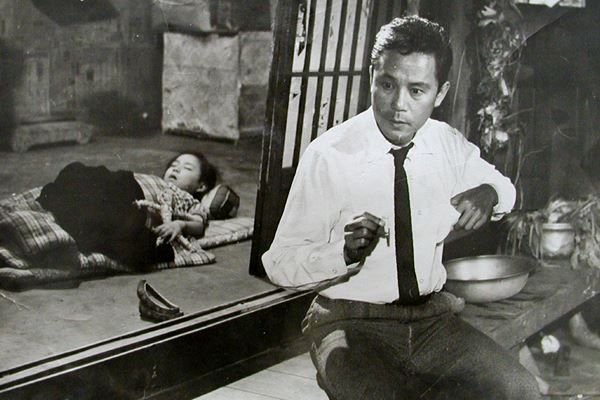
The Film Archive emphasized that this third edition of the 100 Best Korean Films, following those in 2006 and 2014, is significant for having the highest number of selection committee members ever. It also noted that the list of films differs from previous surveys, which is a noteworthy point.
In particular, this selection includes two separate lists: one chosen by 171 viewers including researchers, critics, and programmers to secure a professional perspective on classic films and reflect the viewpoints of creators and the industry, and another chosen by filmmakers such as directors, cinematographers, producers, distributors, and theater workers.
The 100 Best Korean Films will be publicly released online and offline in the second half of this year. The full list will be available on the Film Archive’s KMDb list page. There are also plans to publish a bilingual Korean-English book featuring each respondent’s top 10 Korean films along with comments and reviews to distribute to the public.
To commemorate the 50th anniversary of the institution, the Film Archive has prepared a '50/50 Package' that enables seven restored Korean films from the 1950s to be screened at overseas film festivals and cinematheques. The package includes works whose copyrights have expired, allowing audiences to experience classic Korean film masterpieces without cost. Digitally screened versions with English subtitles will be provided free of charge for local theaters. Special introductory videos explaining the historical significance of each film were also produced.
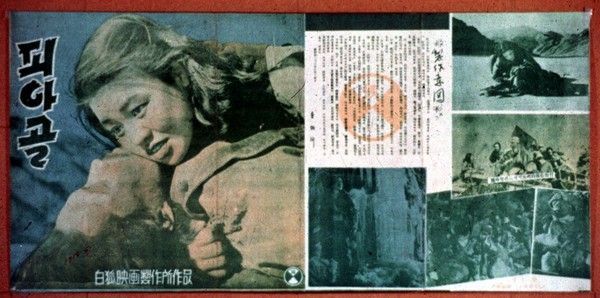 Poster of director Lee Kang-cheon's film 'Piagol' included in the Korean Film Archive's overseas special exhibition. [Photo by Korean Film Archive]
The overseas special exhibition includes ▲ Nakdong River (1952), the only Korean film made during the Korean War with its full length preserved ▲ Piagol (1955), a representative anti-communist humanism work ▲ Widow (1955), directed by Park Nam-ok, Korea’s first female director ▲ The Day the Bride Goes to the Groom (1956), the first Korean film to win an award at an overseas film festival ▲ Free Woman (1956), which expresses Westernization in Korea from a female perspective ▲ Hellfire (1958), an early success by director Shin Sang-ok and actress Choi Eun-hee ▲ and Money (1958), which captures the realities of rural life at the time.
Furthermore, an international symposium will be held in the fourth quarter of this year to review the past half-century of activities including the Cinematheque Movement Collection and to comprehensively examine and share current issues such as online utilization, in collaboration with East Asian film archive experts. The Film Archive is currently negotiating participation with four leading East Asian film archives, and the 50th anniversary conference is planned as a two-day event.
The collection revisiting the history of the Cinematheque Movement, which laid the foundation for the leap of Korean cinema, will also be unveiled in the fourth quarter of this year. The Film Archive has been conducting a systematic collection campaign since 2022, focusing on the activities of various regional cinematheque organizations as one of the driving forces behind contemporary Korean film growth. As a mid-term report of the campaign, some materials related to cinematheque activities will be organized and released as a collection.
Kim Hong-jun, director of the Korean Film Archive, said, "The Cinematheque Movement Collection to be released this year will provide an opportunity to look back on the various cinematheque activities nationwide, created by film fans’ passion for diverse films since the early 1990s."
© The Asia Business Daily(www.asiae.co.kr). All rights reserved.
![Clutching a Stolen Dior Bag, Saying "I Hate Being Poor but Real"... The Grotesque Con of a "Human Knockoff" [Slate]](https://cwcontent.asiae.co.kr/asiaresize/183/2026021902243444107_1771435474.jpg)


















