Celebrities bear the burden of penalty fees whenever they become embroiled in controversies. Generally, penalty fees amount to about 2 to 3 times their appearance fees. This is why the scale of penalty fees skyrockets astronomically for celebrities with numerous works. Actor the late Lee Seon-gyun, who was under investigation for drug use allegations before his death, is no exception.
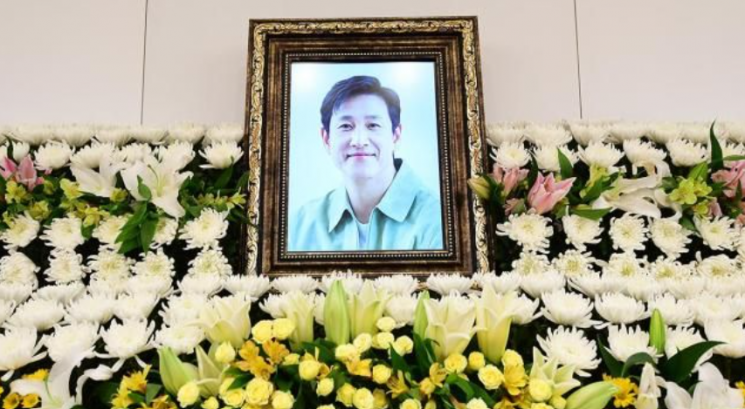
Lee Seon-gyun was one of the most successful actors in the film industry. With the movie Parasite (2019), which won the Palme d'Or at the Cannes Film Festival?the first Korean film to do so?and swept four Academy Awards (Oscars), he gained worldwide recognition. His suitable age, neat appearance, and image as a family-oriented husband and father broadened the range of roles he could take on. He also appeared in several commercials (CFs). He starred in a telecommunications service commercial and a health functional food brand advertisement, but as drug suspicions surfaced under his initials, each company immediately pulled the ads and made viral videos private. Since a model’s image directly affects sales, the standards are even stricter. Therefore, it is industry practice to quickly terminate contracts and claim penalty fees whenever a celebrity is involved in controversy.
Under civil law, penalty fees refer to damages. Although penalty fees are based on confidential contracts and thus specifics are unknown, if a law is violated or social controversy is caused during advertising or work contracts, penalty fees amounting to about 2 to 3 times the contract value are imposed. Contracts typically include clauses stating that one must not violate laws or cause social controversy, engage in morally reprehensible acts, or damage the brand image.
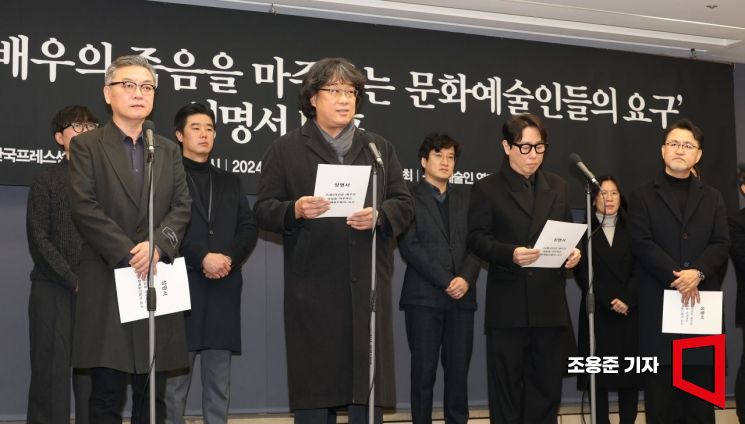 Director Bong Joon-ho is urging for a thorough investigation during the statement announcement titled "Demands of Cultural Artists Facing the Death of the Late Actor Lee Seon-gyun" held on the 12th at the Press Center in Jung-gu, Seoul. Photo by Jo Yong-jun jun21@
The drama No Way Out, which the late Lee Seon-gyun was scheduled to appear in, consists of 8 episodes. Considering that he received an appearance fee of around 200 million KRW per episode for the SBS drama Law Money last year, the total was expected to be about 1.6 billion KRW just for the drama. The two unreleased films he left behind vary in scale and significance, but each is believed to have offered him a top-tier fee of around 1 billion KRW. Based on this, penalty fees from film contracts and advertisements were estimated to be in the 10 billion KRW range.
However, the industry expects the actual penalty fees to be only about 30?50% of the estimated 10 billion KRW. In fact, there have been no cases in the film industry where penalty fees were demanded from actors who caused controversies. Since the films have completed shooting, they can be released at an appropriate time later, and various stakeholders are involved. The unreleased film Escape, starring Lee Seon-gyun, has already been screened at the Cannes Film Festival, and Land of Happiness is finishing post-production this spring, so it is difficult to impose penalty fees as they can be released at a suitable time.
The Cultural Sector Rolls Up Its Sleeves in Grief over the ‘Lee Seon-gyun Prevention Act’
Lee Seon-gyun, who was under investigation for drug use allegations, was found dead on the 27th of last month in a parking lot of a park in Jongno-gu, Seoul. At the peak of his acting career, he made a tragic choice at the age of 48. He had been booked under the Narcotics Control Act for marijuana and psychotropic substances and was under police investigation. He was summoned by the police three times and requested a polygraph test during the investigation shortly before his death. He denied the allegations, claiming that the only evidence related to drug use was the testimony of A, a 29-year-old female manager of a Gangnam room salon. Although Lee Seon-gyun has passed away, many stories continue to circulate around him.
His colleagues donned black clothes and took the microphone after his passing. On the 12th, cultural and artistic figures, including director Bong Joon-ho, who worked with him on the breakthrough film Parasite, issued a statement titled “Demands of Cultural and Artistic Figures Facing the Death of the Late Actor Lee Seon-gyun” at the Press Center in Jung-gu, Seoul, calling for a thorough investigation. The Cultural and Artistic Solidarity Conference included film and cultural organizations such as the Korean Film Directors Association, Korean Management Federation, Busan International Film Festival, and Women Filmmakers’ Association. They urged the police and media to awaken and announced plans to enact the so-called ‘Lee Seon-gyun Prevention Act.’ They demanded a thorough investigation by authorities related to the Lee Seon-gyun case, deletion of articles violating journalistic ethics, and amendments to current laws to protect the human rights of cultural and artistic figures. Director Bong demanded explanations from the investigation authorities, and actor Kim Eui-sung and singer Yoon Jong-shin strongly criticized sensationalist media coverage.
Additionally, cultural and artistic figures such as director Park Chan-wook and actress Youn Yuh-jung delivered related statements to the National Assembly. On the afternoon of the 15th, they visited the National Police Agency and the National Assembly to deliver a statement titled “Demands of Cultural and Artistic Figures Facing the Death of the Late Actor Lee Seon-gyun.” Present were representatives including Ko Young-jae of the Korean Independent Film Association, Jung Sang-jin of the Film Import and Distribution Association, Choi Jeong-hwa of the Korean Film Producers Association, and Jang Won-seok, CEO of BA Entertainment, affiliated with the Korean Film Producers Association. The statement included demands for “a thorough investigation into the investigation process by authorities,” “deletion of articles not aligned with KBS’s reporting purpose,” and “enactment and amendment of current laws to protect the human rights of cultural and artistic figures.”
On the other hand, voices pointing out fundamental issues have also emerged. Critics argue that the actions of these organizations are unlikely to gain sympathy from the vast majority of the public and that colleagues should not grant absolution regarding the moral issues and illegal allegations that arose during his lifetime.
© The Asia Business Daily(www.asiae.co.kr). All rights reserved.


















