The special application period for lodging businesses utilizing vacant houses in rural fishing and farming villages will be extended by two years. Additionally, the scale of business implementation will be expanded to up to 500 units only in rural areas at risk of disappearance.
The Ministry of Agriculture, Food and Rural Affairs and the Ministry of Science and ICT announced on the 25th that the regulatory sandbox demonstration special case allowing lodging businesses to use vacant houses in rural fishing and farming villages will be extended for two years until January 2026.
The lodging business utilizing vacant houses in rural fishing and farming villages was designated as a regulatory special case for demonstration after review and approval by the Regulatory Sandbox New Technology and Service Deliberation Committee (Ministry of Science and ICT) in 2020. Currently, 'Dajayo' is designated as the special case operator and is regenerating and operating nine vacant houses in Jeju-do.
The Ministry of Agriculture, Food and Rural Affairs had planned to review legal and institutional improvements comprehensively considering the impact of the new business on rural communities based on the performance of the regulatory sandbox demonstration special case. However, it decided to extend the special case period due to a lack of demonstration cases outside Jeju-do.
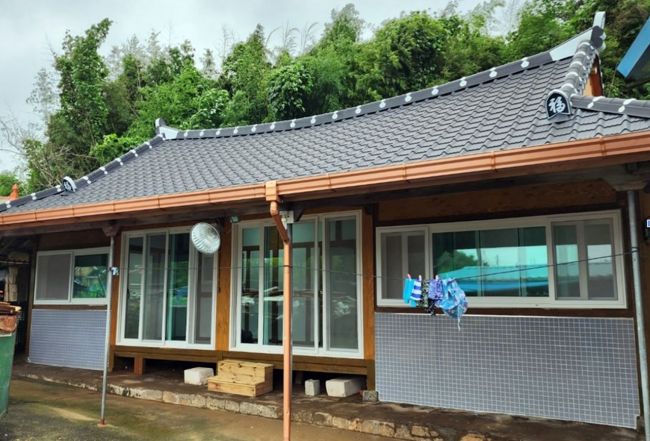
Along with this, considering that various additional conditions imposed during the demonstration special case could restrict operators from expanding their businesses, it was decided to relax the additional conditions along with the extension of the special case period.
First, the demonstration scope will be conducted within a total of 50 units in up to five city/county/district areas (one city/county/district per city/province) as before, but expansion to up to 500 units is possible in rural areas at risk of disappearance agreed upon with the Ministry of Agriculture, Food and Rural Affairs. The restriction of 300 business days per year will be abolished.
Also, considering that rural fishing and farming village houses include various auxiliary buildings such as warehouses and livestock barns, the current business target limited to detached houses will be changed to allow the use of vacant houses under the Rural Development Act. Accordingly, the business will be possible in 'rural fishing and farming village houses or buildings that have been unoccupied or unused for more than one year.'
The existing business method required regenerating long-term leased vacant houses and returning them to the owner after the lease period ended, but going forward, the special case operator will be allowed to directly purchase vacant houses on the premise of operating them for more than two years after starting the business.
Lee Sang-man, Director of the Rural Policy Bureau at the Ministry of Agriculture, Food and Rural Affairs, said, "With this extension of the regulatory sandbox and relaxation of additional conditions, we hope to secure various demonstration cases while increasing the potential utilization of vacant houses in rural fishing and farming villages and thereby lead to the revitalization of rural tourism." He added, "The Ministry of Agriculture, Food and Rural Affairs is preparing related institutional improvement plans to respond to diverse rural tourism demands and to complement the limitations of the rural lodging system, and plans to closely consult with related ministries and the field for this purpose."
© The Asia Business Daily(www.asiae.co.kr). All rights reserved.
![Clutching a Stolen Dior Bag, Saying "I Hate Being Poor but Real"... The Grotesque Con of a "Human Knockoff" [Slate]](https://cwcontent.asiae.co.kr/asiaresize/183/2026021902243444107_1771435474.jpg)
















