Relaxation of Height, Use, and Density Regulations Compared to Apartment Districts
Special Planning Zone Designated in Ichon District Unit Plan
Hwagok Designated with Building Limit Line, Vehicle Entry Prohibited Area, and Public Pedestrian Path
Ichon Apartment District and Hwagok Apartment District will be converted into district unit planning zones. Various regulations such as building height will be relaxed, and redevelopment projects approaching their scheduled time will be designated as special planning zones.
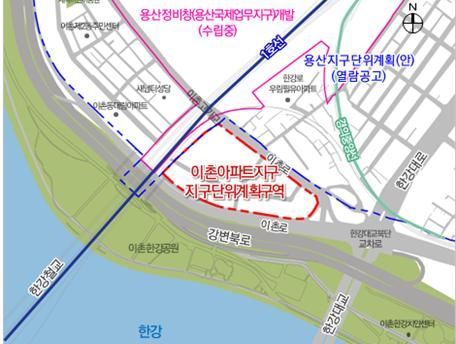
On the 25th, the Seoul Metropolitan Government announced that it had approved with modifications the draft decision on the district unit plan for Ichon and Hwagok Apartment Districts at the first Urban and Architectural Joint Committee meeting held the previous day.
The apartment districts were designated in the 1970s and 1980s to develop large-scale apartment complexes. Since the land use plans and infrastructure were primarily focused on housing supply, it was difficult to accommodate diverse demands such as mixed-use residential-commercial buildings and commercial facilities within the complexes.
Considering the increasing number of apartments exceeding 30 years of building age and the difficulty in linking redevelopment projects, Seoul has been promoting the conversion of apartment districts into district unit plans since the end of 2022.
With the conversion to district unit plans, regulations on height, building use, density, and others will be relaxed compared to existing apartment districts to expand housing supply and activate redevelopment. Residential sites subject to redevelopment will be designated as special planning zones to enable faster establishment of maintenance plans.
As a result of the recent Urban and Architectural Committee review, Seoul designated special planning zones within the Ichon Apartment District’s district unit plan for redevelopment sites approaching their scheduled time, allowing for the accommodation of various demands when establishing maintenance plans.
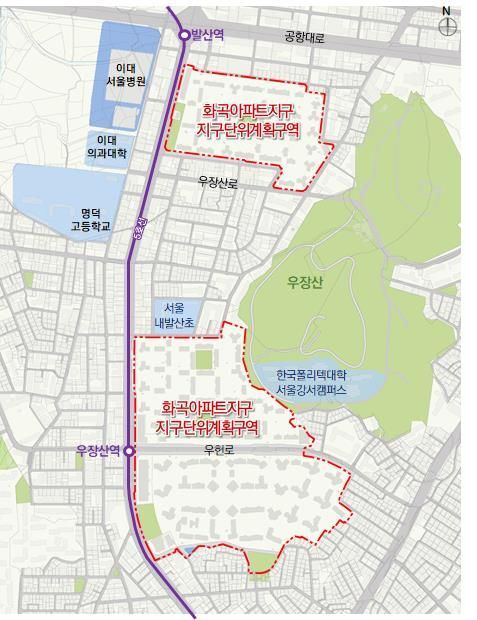
The Hwagok Apartment District’s district unit plan did not designate separate special planning zones as there are no residential complexes scheduled for redevelopment by 2030. Instead, when pursuing redevelopment or remodeling in the future, building setback lines, vehicle access restrictions, and public pedestrian pathways were planned considering connectivity with surrounding parks and traffic management plans.
Central facility sites, which were responsible for commercial planning within the apartment districts, can now be introduced for residential use. Considering the land price increase caused by permitting residential use, public contributions in the range of 5-10% are required. The introduction of non-residential uses, which was previously impossible, is also allowed on remaining development sites. Building height restrictions can be relaxed from the existing limit of 5 floors to up to 40 meters depending on site conditions.
Seoul plans to finalize and announce the district unit plans in the first half of the year after public inspection and announcement to residents.
© The Asia Business Daily(www.asiae.co.kr). All rights reserved.


















