Expectations for Interest Rate Cuts Within the Year Grow
Government's 'First Half Inflation Stabilization' Policy Impact
Inflation Forecast Hits Lowest in 22 Months
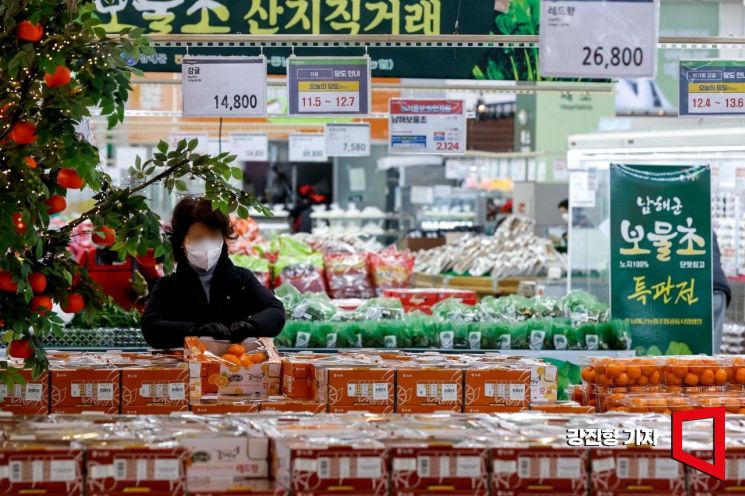
As inflation rates slow down and expectations for interest rate cuts within the year grow, consumer sentiment has turned optimistic for the first time in five months. The expected inflation rate recorded its lowest level in 1 year and 10 months, and housing price growth forecasts have weakened for the fourth consecutive month due to concerns over real estate project financing (PF) defaults and the resulting contraction in the housing market.
According to the January Consumer Sentiment Survey released by the Bank of Korea on the 24th, the Consumer Confidence Index (CCSI) rose by 1.9 points from the previous month to 101.6. The CCSI is a psychological indicator calculated using six major indices from the Consumer Sentiment Index (CSI), where a value below the long-term average baseline (100) indicates pessimism. This survey was conducted from the 9th to the 16th of this month, targeting 2,500 households nationwide (2,347 respondents).
The CCSI showed a continuous decline for four months from August last year (103.3), September (99.8), October (98.2), to November (97.3), before turning upward in December (99.7) and continuing its rise this month. The consumer sentiment, which had frozen due to the full impact of last year’s sustained interest rate hikes, appears to have recovered thanks to the continued slowdown in inflation, expectations that the U.S. Federal Reserve (Fed) will end rate hikes, and improvements in exports.
The Interest Rate Expectation Index dropped 8 points in one month to 99. As market interest rates continued to stabilize downward, this index fell below 100 for the first time since December 2020. Hwang Hee-jin, head of the Statistical Survey Team at the Economic Statistics Bureau, explained, "During the survey period, the Monetary Policy Committee held a meeting and maintained the policy rate for the eighth consecutive time, reducing the likelihood of further hikes and raising expectations for rate cuts."
The Housing Price Expectation Index (92) fell by 1 point due to concerns over real estate PF defaults, tightened loan regulations, and sustained high interest rates, which have dampened the housing market. This marks the fourth consecutive month of decline since September last year.
The Price Level Expectation Index (143) decreased by 3 points as the inflation rate for agricultural products and dining out remains high, but the consumer price inflation rate slowed due to a wider drop in petroleum prices.
The expected inflation rate for the next year, which forecasts consumer price inflation, fell by 0.2 percentage points from the previous month to 3%. With growing expectations of economic and inflation slowdown, this is the lowest level in 22 months.
The response proportions for major items expected to influence consumer price inflation over the next year were public utility charges (65.3%), agricultural, livestock, and fishery products (45.9%), and personal services (24.6%). Compared to the previous month, the response shares for agricultural, livestock, and fishery products (up 2.4 percentage points) and personal services (up 2.2 percentage points) increased, while the share for petroleum products decreased by 3 percentage points due to continued stability in international oil prices.
Team leader Hwang said, "Although the inflation rates for agricultural products and dining services remain high, the rate of increase has slowed, suggesting that the long-term outlook favors falling prices. While public utility fee hikes are an inflationary factor, the government has announced a freeze policy for the first half of the year, which seems to have mixed in hopes for price stabilization."
© The Asia Business Daily(www.asiae.co.kr). All rights reserved.
![Clutching a Stolen Dior Bag, Saying "I Hate Being Poor but Real"... The Grotesque Con of a "Human Knockoff" [Slate]](https://cwcontent.asiae.co.kr/asiaresize/183/2026021902243444107_1771435474.jpg)
















