Investment Principal at Risk by Half... Banks Alone Suffer 229.6 Billion KRW Loss
Hong Kong H Index Falls Below 5000 at One Point... 'Hang Seng Tech ETN' Also Early Liquidated
Chinese Government Steps in to Boost Stock Market, But Concerns of Nearly 6 Trillion KRW Loss in First Half
Financial Authorities Conduct On-Site Inspections of 12 Sellers... Results to Be Announced in February-March
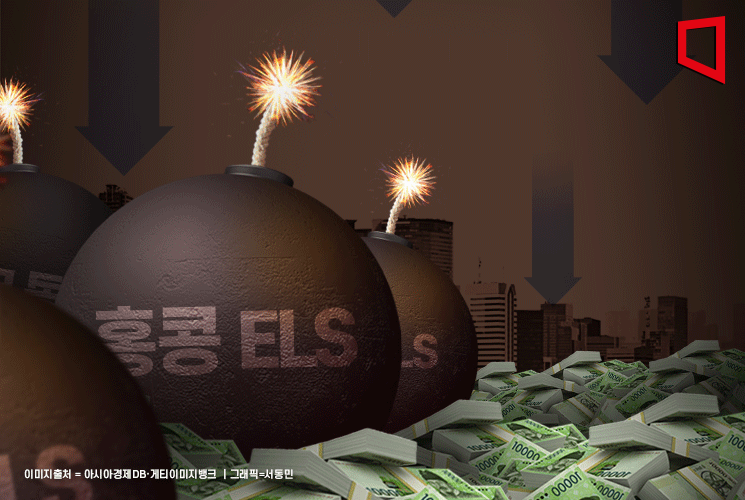
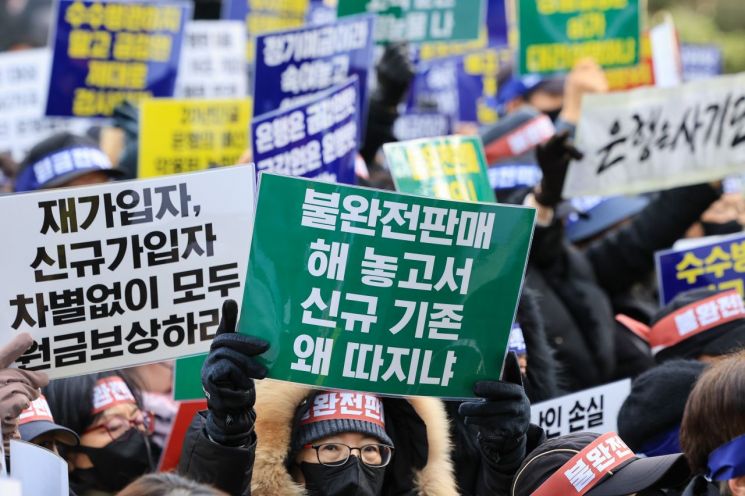
The Hong Kong H-Share Index (HSCEI) has continued its downward trend since the beginning of the year, causing the expected loss scale of equity-linked securities (ELS) approaching maturity to grow over time. Some ELS that matured early this year have loss rates exceeding 55%, and investment losses amounting to 230 billion KRW have already been confirmed. Frustrated investors have ultimately taken to the streets, claiming incomplete sales practices amid the frozen market.
Yesterday, news broke that the Chinese government plans to inject a stock market stabilization fund worth approximately 372 trillion KRW, leading to a rebound in the Chinese stock market, including the Hong Kong H-Share Index. However, since the underlying cause is the accumulated problems in China's macroeconomy, it remains uncertain whether this will translate into sustained rebound momentum that ELS investors awaiting maturity are hoping for.
According to financial sources on the 24th, losses from Hong Kong H-Share Index-linked ELS products sold by major commercial banks such as KB Kookmin Bank, Shinhan Bank, Hana Bank, Woori Bank, and NH Nonghyup Bank have reached 229.6 billion KRW (principal of 435.3 billion KRW) as of the 19th this year. The loss rate is approaching 53% relative to the invested amount and is increasing over time.
When combined with confirmed losses from major securities firms beyond the five major commercial banks, the total loss is expected to be even greater. With ELS products worth 920 billion KRW maturing in January alone, the loss scale is likely to exceed 450 billion KRW and approach 500 billion KRW. Most of the sold ELS products were issued in January 2021 when the Hong Kong H-Share Index fluctuated between 10,000 and 12,000 points, making it highly unlikely to avoid losses.
The criteria for confirming losses on ELS vary by product, but generally, the tracking index must be at 65-70% of the initial level three years after subscription to avoid principal loss. For example, in the case of the 'Knock-in' type, if the tracking index at maturity is usually above 70% of the initial level, both principal and interest can be received; however, if it falls below 70%, principal loss occurs proportional to the decline. The 'No Knock-in' type also has a break-even point at about 65% of the initial level, categorizing it as a very high-risk product.
The problem is that the scale of ELS maturing in the future is even larger. In February, 1.66 trillion KRW worth of ELS products will mature, followed by 1.82 trillion KRW in March and 2.56 trillion KRW in April, marking a peak. The maturity scale in May and June is also substantial, at 1.56 trillion KRW and 1.51 trillion KRW respectively. In total, over 10 trillion KRW worth of ELS will mature simultaneously in the first half of the year.
Some predict that confirmed losses from ELS products in the first half could exceed 5 trillion KRW and approach 6 trillion KRW. This is due to the Hong Kong H-Share Index recording a significant drop this year and even falling below 5,000 points intraday on the 22nd. Even the 'Samsung Leverage Hang Seng Tech ETN (H)' issued by Samsung Securities recently halted trading due to a sharp index decline and has entered delisting procedures.
Yesterday, news of the Chinese government planning to inject a 2 trillion yuan (approximately 372 trillion KRW) stock market stabilization fund led to a 2% rebound in the Chinese stock market, including the Hong Kong H-Share Index. However, the prevailing view is that it remains uncertain whether this will lead to structural upward momentum. Premier Li Qiang reportedly instructed the State Council executive meeting to promote ▲expansion of long-term fund investments by pension funds ▲strengthening supervision of illegal activities ▲enhancement of listed companies' investment value ▲improvement of capital market systems, but there appear to be no immediate special measures to reverse the trend.
Investors have taken to the streets, mostly presumed to be bank subscribers who had a high proportion of sales. According to the Financial Supervisory Service (FSS), as of November last year, the cumulative sales of Hong Kong H-Share Index ELS amounted to 19.3 trillion KRW, of which 15.9 trillion KRW worth was sold by KB Kookmin Bank (8 trillion KRW), Shinhan Bank (2.4 trillion KRW), NH Nonghyup Bank (2.2 trillion KRW), Hana Bank (2 trillion KRW), and SC First Bank (1.2 trillion KRW). On the 19th, investors expressed their frustration in front of the FSS office in Yeouido, Seoul, saying, "We trusted the explanations from sellers and subscribed, but we were sacrificed in the competition among banks." The FSS has activated its own task force team (TF) and is monitoring complaints through sellers while conducting investigations, but has not disclosed specific case numbers.
Earlier, since the 8th, the FSS has been conducting on-site inspections focusing on incomplete sales and key performance indicators (KPI) targeting 12 financial companies. The banks under investigation include KB Kookmin, NH Nonghyup, SC First, Shinhan, and Hana. Securities firms include KB Kookmin, NH Nonghyup, Mirae Asset, Samsung, Shinhan, Kiwoom, and Korea Investment & Securities. For incomplete sales, the focus is on subscription procedures targeting the elderly, and sales drive policies centered on KPIs, which are cited as the cause of excessive sales competition, are also being scrutinized.
A senior official at the FSS explained, "The core issue related to this ELS product is how much it was sold to elderly subscribers with low financial literacy," adding, "Considering the market situation, how internal controls on performance indicators have been managed is also a key inspection target."
© The Asia Business Daily(www.asiae.co.kr). All rights reserved.
![Clutching a Stolen Dior Bag, Saying "I Hate Being Poor but Real"... The Grotesque Con of a "Human Knockoff" [Slate]](https://cwcontent.asiae.co.kr/asiaresize/183/2026021902243444107_1771435474.jpg)

















