As Controversy Grows, School Claims 'Bathing Guidance'
Criticism Arises That Outdated School Rules Are Regressive
A practice in the Japanese education system of inspecting whether students on school trips have thoroughly dried themselves after bathing by checking them naked is causing controversy. While schools claim this is 'bathing guidance,' many students have expressed discomfort. On the 22nd, the Nishinippon Shimbun reported that 'water droplet inspections' are being conducted nationwide, especially in the Kyushu region, sparking debate.
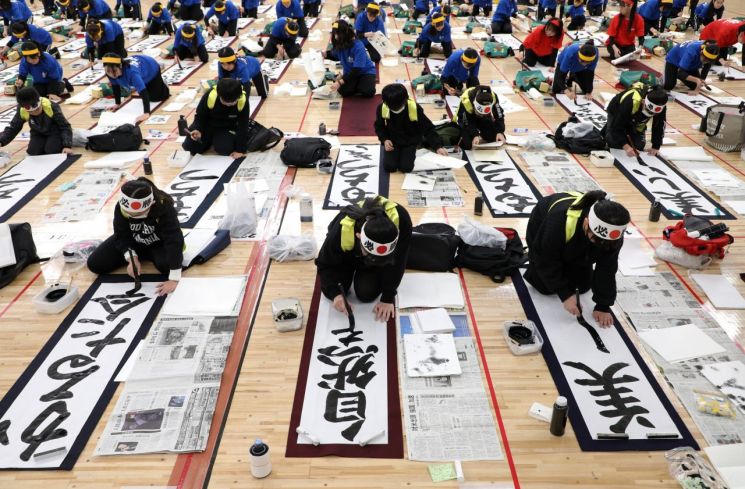 In Japanese middle and high schools, so-called "black school rules" (unfair regulations that may infringe on human rights) are still known to exist. The photo is not related to the specific content of the article. [Photo by EPA·Yonhap News]
In response to the controversy, schools explained that the guidance is necessary to teach proper bathing etiquette, but criticism of its inappropriateness has emerged. A person identified as A, who reported the matter to the media, said that last December, their daughter, a second-year middle school student, was inspected by a female teacher after bathing on a school trip to see if water droplets remained on her body. Notably, the teacher made the students raise their arms naked and visually checked for water droplets on their bodies.
The school stated that two same-gender teachers were assigned to each of the male and female bathhouses to provide 'bathing guidance,' which included removing water droplets and adhering to time limits, and that this practice had been ongoing for some time. The Fukuoka Prefectural Board of Education also received an anonymous complaint about the matter. When the board requested the school to verify the facts, the school principal explained, "We conducted bathing guidance, but we did not make students raise their arms."
The principal further explained, "We teach manners in general, such as not putting towels into the bathtub as well as removing water droplets. Ideally, these should be taught at home, but if children grow up unaware, they will be embarrassed later." The principal also emphasized that this education has been conducted since their own time as a teacher and stated there are no plans to reconsider it.
"Only white underwear, hair must be black"... Japan's 'Black School Rules'

Some in the education field argue that the water droplet inspections are necessary for safety, as wet floors in inns have caused students to slip and fall. However, Japanese internet users have criticized this method as a remnant of outdated and improper educational culture.
Recently in Japan, education aimed at preventing sexual violence against children has focused on teaching them not to show or allow others to touch sensitive areas such as the chest or buttocks, and this practice is seen as contradicting that trend. Additionally, so-called 'Black School Rules'?unfair regulations that potentially violate human rights?are still known to exist in Japanese middle and high schools.
The long-standing issue of Black School Rules came under scrutiny in 2017 when a woman filed a lawsuit. The woman, who attended a public high school in Osaka Prefecture, claimed she suffered due to excessive hair regulations and demanded compensation from the school. She alleged that the school forced her to dye her naturally brown hair black and verbally abused her by saying, "If you don't dye it, there's no need to come to school." She also stated that the school bullied her under the pretext of student guidance, eventually causing her to stop attending school.
According to media reports at the time, 60% of 238 public schools in Nagasaki required students to wear white underwear. Furthermore, the rules stipulated that when students changed from their uniforms into gym clothes, female teachers had to inspect their underwear. In Fukuoka, 57 out of 69 public schools also regulated underwear color. Some schools reportedly even demanded students remove their underwear on the spot if it was not white, which sparked controversy. Meanwhile, a Japanese web media company conducted a survey via social networking services (SNS) and found that about one-quarter of 1,119 respondents had experienced water droplet inspections.
© The Asia Business Daily(www.asiae.co.kr). All rights reserved.


















