Samil Accounting Corporation Leads... Key Focus on Handling 60 PF Project Sites
Corporate Improvement Plan Resolved at 2nd Financial Creditors' Meeting in April
Joint Steering Committee Coordinates Stakeholders in Workout Process
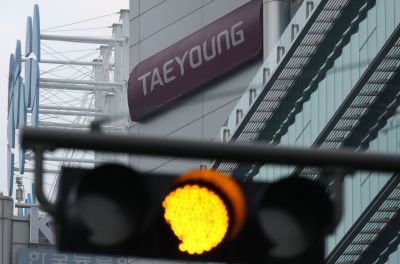 On the 11th, the fate of Taeyoung Construction, which applied for a workout (corporate restructuring) after failing to repay real estate project financing (PF) loans worth around 9 trillion won, is being decided, creating tension at Taeyoung Construction in Yeongdeungpo-gu, Seoul. Photo by Jo Yongjun jun21@
On the 11th, with 96.1% consent from creditors, the workout (corporate financial restructuring) process was initiated for Taeyoung Construction, and an asset and liability audit is set to begin. Since a corporate improvement plan must be established based on the audit results by the financial creditors' council scheduled for April, both the creditors and Taeyoung Construction are expected to accelerate their efforts to meet the tight schedule.
According to Taeyoung Construction’s creditors on the 22nd, the main creditor bank, KDB Industrial Bank, has selected Samil Accounting Corporation as the accounting firm for the audit and will commence the formal audit process. The auditing accounting firm will conduct an asset and liability audit of Taeyoung Construction and evaluate its viability. Once the 'Main Creditor-PF Major Lenders Joint Management Committee,' composed equally of the main creditors including the Industrial Bank and the PF major lenders' council, is formed, the audit process for 60 PF project sites is also expected to be fully underway.
The accounting firm’s audit and the establishment of the corporate improvement plan will tentatively proceed over about three months until the second financial creditors' meeting scheduled for April 11. This period may be extended by one month if additional consultations occur. Once the corporate improvement plan is established, the Industrial Bank will convene the second financial creditors' meeting to go through the resolution process.
The corporate improvement plan will include ▲project financing (PF) project site handling measures ▲financial structure improvement plans ▲liquidity procurement plans ▲company management plans and management control measures. Afterward, within a month, if an implementation agreement containing Taeyoung Construction’s management goals and execution plans is signed, the formal joint management process is expected to begin around May to June.
Since the core of the corporate improvement plan is the handling measures for Taeyoung Construction’s 60 PF project sites, the role of the joint management committee, which mediates disputes among stakeholders, is expected to become crucial. Due to the nature of the construction industry, the scale of loan guarantees required during the PF project process is much larger than direct loans, making conflicts between the main creditors and PF major lenders inevitable.
In particular, among Taeyoung Construction’s 60 PF project sites, 18 are at the bridge loan stage before the main PF, so the possibility of disputes arising during the audit process cannot be ruled out. Accordingly, the main creditor bank, Industrial Bank, has requested the PF major lenders to establish handling measures for each PF project site by mid-February. According to the scheduled workout process, the joint management committee formed by the main creditors and PF major lenders is expected to coordinate the handling measures submitted by the PF major lenders next month.
There is also analysis that the difference in the estimated level of 'risky debt' between the main creditors and Taeyoung Construction is a latent source of conflict. Yoon Se-young, founder of Taeyoung Group, stated that only 2.5 trillion KRW of the company’s guarantee debt is 'contingent debt,' and considering the accumulated order volume and profitability over the next three years, there is no problem.
On the other hand, creditors view Taeyoung Construction’s total debt as reaching 16.3 trillion KRW, including 1.3 trillion KRW in direct debt, 5.5 trillion KRW in performance guarantee debt, and 9.5 trillion KRW in joint guarantee debt, with any of these debts potentially being classified as contingent debt. This is because Taeyoung Construction recognizes only 1.2 trillion KRW in bridge loan guarantees and 1.3 trillion KRW in main PF guarantees with less than 75% pre-sale rates as risky debt.
Meanwhile, Taeyoung Group’s affiliate Blue One plans to secure 130 billion KRW by selling Yongin CC and Sangju CC to Mark Asset Management. Taeyoung Group intends to promptly use the funds raised through golf course liquidity to support Taeyoung Construction. Creditors expect that operating funds amounting to 500 billion KRW will be required from Taeyoung Group by April, when the workout audit process is underway.
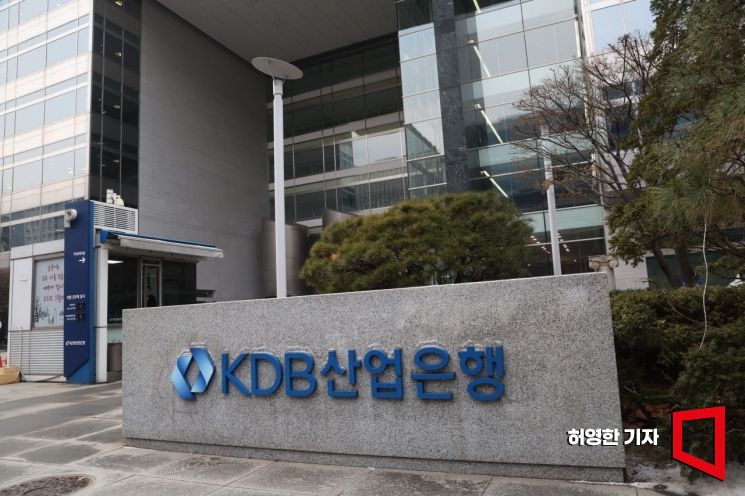 On the 10th, the creditor meeting of Taeyoung Construction was held at the headquarters of the Korea Development Bank in Yeouido, Seoul. Photo by Younghan Heo younghan@
© The Asia Business Daily(www.asiae.co.kr). All rights reserved.


















