NYT Column... "It Can Be a Problem for Everyone"
Consumer Spending Down · Lack of Social Safety Nets → Financial Repression
Paul Krugman, Nobel laureate in Economics and professor at the City University of New York, pointed out, "Let's not gloat over China's economic downturn. It could become everyone's problem." He assessed that if measures such as reckless military actions are taken to divert internal turmoil outward, it could ultimately become an issue the entire world has to bear.
In a column titled "China's Economy Is in Serious Trouble," published on the 18th (local time) in The New York Times (NYT), Professor Krugman stated, "There are reasons to believe that China's economy is entering a period of recession and despair."
Professor Krugman first evaluated that although some expected China's economy to boom after the COVID-19 pandemic, most economic indicators, except for the government's official GDP growth rate announcement of 5.2%, fell short of expectations.
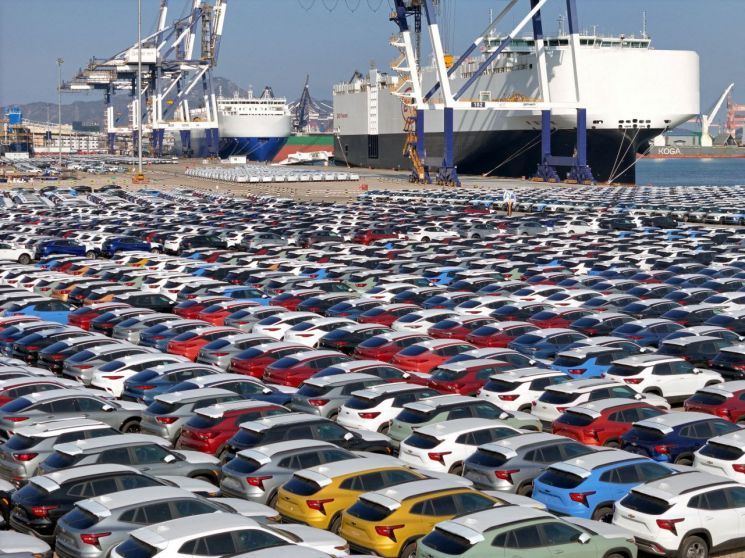
In fact, China's economic growth rate last year recorded 5.2%, benefiting from the base effect caused by the COVID-19 pandemic, achieving the growth target of around 5% set by the authorities. However, considering the base effect of 2022, when growth was only 3% due to the spread of COVID-19 and strict quarantine controls, the 2023 results, the first year of "With COVID," were somewhat below expectations. Due to global demand contraction and weak domestic consumption in China, exports decreased by 4.6% compared to the previous year, marking the first negative growth since 2016, and imports also fell by 5.5%.
Professor Krugman cited the leadership of Chinese President Xi Jinping as the first reason why the Chinese economy, which seemed poised to dominate global hegemony, is facing difficulties.
However, he believed that even if there had been a different leader instead of President Xi, the Chinese economy would have faced difficulties due to its structural characteristics. First, Professor Krugman analyzed that there is a structural problem in the Chinese economy itself. The proportion of household consumption expenditure relative to GDP is very low. In fact, the share of private consumption relative to nominal GDP in China is less than 40%. The average among about 140 countries exceeds 60%, and in the United States, it reaches 70%.
Professor Krugman pointed out that the reason for China's low household consumption expenditure is the "financial repression" caused by government intervention distorting the financial market. He explained that a structure has been established where household consumption is suppressed and savings increase, allowing the government and state-owned enterprises to borrow these savings at low interest rates. From the perspective of Chinese consumers, this means there is a lack of social safety nets, creating a necessity to increase savings to prepare for emergencies.
According to Professor Krugman, the background that allowed China to create demand despite low consumption expenditure was investment exceeding 40% of GDP. In the early 2000s, when China was growing rapidly, it seemed sustainable to maintain high investment exceeding 40% of GDP. However, since 2010, with the decline in the working-age population and overall productivity falling, Professor Krugman forecasted that maintaining this would be difficult.
To resolve this situation, Professor Krugman argued that social safety nets should be strengthened so that consumers do not feel the need to hoard cash, and consumption expenditure should be encouraged. He pointed out, "Powerful groups close to state-owned enterprises benefit from financial repression." However, he evaluated that leaders in China, a communist country, do not show strong enthusiasm for strengthening social safety nets. This implies that the Chinese authorities are unlikely to take measures to increase consumption expenditure.
Professor Krugman compared China's current situation to Japan in the 1980s but predicted differences in the resolution process. He noted that Japan took measures such as strengthening social and political cohesion to avoid mass unemployment, and questioned, "How much internal cohesion can China, facing economic problems, achieve?" He added, "What I fear most is that China may hardly respond," and warned, "The scariest thing is whether they might try reckless military actions to divert internal turmoil outward."
Meanwhile, local economic media Caijing reported on the 20th that Chinese and overseas economic experts forecast China's economic growth rate to be 4.9% this year. According to a recent report released by Caijing Research Institute, the average forecast for China's year-on-year GDP growth rate this year, presented by 16 Chinese and foreign economic experts, was 4.88%. They observed that Chinese authorities are likely to set this year's economic growth target around 5%, similar to last year.
© The Asia Business Daily(www.asiae.co.kr). All rights reserved.

















