Establishing Renewable-Centered Energy System Strategy, Proactive Response by Designating Distributed Energy Specialized Areas
Mayor Lee, "Realizing a Future Clean Energy Leading City through Expanding Renewable Energy Distribution"
Amid the global wave of strengthening carbon neutrality, Pohang City, which hosts energy-intensive industries such as steel and secondary batteries, is drawing up a blueprint to create an advanced industrial city based on renewable energy to drive sustainable urban growth.
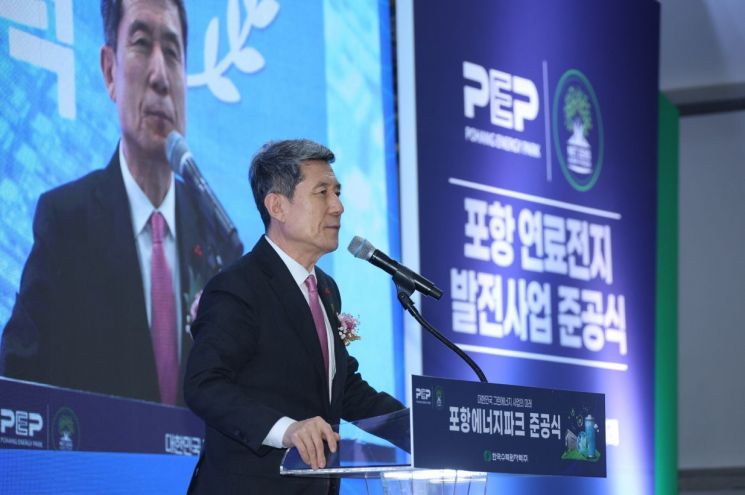 The completion ceremony of Pohang City's first hydrogen fuel cell power plant was held on the 10th at Pohang Blue Valley National Industrial Complex, where Mayor Lee Kang-deok delivered a congratulatory speech.
The government plans to implement the Special Act on the Activation of Distributed Energy in June to establish a region-led energy system where energy is produced and consumed locally. It will designate specialized areas, apply special electricity trading exceptions, and enable renewable energy power producers and consumers to trade electricity independently and directly.
In line with this trend, Pohang City is actively working on establishing a Pohang-type distributed energy activation strategy that builds a self-sufficient energy model within the Yeongilman Industrial Complex, Blue Valley Industrial Complex, and new industrial complexes by utilizing future energy sources to secure a leading position in distributed energy specialized areas.
To this end, the city plans to commission a study this year to develop a plan for the distributed energy specialized area. Targeting Pohang’s industrial complexes, the study will configure power grids based on each company’s electricity demand and supply, as well as projected future demand, and develop a region-specific new industry model where distributed energy operators and electricity users can coexist through economic feasibility analysis.
The main distributed energy sources for activating distributed energy include hydrogen fuel cells, solar power generation, and offshore wind power generation, which align with Pohang City’s prioritized renewable energy projects.
Pohang City is promoting a hydrogen fuel cell cluster and hydrogen city development project centered on the hydrogen fuel cell industry. On the 10th, it held a completion ceremony for a 20 MW hydrogen fuel cell power plant within the Blue Valley Industrial Complex and plans to expand it to 300 MW by 2030.
The city is also accelerating renewable energy projects. It is pursuing a 200 MW solar power generation project utilizing rooftops within industrial complexes, aiming for over 1 GW in the future. Additionally, Pohang was selected last year in a government-led public large-scale offshore wind farm development support project competition, further strengthening the foundation for nurturing the renewable energy industry.
If designated as a distributed energy specialized area, benefits such as reduced electricity rates can be expected through economies of scale achieved by clustering energy facilities. This is likely to directly attract power-intensive companies such as secondary battery manufacturers and data centers to Pohang’s industrial complexes.
As more companies move in, jobs will be created, attracting young people, revitalizing the local economy, and naturally addressing population issues.
Pohang City plans to strategically establish a distributed energy activation plan in line with the Ministry of Industry’s guidelines to be released in the first half of the year. It also aims to develop a distributed model considering regional characteristics such as location conditions and the economic feasibility between operators and consumers, becoming a leading city ushering in the era of localized energy.
Mayor Lee Kang-deok said, “We will discover distributed energy business models that support corporate growth and are tangible to citizens and reflect them in the specialized area plan. Through the steady expansion of renewable energy supply centered on hydrogen, solar power, and offshore wind power, we will realize a future clean energy specialized city.”
© The Asia Business Daily(www.asiae.co.kr). All rights reserved.

















