'Community-Engaged Autonomous Police for a Safer and Happier Busan' Vision ... Busan-Style Implementation
Prioritizing Citizen Participation and Safety, Protecting Vulnerable Groups, and Establishing a Robust Social Safety Net
The Busan Metropolitan Autonomous Police Committee (Chairman Jeong Yong-hwan) has designated 2024 as the year to "Realize a Safer Busan" and announced plans to implement more tangible public safety policies to establish a Busan-style autonomous police system that protects the peaceful daily lives of its citizens.
Last year, the committee laid the groundwork for a practical autonomous police system by reviewing the effectiveness of existing policies and conducting various public safety activities.
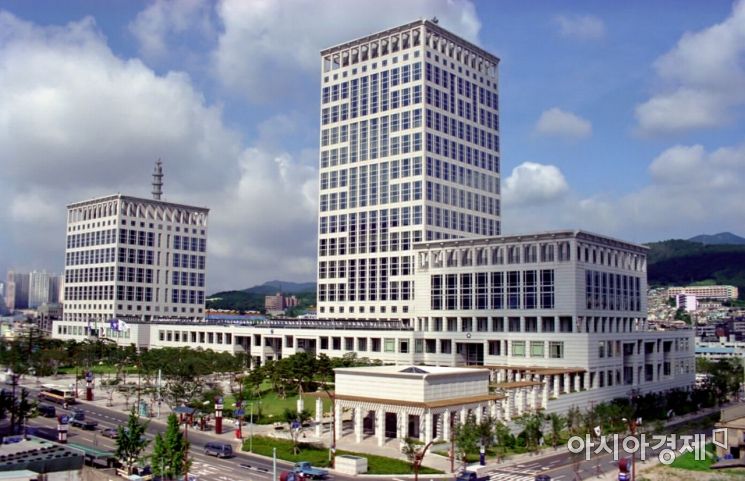
They expanded the budget for public safety projects and closely collaborated with related organizations such as Busan City, Busan Police Agency, and Busan Office of Education to create a stronger safety network. Additionally, they opened the nation’s first public relief facility for intoxicated individuals, the ‘Busan Metropolitan Intoxication Relief Center,’ and operated the ‘Mental Emergency Joint Response Center’ to enhance protection measures for intoxicated and mentally ill individuals. Furthermore, they enabled 16 districts and counties to enact the ‘Autonomous Police Affairs Support Ordinance,’ overcoming the limitations of metropolitan-level autonomous police systems and strengthening the integration between autonomous administration and public safety administration.
Building on these achievements, the committee has set the vision for this year as "Autonomous Police with Citizens, Safer and Happier Busan," prioritizing citizen participation and safety to establish a dense social safety net that protects vulnerable groups. The key goals and initiatives are as follows.
◆ First, the autonomous police system will be established based on 'citizen participation.'
Through the Public Safety Living Lab, working-level councils, expert advisory groups, and autonomous police communication teams, the committee will collaborate with citizens to develop practical public safety policies.
In particular, they will advance the concept of the ‘Public Safety Living Lab,’ a platform where diverse community members participate to identify problems and seek solutions, thereby enhancing policy completeness. Moreover, citizens’ voices will be incorporated into a virtuous cycle process that goes beyond policy formulation to jointly evaluate and improve policy outcomes.
◆ Second, citizen safety will be prioritized to ensure that people can live their daily lives with peace of mind.
The focus will be on preventive public safety activities that suppress crime occurrence.
They will promote initiatives such as improving crime prevention environments in 73 crime prevention zones and 151 women’s safe return routes, expanding the installation of security CCTV based on public safety data, continuing protective measures through the Intoxication Relief Center and Mental Emergency Joint Response Center, and strengthening joint patrols involving autonomous crime prevention teams and companion dog patrols, as well as special crime prevention activities at crowded events.
They will also support region-specific public safety activities, including urgent and rapid budget support to respond to socially significant crimes such as abnormal motivation crimes.
◆ Third, they will further protect and support vulnerable social groups from crime.
The committee will protect vulnerable individuals who need a warm helping hand throughout society and work to eliminate blind spots in public safety.
In particular, they will strictly respond to relational crimes targeting vulnerable groups, focus on protecting and supporting victims, and seek practical solutions by expanding the ‘Happy Home Hope Dream Project’ to prevent domestic violence recurrence and promoting private security support services for victims of high-risk crimes such as stalking.
They will also create a strong safety net for vulnerable groups through projects such as the Child Safety Keeper Program and programs to prevent sexual crimes and abuse.
To strengthen the field response capabilities of Abuse Prevention Officers (APO), work vehicles will be provided.
◆ Fourth, they will establish a traffic culture centered on protecting traffic-vulnerable groups.
To reduce traffic accidents and minimize casualties, they will create a traffic environment focused on pedestrians and vulnerable road users.
This includes installing highly visible traffic facilities such as pedestrian signal side lights, right-turn signals, and countdown crosswalk timers, as well as expanding unmanned enforcement equipment like rear license plate monitoring devices for two-wheelers.
They also plan to carry out comprehensive efforts to spread advanced traffic culture, including promoting the return of driver’s licenses by elderly drivers and distributing standardized beginner driver stickers.
Jeong Yong-hwan, Chairman of the Busan Metropolitan Autonomous Police Committee, stated, “This year, we will build an even denser social safety net and become the Busan autonomous police that thoroughly address citizens’ daily lives and livelihood issues.” He added, “Our committee will continue to do its best to raise awareness of the necessity and legitimacy of autonomous police by enhancing the sense of safety in daily life, protection of vulnerable groups, and traffic safety.”
© The Asia Business Daily(www.asiae.co.kr). All rights reserved.

















