Success through tough jobs: 'Baedal-ui Wang' and other consecutive reports
"Interpretation as 'downward' inducement amid employment difficulties"
Chinese media have launched extensive reports on young people who have accumulated wealth by doing tough jobs. This has led to criticism that there may be an intention to encourage 'downward mobility' among Chinese youth who are facing severe employment difficulties.
On the 17th, Yonhap News reported that China's Pengpai News on the 13th covered the story of a man in his 20s who did not even graduate from elementary school but worked as a delivery driver and earned 1.02 million yuan (about 190 million KRW) in three years.
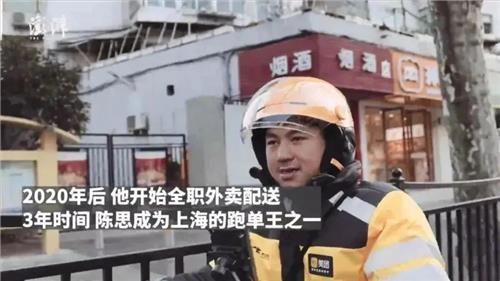 The 'King of Delivery' who earned 200 million won in 3 years as a delivery driver
 [Photo by Yonhap News, screenshot from Pengpai News]
The media introduced the story of Chen Si, who is 26 years old this year. He borrowed 800,000 yuan (about 150 million KRW) to open a restaurant in his hometown of Fuzhou, Jiangxi Province, but after suffering heavy losses and closing it within five months, he went to Shanghai to work as a delivery driver. Chen said to the media, "I thought there would definitely be more opportunities if I went to a big city, so I went to Shanghai in 2019. I worked in a restaurant kitchen earning a monthly salary of 13,000 yuan (about 2.42 million KRW), but after seeing that delivery drivers earned more, I jumped into delivery work within a year."
He said, "I only slept three hours a day and devoted the rest of the time solely to deliveries, handling 180 to 200 orders a day. Many people doubted if that was possible, but I didn't care. Anyway, I did it." The media reported that after enduring various hardships, he was called the 'King of Delivery' and earned a large sum of money to pay off all his debts. It also added that he succeeded in recovery, having repaid most of the loan he took to buy a house in his hometown, leaving only 100,000 yuan (about 18.6 million KRW) remaining.
Haibao News also introduced the story on the 15th of Xie Ansong, who worked as a laborer at construction sites and paid off his debts and even bought a house after seven years. Now in his 30s, he is from Anhui Province and learned plastering work stacking bricks in Jinan, Shandong Province, at the age of 18. After two years, he bought a car, and seven years later, he cleared all his parents' debts and bought a house. He told the media, "If the three of us work hard, we can earn around 40,000 yuan (about 7.44 million KRW) including material costs in half a month. The daily wage is about 2,000 yuan (about 370,000 KRW), which is better than most salaried workers."
Another Chinese media outlet, Gupai News, reported that Zhao Mo, 21 years old this year, inherited the family business of collecting scrap and is living a better life than an ordinary office worker. The media said he earns about 200,000 yuan (about 40 million KRW) a year and, after work, focuses on building abs at the gym. It also reported that Zhao posted a video on social media (SNS) of his girlfriend wearing a wedding dress and said, "Collecting scrap is tough work, but it doesn't interfere with dating my girlfriend."
Regarding these reports, local netizens reportedly responded with comments such as "There is no distinction between jobs, and nothing is impossible with effort," "Hard work can accumulate more wealth than a mediocre office worker," and "It serves as a role model for young people who want to make money easily."
However, there is also an interpretation that there may be other intentions behind these media reports continuing amid economic stagnation and unprecedented employment difficulties faced by Chinese youth.
The Chinese authorities, facing ongoing employment difficulties, are implementing rural job provision programs that have young people work as grassroots cadres or volunteers. This policy is similar to the "Down to the Countryside Movement" during the Cultural Revolution (1966?1976), when Mao Zedong forcibly sent intellectuals and students to rural areas to learn through labor, and is called the "New Downward Mobility (新下放, Xin Xi?f?ng)."
While this policy is criticized for not being a fundamental solution to the current employment difficulties, some interpret that by highlighting 'bottom-tier success stories' one after another, there may be an intention to induce the youth to engage in 'Linghuo Employment (靈活就業, flexible employment, i.e., non-regular freelance work).'
© The Asia Business Daily(www.asiae.co.kr). All rights reserved.

















