Need to Develop Solutions for Overheating of Private Education
Consider Effectiveness of Mandatory Selection in Social Integration Admissions
Concentration in Top Ranks Poses 'High School Hierarchy' Challenge
The revival of autonomous private high schools (Jasago), foreign language high schools, and international high schools, which were scheduled to be converted into general high schools by the end of this year, is expected to cause significant changes in the school environment. While it is anticipated to contribute to 'educational diversification' alongside the implementation of the high school credit system next year, there are also concerns about the overheating of private education.
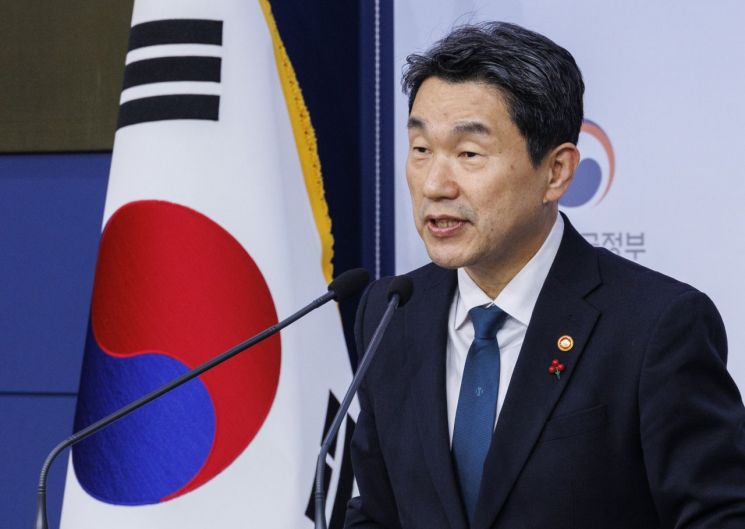
According to the education sector on the 18th, the amendment to the Enforcement Decree of the Elementary and Secondary Education Act was passed at the Cabinet meeting on the 16th, allowing autonomous private high schools, international high schools, autonomous public high schools (Jagonggo), and foreign language high schools, which were scheduled to be abolished in February next year, to be maintained as they are.
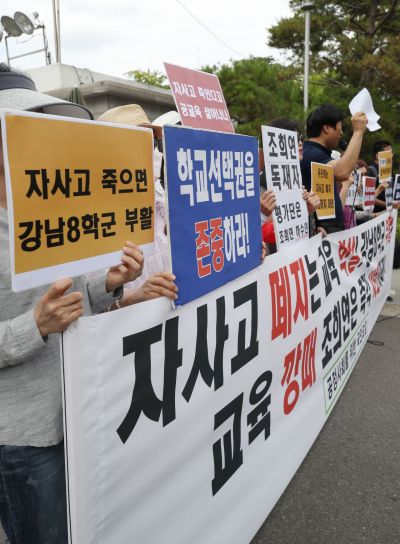
Previously, the Moon Jae-in administration revised the enforcement decree in 2020 to convert these schools into general high schools from 2025, citing that Jasago and foreign language high schools deepened the hierarchy among high schools. However, the Yoon Seok-yeol administration viewed this plan as 'uniform leveling' and discarded the previous government's policy. The Ministry of Education also presented supplementary measures to prevent previously raised issues, such as maintaining the later selection process for Jasago and foreign language high schools. Nevertheless, there are considerable challenges to ensuring a smooth transition of the system.
Can the Increase in Private Education Expenses Be Prevented?
Initially, Jasago and foreign language high schools were identified as factors increasing private education expenses by creating a 'high school entrance' process before college entrance. In fact, students hoping to enter Jasago or foreign language high schools were found to spend significantly more on private education. According to the 2022 private education expenses survey for elementary, middle, and high school students released last year by the Ministry of Education and Statistics Korea, the average monthly private education expense for middle school students hoping to enter general high schools was about 410,000 KRW, while those aiming for Jasago spent about 690,000 KRW, showing a difference of nearly 280,000 KRW.
When deciding to maintain Jasago, the Ministry of Education also proposed measures to prevent overheating of private education. The high school entrance schedule is divided into early and late rounds, and the selection of Jasago and foreign language high schools will be maintained as 'late high school' selection along with general high schools. It is expected that operating a self-directed learning screening process focusing on school life fidelity can effectively suppress private education.
However, immediately after the Ministry of Education's announcement the previous day, criticisms arose that the current measures are insufficient. Song Kyung-won, policy committee member of the Justice Party, expressed concern that "the maintenance of Jasago and foreign language high schools, combined with the new college entrance system and the medical school craze, could affect competition patterns and private education expenses."
20% Mandatory Selection for Social Integration Screening: Effectiveness?
The Ministry of Education expanded the mandatory selection of social integration screening to all 10 nationwide autonomous private high schools to ensure that Jasago, foreign language high schools, and international high schools fulfill their social responsibilities. Until now, six nationwide autonomous private high schools converted from the former 'self-reliant private high schools' were exempt from such regulations.
However, there is controversy over effectiveness, as many Jasago schools with mandatory regulations have social integration screening enrollment rates below half. According to the office of Seo Dong-yong, a member of the Democratic Party, in the 2023 academic year, 757 students were admitted through social integration screening across 22 nationwide Jasago schools, accounting for only 45.5% of the total recruitment quota of 1,664. More than half of these 22 schools, 13 in total, failed to fill even 50% of their social integration screening quotas.
Particularly, criticism has been raised regarding the Ministry of Education's amendment allowing some unfilled social integration screening slots to be transferred to general screening. The organization Private Education Concern-Free World (Sagokse) stated in a commentary, "The Ministry of Education included a loophole in the amendment allowing up to 50% of unfilled social integration screening slots to be selected through general screening," emphasizing that "it removes even the minimal safeguard against opportunity inequality."
Professor Yang Jeong-ho of the Department of Education at Sungkyunkwan University advised, "Beyond saying 'we couldn't fill the slots because no one applied for social integration screening,' Jasago schools themselves should make active efforts, such as guiding elementary-level students who are eligible for the screening towards Jasago career paths."
Concerns Over Concentration of Top Students and High School Hierarchy
The maintenance of Jasago, combined with the '5-grade system' for internal school records applied to high school entrants from next year, is expected to intensify the concentration of top students in Jasago. The current 9-grade system will change to a 5-grade system, expanding the top grade range from the top 4% to the top 10%. Consequently, while top students previously chose general high schools to avoid fierce 'internal grade competition' at Jasago, the reduced internal grade burden from next year may attract them to Jasago and foreign language high schools.
Lee Ju-ho, Deputy Prime Minister and Minister of Education, explained in a briefing the previous day in response to related questions, "Although the internal grade system has been relaxed, the 5-grade system balances absolute and relative evaluations," adding, "It is not a measure favorable to Jasago." However, the admissions industry anticipates increased competition rates for Jasago and foreign language high schools. In this year's admissions, while the number of third-year middle school students decreased by 5.4% (25,213 students) compared to the previous year, the number of applicants to Jasago, foreign language, and international high schools increased by 951, raising competition rates.
Cho Hee-yeon, Superintendent of the Seoul Metropolitan Office of Education, who has led efforts to abolish Jasago, did not hide concerns about high school hierarchy. Regarding Deputy Prime Minister Lee's remark that "the vertical hierarchy of Jasago can be reduced through diversification of general high schools," he argued, "To change the dark reality, it is impossible without horizontally reforming the hierarchical university and high school systems."
© The Asia Business Daily(www.asiae.co.kr). All rights reserved.
![Clutching a Stolen Dior Bag, Saying "I Hate Being Poor but Real"... The Grotesque Con of a "Human Knockoff" [Slate]](https://cwcontent.asiae.co.kr/asiaresize/183/2026021902243444107_1771435474.jpg)

















