High Inflation and High Interest Rates Threaten Domestic Market
Sharp Exchange Rate Rise Impacts Import Prices
Government's Price Stability Policy at Risk
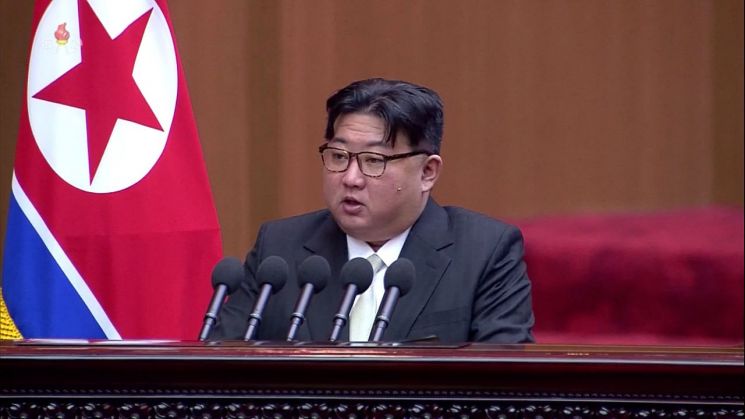
Overseas, the possibility of escalation in the Red Sea crisis is rising, and on the Korean Peninsula, geopolitical risks are increasing due to the hardline remarks of Kim Jong-un, General Secretary of the Workers' Party of North Korea, causing exchange rates to fluctuate wildly. The won-dollar exchange rate, which had settled in the 1,200 won range at the end of last year, recently surpassed the 1,300 won mark. There are concerns that if the exchange rate fluctuates amid already high inflation and high interest rates threatening domestic demand, the government's price stabilization policy could be jeopardized.
The government plans to focus all efforts on price stabilization through economic policy directions and Lunar New Year livelihood stabilization measures, but if the exchange rate rises while the existing high inflation and high interest rate trends remain, it could act as a factor driving prices up. Primarily, import prices will be affected. Exchange rates are generally considered to impact import prices with a lag of 1 to 3 months. If the exchange rate surges this month, the effect could be felt as early as February through April.
The Bank of Korea cited exchange rates along with oil prices as the main reasons for the decline in import prices from November to December last year in its 'Export and Import Price Index Statistics' released on the 16th. The import price index rose for four consecutive months from July to October last year but turned downward in November (-4.4%), coinciding with the period when the exchange rate began to decline.
An increase in the exchange rate positively affects export companies through increased foreign exchange gains, while also leading to higher prices for imported raw materials and expanded foreign exchange risk. Rising raw material prices are also the most threatening risk factor identified by companies. According to the '2024 Export Small and Medium-sized Enterprises Outlook Survey' conducted by the Korea Federation of SMEs on 300 small and medium-sized enterprises, the most frequently cited export risk (multiple responses allowed) was rising raw material prices (53.7%), with a significant number of companies (29.3%) also citing exchange rate fluctuations.
Professor Choi Cheol of the Department of Consumer Economics at Sookmyung Women's University pointed out, "If the pressure of exchange rate increases prolongs, it can raise import prices and raw material costs. While a rise in the won-dollar exchange rate could positively impact South Korea's international balance of payments, it is not necessarily all bad, but the exchange rate increase may not immediately affect the improvement of the international balance of payments."
© The Asia Business Daily(www.asiae.co.kr). All rights reserved.

















