Rising as a Compromise Negotiation Card Amid Disagreements
People Power Party Still Strongly Advocates Parallel Model
Ruling and Opposition Parties Likely to Strive for Agreement by Late January
With 85 days remaining until the general election, the method for electing proportional representation members has yet to be decided. In the 21st National Assembly, out of 47 proportional representation seats, 30 were elected through a mixed-member proportional system, and 17 through a parallel system. According to the current election law, starting from this year's election, all 47 seats must be elected using a system that links the number of constituency seats to the party vote share.
Amid this, a compromise plan reflecting half mixed-member proportional and half parallel systems (24 seats parallel, 23 seats mixed-member proportional) is emerging. The Democratic Party of Korea, which holds the majority in the National Assembly and holds the key to revising the election law, is actively considering the compromise plan. The People Power Party has expressed opposition to the compromise plan, stating that there is no option other than a 100% parallel proportional representation election method.
Kim Young-bae, the Democratic Party's secretary of the National Assembly's Special Committee on Political Reform, said in a phone interview with Asia Economy on the 16th, "We are discussing a method that compromises between mixed-member proportional and parallel systems," adding, "The Democratic Party is willing to make an effort (negotiation) with the compromise plan. It is possible that it will be reviewed as a bipartisan negotiation proposal." Hong Ik-pyo, the Democratic Party floor leader, also said on BBS Radio the previous day, "If the ruling party wants to negotiate with this plan, we are willing to discuss it."
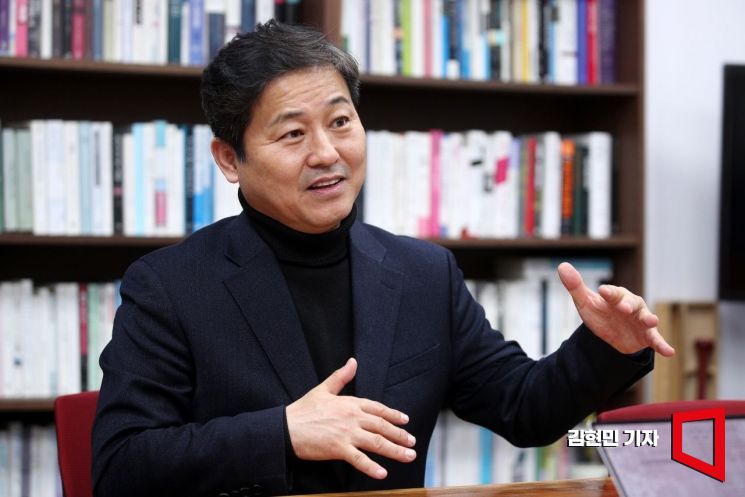
Currently, within the Democratic Party, opinions are sharply divided between those who believe the parallel system is necessary to win the general election and those who argue that the mixed-member proportional system must be adopted to keep the promise of political reform, resulting in no conclusion. A Democratic Party official said, "The compromise plan is meaningful as a settlement reflecting both sides' positions." However, Kim said, "If we go with the compromise model, it will be difficult to introduce regional proportional representation."
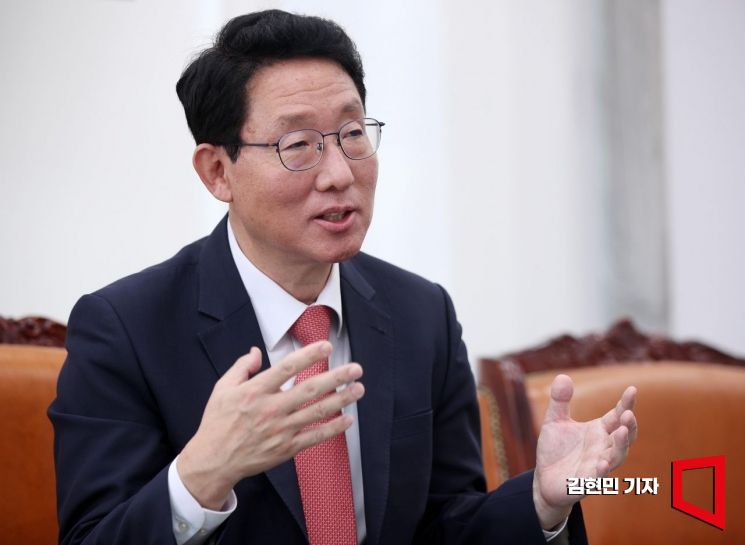
The People Power Party has expressed opposition to the Democratic Party's compromise plan. Yoon Jae-ok, the People Power Party floor leader, stated at the party's floor meeting held that day, "Our party insists on restoring the parallel proportional representation system." Kim Sang-hoon, the People Power Party secretary of the Special Committee on Political Reform, also said in a phone interview with Asia Economy, "(The compromise plan) is difficult to accept," adding, "What is the meaning of changing 30 (mixed-member proportional) - 17 (parallel) to 24 - 23? Since there is no internal consensus within the Democratic Party, they are advocating a half-and-half approach, but this is not an issue to be handled that way."
Both ruling and opposition parties are expected to strive to reach a conclusion by the end of January, but political circles predict that negotiations on the election law may extend into February.
© The Asia Business Daily(www.asiae.co.kr). All rights reserved.


















