Vehicles heading outward are exempt
Toll effect on the outer line is minimal
From the 15th, the congestion toll in the Namsan Tunnel in Jung-gu, Seoul will be charged only in the direction toward the city center.
Earlier, on the 8th, the Seoul Metropolitan Government announced that the 2,000 KRW congestion toll for Namsan Tunnel No. 1 and No. 3 and the connecting roads would be charged only in the direction toward the city center starting from that day. In other words, the outbound direction toward Gangnam is free to use.
The congestion toll system has been in place since 1996. It is charged between 7 a.m. and 9 p.m. on weekdays during peak commuting hours to reduce the use of private passenger cars and promote public transportation. The toll applies to passenger cars or vans with 10 seats or fewer carrying two or fewer occupants including the driver, and the toll fee is 2,000 KRW.
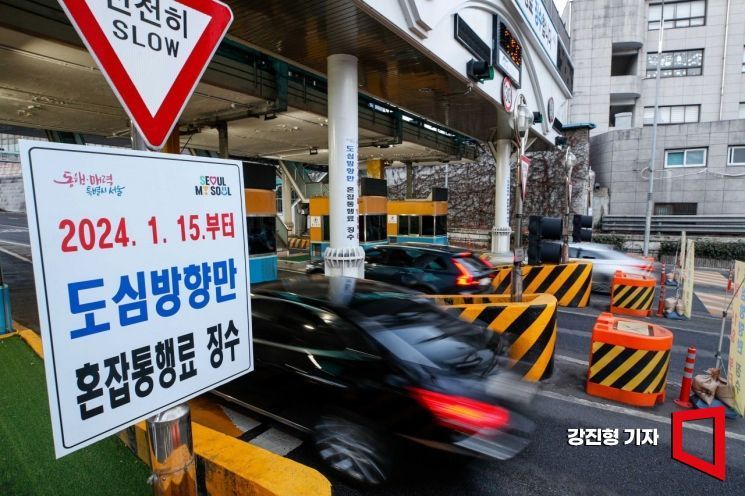 On the 15th, a notice about congestion toll collection was posted at the Namsan 3-ho Tunnel tollgate in Jung-gu, Seoul, for the city center direction. From today, congestion tolls will no longer be collected for the outer (Gangnam) direction of Seoul Namsan 1-ho and 3-ho Tunnels. The city center direction will continue to charge the existing congestion toll of 2,000 won.
However, controversies surrounding the congestion toll have never ceased. There have been criticisms that the policy's effectiveness is limited, as well as ongoing debates that it is unreasonable to charge the toll equally for vehicles exiting in the outbound direction.
From March last year, Seoul conducted a two-month experiment exempting tolls. During the first month, when tolls were waived for vehicles heading outbound, traffic volume increased by only about 5.2%, which was minimal.
However, in the second month, when tolls were waived for both inbound and outbound directions, traffic volume reportedly increased by approximately 12.9%. Consequently, traffic speeds in the city center areas such as Sogong-ro and Eulji-ro decreased by up to 13%.
Ultimately, Seoul decided to collect tolls only in the inbound direction where the system's effect is clear, and exempt the outbound direction.
© The Asia Business Daily(www.asiae.co.kr). All rights reserved.

















