tvN Drama 'Jeongnyeon-i' Still Cut Controversy
Checkered Fabric Imported as Relief Supplies
Postwar Korea Sustained by Foreign Aid
The tvN drama 'Jeongnyeon-i,' scheduled to air in the second half of this year, has recently been embroiled in a 'historical accuracy controversy.' The setting of the drama is Korea right after the Korean War, but there is criticism that a character appears wearing a 'checkered hanbok.' Considering the era when the production base was devastated by the war and food was scarce, does it make sense for someone to wear a jeogori made from Western-imported fabric?
Did checkered clothes exist in 1950s Korea?
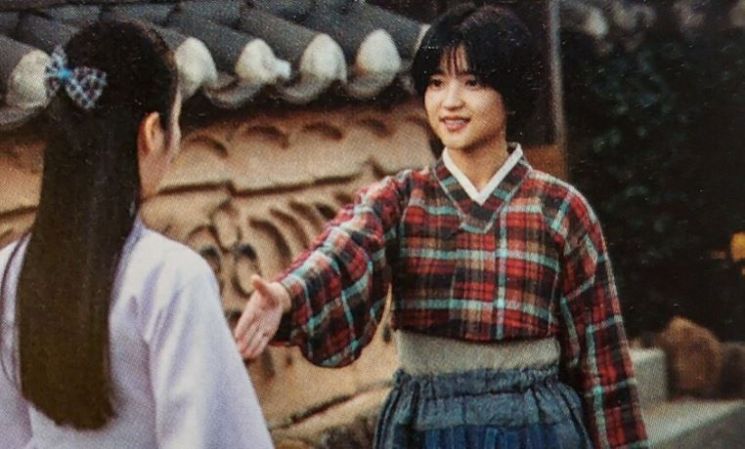 Still cuts from the tvN drama "Jeongnyeon-i," which sparked a controversy over historical accuracy [Image source=tvN]
The drama still that sparked the controversy shows actress Kim Tae-ri wearing a 'checkered' jeogori. At first glance, it looks more like modern clothing than 1950s attire. Some have criticized the drama for taking excessive creative liberties. However, there has been a rebuttal that the costume actually reflects the period's historical accuracy quite well. In reality, Koreans in the 1950s made clothes from fabrics imported from overseas or repaired worn-out parts with checkered fabric.
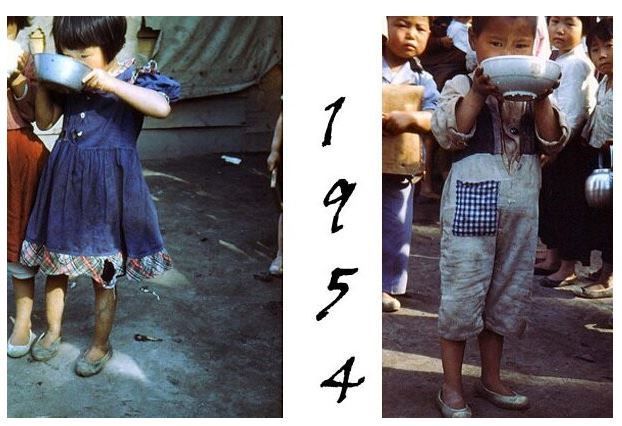
A netizen who is a fan of Kim Tae-ri's X (X) account drew attention by explaining, "It seems that checkered fabric was imported as relief supplies from aid organizations in the 1950s," adding, "(In the 1950s) synthetic fibers like acrylic had already been developed, and if you search online, there are photos of hanbok modified to look like Western-style suits."
Post-Korean War Korea barely sustained by 'donations' from UN member states
Is this claim true? According to 'K-Developedia,' an English-language domestic aid history archive operated by the Korea Development Institute (KDI), there is detailed information on how the Korean economy functioned in the 1950s. At that time, Korea had lost almost all its production base due to the war and had no capacity to produce consumer goods for the private economy. As a result, Korea's consumer economy was practically dependent on foreign aid.
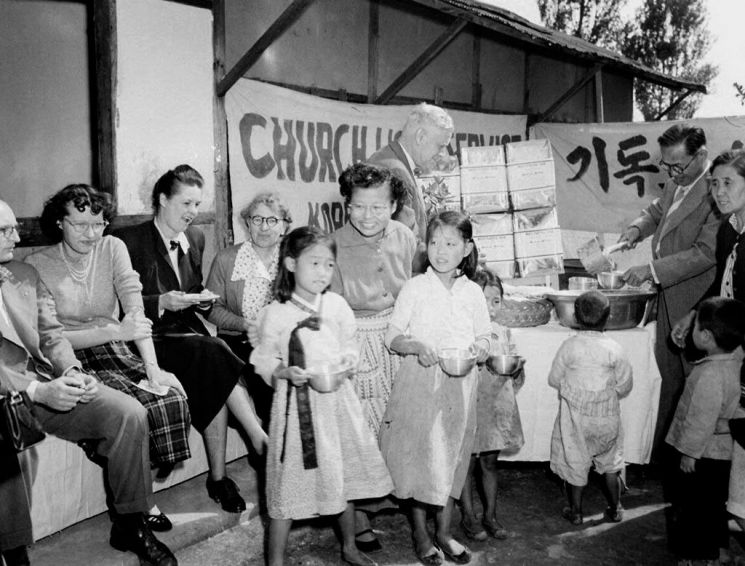 Members of the Christian World Relief Society conducting relief activities in Korea [Image source=Ministry of the Interior and Safety]
From 1953 to 1961, the amount of aid was about 2.3 billion dollars (3 trillion 297 billion won). While this amount might not seem large enough to sustain a country's economy, it accounted for 53%?more than half?of the Korean government's total revenue at the time.
More importantly, this amount did not come into Korea as 'money.' It was provided in the form of consumer goods urgently needed for daily life, such as food, textiles, and fuel. These goods were voluntarily donated by citizens of United Nations (UN) member countries.
The Korean government imported these consumer goods from abroad and supplied them directly to the private economy. Traces of this remain today. For example, corn bread occasionally seen in traditional markets originally started from mixing inexpensive corn flour imported as American aid supplies. Behind the story of wearing a jeogori made from colorful checkered fabric lies this background.
In other words, the 'stylish checkered jeogori' appearing in the drama Jeongnyeon-i is an excellent example of reflecting the historical lifestyle of past Korea and represents another facet of the impoverished era when the real economy had practically collapsed and daily life could only be sustained through foreign aid.
© The Asia Business Daily(www.asiae.co.kr). All rights reserved.
![Clutching a Stolen Dior Bag, Saying "I Hate Being Poor but Real"... The Grotesque Con of a "Human Knockoff" [Slate]](https://cwcontent.asiae.co.kr/asiaresize/183/2026021902243444107_1771435474.jpg)













