Gwangju Metropolitan City is accelerating the establishment of an energy transition foundation by expanding the distribution of renewable energy, including the installation of medium to large-scale solar power generation facilities this year.
Gwangju City (Mayor Kang Gi-jung) announced on the 14th that medium to large-scale solar power generation facilities will be installed at the Seo-gu World Cup Stadium parking lot (2.3 MW) and the Cheomdan 1 and 2 Industrial Complexes (8 MW) this year.
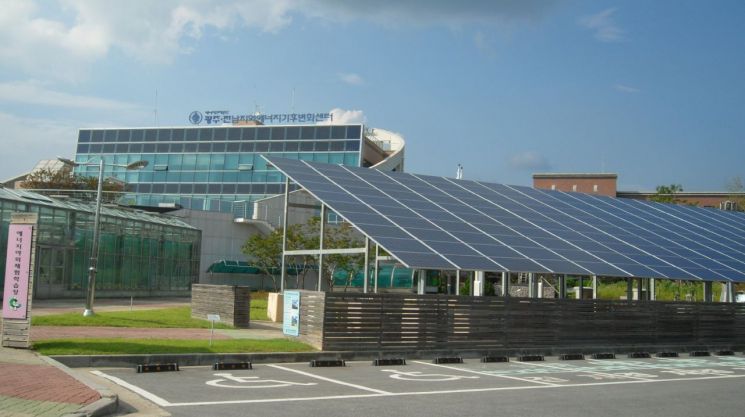
In addition, a citizen solar power plant project involving 33 local energy cooperatives in Gwangju is being promoted.
In collaboration with Gwangju Urban Corporation, a total of 4.6 billion KRW will be invested to install solar power facilities at the World Cup Stadium parking lot. The first phase, with a capacity of 0.5 MW, will be installed in February, and the second phase, with a capacity of 1.8 MW, is planned to be completed by December.
Once the solar power facilities at the World Cup Stadium parking lot are completed, it is expected to produce 3,022 MWh (megawatt-hours) of electricity annually. This amount of electricity can supply approximately 830 households and will reduce about 1,426 tons of greenhouse gases annually.
Furthermore, a total project cost of 32 billion KRW will be invested in the Cheomdan National 1 and 2 Industrial Complexes by December 2025 to establish energy self-sufficiency infrastructure.
Along with solar power installation, support will be provided to companies in the industrial complex by replacing high-efficiency, low-consumption energy equipment, establishing electric vehicle charging systems, and building an integrated energy management platform.
Upon completion of the energy self-sufficiency infrastructure, the renewable energy production in the Cheomdan Industrial Complex is expected to increase from 39 GWh to 47 GWh annually compared to the annual electricity consumption, raising the power self-sufficiency rate within the complex from 9.23% to 11%.
Gwangju City is also promoting a citizen solar power plant project involving 33 local energy cooperatives. If the project proposal plan passes the evaluation and is deemed suitable, up to 200 million KRW per cooperative will be supported.
The citizen solar power plants have contributed to carbon neutrality and the realization of an energy self-sufficient city by installing a total of 3.7 MW of solar power at 11 sites, including Yongyeon Water Purification Plant and Jeonja Technical High School, since 2021, and are recognized as a successful case by other cities and provinces.
Additionally, to accelerate the energy transition, Gwangju City will invest a total of 8.7 billion KRW in 1,078 sites selected through the 'Renewable Energy Convergence Support Government Contest Project' to install 3.7 MW of solar power and 293㎡ of solar thermal systems.
This project installs two or more types of renewable energy sources such as solar power, solar thermal, and geothermal energy in houses and buildings to supply electricity and heat.
Gwangju City will continue to promote the renewable energy housing support project, which provides subsidies (up to 1 million KRW), to support carbon neutrality and the realization of an energy self-sufficient city.
Son In-gyu, Director of the Climate and Air Policy Division, said, “Gwangju, ranked first among metropolitan cities in solar power facility distribution, will do its best this year to accelerate the energy transition centered on renewable energy.”
Meanwhile, Gwangju City proactively established the 2045 Carbon Neutrality and Energy Self-Sufficient City plan in 2020, five years ahead of the national government's climate crisis response, and is laying the foundation for the expansion of renewable energy such as solar power across all sectors including households, industry, transportation, and public sectors.
© The Asia Business Daily(www.asiae.co.kr). All rights reserved.

















