US, Japan, EU "Congratulations... Expansion of Exchanges"
China, Russia Uphold "One China" Policy
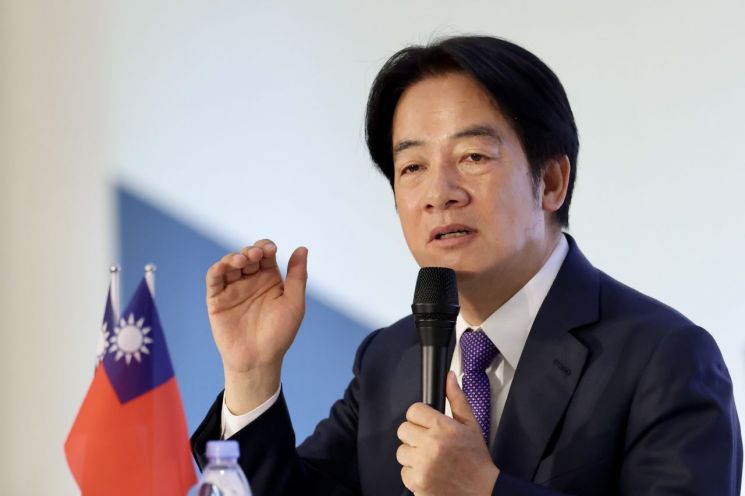
On the 13th (local time), in the 16th presidential election of Taiwan, the ruling Democratic Progressive Party (DPP) candidate Lai Ching-te, who is pro-independence and pro-American, won. The election results have elicited mixed reactions from countries around the world.
U.S. Secretary of State Antony Blinken issued a statement congratulating the victory. He said, "The U.S. government congratulates President-elect Lai. We also congratulate the people of Taiwan for once again affirming the strength of democracy and the electoral system," adding, "The relationship between the U.S. and Taiwan, based on democratic values, will expand and deepen across various fields including the economy, culture, and interpersonal exchanges."
Earlier, President Joe Biden stated regarding the Taiwan election results, "We do not support Taiwan independence." The U.S. government has expressed concerns about China's intention to unify Taiwan and has maintained a stance of pursuing peace in Taiwan.
After Lai's victory was confirmed, Chen Binhua, spokesperson for the Taiwan Affairs Office of the State Council of China, stated the position that "Taiwan is 'China's Taiwan'." He said, "The results of these two elections (presidential and legislative) show that the DPP does not represent the mainstream public opinion on the island (Taiwan)." This is interpreted as a reference to the DPP's vote share dropping from 57.13% in the 2020 election against the Kuomintang in a two-way race to 40.05% in this three-way race. He added, "This election cannot change the fundamental pattern and development direction of cross-strait (China and Taiwan) relations, nor can it change the common wish of compatriots on both sides to become closer and more intimate," and further stated, "The motherland will inevitably be reunified, and this cannot be stopped."
A spokesperson for the Chinese Ministry of Foreign Affairs posted a statement on its website, saying, "The Chinese government’s position of upholding the One-China principle, opposing Taiwan independence and separatism, and opposing 'two Chinas' and 'one China, one Taiwan' will not change."
Japanese Foreign Minister Kamikawa Yoko issued a congratulatory statement to President-elect Lai, saying, "Based on the Japanese government's position of maintaining non-governmental practical relations with Taiwan, we intend to further deepen cooperation and exchanges," and added, "We hope that issues surrounding Taiwan will be resolved peacefully through dialogue, contributing to regional peace and stability." Meanwhile, the Chinese Embassy in Japan protested against Foreign Minister Kamikawa’s congratulatory statement, claiming it violated the One-China principle.
The European Union (EU) extended congratulations to President-elect Lai. A spokesperson for the EU External Action Service (EEAS) said in a statement, "The EU emphasizes that peace and stability in the Taiwan Strait are key to regional and global security and prosperity," and added, "We are concerned about rising tensions in the Taiwan Strait and oppose any unilateral attempts to change the status quo."
Russia, an ally of China, showed a stance to check the DPP and the West. According to TASS news agency, Maria Zakharova, spokesperson for the Russian Ministry of Foreign Affairs, said in a commentary, "Taiwan is an inseparable part of China," maintaining Russia’s existing position on Taiwan. She also urged external forces to refrain from any provocative acts that undermine regional stability and global security. This is interpreted as a statement aimed at the United States and others.
© The Asia Business Daily(www.asiae.co.kr). All rights reserved.

















