Raichinger Elected President
Minjindang Governs for 3 Consecutive Years
US-China Conflict Intensifies
Possible Partial Impact on Korea
In the 16th presidential election of Taiwan, which is regarded as a proxy war in the US-China hegemonic rivalry, Lai Ching-te, the Democratic Progressive Party (DPP) candidate, was elected. Hou Yu-ih, the Kuomintang (KMT) candidate from the pro-China main opposition party, conceded defeat as Lai Ching-te’s victory became almost certain with over 90% of the votes counted.
With the DPP securing another term, Taiwan is expected to continue its pro-US and anti-China stance. However, there are also forecasts that China will intensify pressure on Taiwan, further escalating the Taiwan Strait crisis.
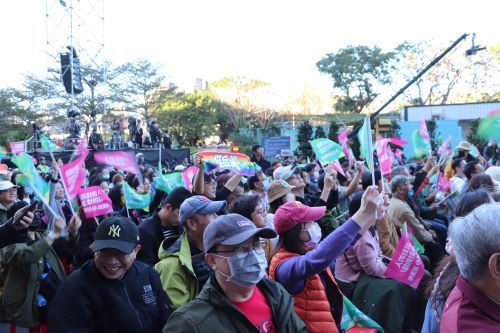
According to Taiwan’s Central Election Commission on the 13th, with 94% of the votes counted by 8 p.m. local time (9 p.m. Korean time), the presidential ticket of Lai Ching-te and Vice President candidate Xiao Meiqin received 5.23 million votes, accounting for 40.34% of the total. The Kuomintang ticket of Hou Yu-ih and Vice President candidate Chao Shao-kang received 4.34 million votes, or 33.35%. Following these results, Hou Yu-ih conceded defeat.
On the same day, from 8 a.m. to 4 p.m., elections were held nationwide at 17,794 polling stations to elect the president and vice president as well as 113 legislators (members of parliament). Among Taiwan’s total population of approximately 24 million, 19.55 million were eligible voters aged 20 and above. The voter turnout was around 75%, similar to the 74.9% turnout in the previous 2020 presidential election.
With Lai Ching-te of the DPP defeating Hou Yu-ih of the KMT, the DPP will govern Taiwan for a total of 12 consecutive years, following the eight years under the Tsai Ing-wen administration. This marks the first time in the DPP’s 38-year history that it has maintained power for such a long period. The presidential term is four years, with the possibility of re-election. The inauguration ceremony will be held by May 20.
The DPP is regarded as a party with an anti-China stance, advocating that Taiwan is a sovereign state and must strengthen its defense capabilities to protect itself. Analysts suggest that Taiwanese voters chose the DPP again after witnessing China’s harsh crackdown on the massive pro-democracy protests in Hong Kong in 2019. Ahead of the election, China openly supported the KMT and threatened that a DPP victory could lead to war in the Taiwan Strait, but this did not result in a change of government.
US Gains Strength in US-China Hegemonic Rivalry... But
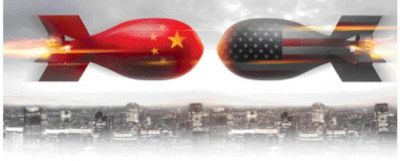
With the election of the pro-US DPP candidate Lai Ching-te, the US side gains strength in the ongoing US-China hegemonic rivalry. Taiwan is home to TSMC, the world’s largest semiconductor foundry. For the US, which aims to block China’s access to advanced technologies such as semiconductors, Taiwan holds a crucial geopolitical position. Additionally, the US can signal its continued dominance over the strategically important Taiwan Strait and the Western Pacific.
However, since Chinese authorities have threatened that tensions across the Taiwan Strait will escalate if Lai Ching-te is elected, tensions between Taiwan and China are expected to rise further. There is even a possibility of China’s extreme scenario of invading Taiwan resurfacing. China may conduct large-scale military demonstrations under the pretext of military exercises. Economic sanctions such as suspending tax reductions or halting imports of certain products could also be imposed to inflict economic damage.
Direct and Indirect Impact on South Korea
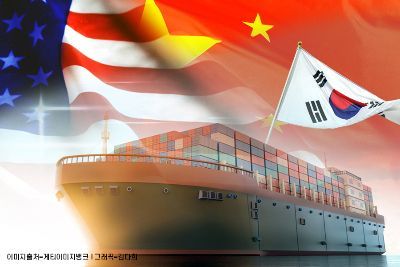
The outcome of Taiwan’s presidential election is also expected to have direct and indirect effects on South Korea. With reduced interference from China, which might impose semiconductor export restrictions, competition among South Korean semiconductor companies like Samsung Electronics could intensify. Furthermore, if China invades Taiwan, South Korea is also expected to suffer economic losses. Bloomberg reported, “In the event of a Chinese invasion of Taiwan, regardless of South Korea’s stance, the US Forces Korea may participate in the conflict,” and predicted that “South Korea’s gross domestic product (GDP) could decrease by 23.3%.”
© The Asia Business Daily(www.asiae.co.kr). All rights reserved.
![Clutching a Stolen Dior Bag, Saying "I Hate Being Poor but Real"... The Grotesque Con of a "Human Knockoff" [Slate]](https://cwcontent.asiae.co.kr/asiaresize/183/2026021902243444107_1771435474.jpg)


















