Three Major Carriers Also Return 28GHz Band... Cost-Effectiveness↓ Concerns
Initial Costs↑, Differentiation from Budget Phone Businesses Key
"Can the Government Achieve the Desired Competition Diversification?"
All three candidate companies vying to become the fourth mobile carrier have passed the first hurdle of eligibility screening for the 5G 28 GHz frequency allocation application. However, considering the frequency characteristics that require more base stations, the initial costs are enormous. The government has allowed these corporations to build networks only in certain areas due to the high cost burden, raising concerns that they could end up as a second-tier MVNO model.
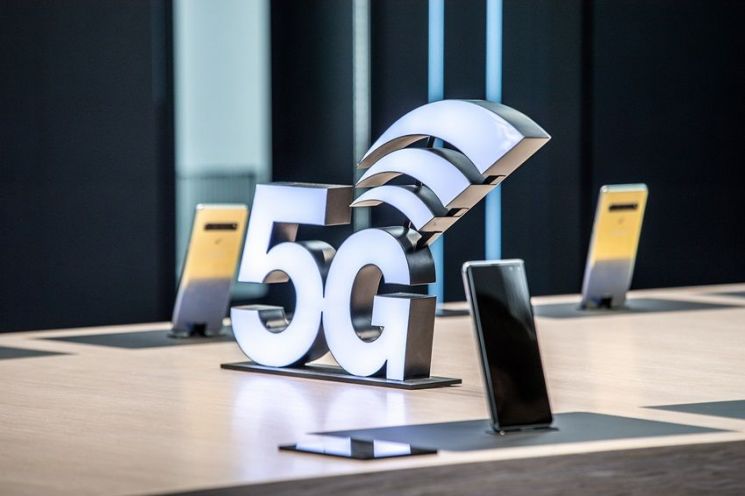
According to the Ministry of Science and ICT on the 13th, the three corporations that applied for the 28 GHz band frequency allocation?Sejong Telecom, StageX (StageFive Consortium), and MyMobile (Future Mobile Consortium)?all passed the eligibility screening for frequency allocation applications. On the 25th, one of the three will be selected as the fourth mobile carrier through a frequency allocation auction, meaning all candidates have been recognized at this first stage.
However, the industry is raising doubts about the sustainability of the business models of the companies receiving frequency allocations, as they have not yet been verified. This is also related to the frequency characteristics. The 28 GHz frequency is known to be difficult to secure profits relative to costs. Although 28 GHz is faster than the commonly used 5G frequency of 3.5 GHz, it has low diffraction, meaning it cannot reach far by avoiding obstacles. This implies that terrestrial base stations need to be installed more densely.
Therefore, the prevailing view is that the initial costs will be substantial. First, the minimum nationwide competitive price for the frequency starts at 74.2 billion KRW. If all three companies participate in the auction, competition is expected to drive the price higher. Additionally, there is a network construction obligation: for nationwide coverage, a total of 6,000 units of 28 GHz base station equipment must be installed by the third year from the allocation date. Adding extra costs, the total is estimated to be around 300 billion KRW. In 2018, the three major U.S. mobile carriers (SKT, KT, LG U+) were allocated 28 GHz frequencies but all returned them because they failed to meet network construction obligations, ultimately due to cost burdens.
Professor Shin Min-su of Hanyang University’s Business School said, "Since this frequency was returned after a failure by the three major carriers, if policy funds were allocated to places where a profitability model has not been established, it would be a waste."
The companies that passed the first screening have not clearly stated their business models. Only StageX has revealed a business model that considers the frequency characteristics by building communication networks with leading companies and organizations in specific sectors such as universities, hospitals, stadiums, and airports, conducting trials before expanding. Future Mobile plans to provide both B2B and B2C services, while Sejong Telecom has not disclosed a specific business model.
Professor Moon Hyung-nam of Sookmyung Women's University Graduate School of Business said, "Companies probably applied thinking they could make a profit, but they need to present a new business model for 28 GHz."
There are also concerns that the fourth mobile carrier could fall into becoming a second MVNO. The Ministry of Science and ICT has lowered the market entry barrier by allowing applications not only for nationwide but also for regional frequency allocations. However, if the fourth carrier only builds a regional network, users leaving that region would have to borrow networks built by the three major carriers, which could ultimately resemble an MVNO model.
Professor Choi Kyung-jin of Gachon University Law School said, "If they borrow networks, it becomes similar to an MVNO, which raises issues about wholesale fees (network usage fees). The cheaper the wholesale fees, the more competitive the fourth carrier becomes, but if not, some might argue that creating another MVNO would be better." He added, "From the government's perspective, which has promoted MVNO growth policies, the fourth carrier should target mid-tier and high-end consumers rather than competing in a low-price market, but it is questionable whether they can provide a substantial level of service while competing on price."
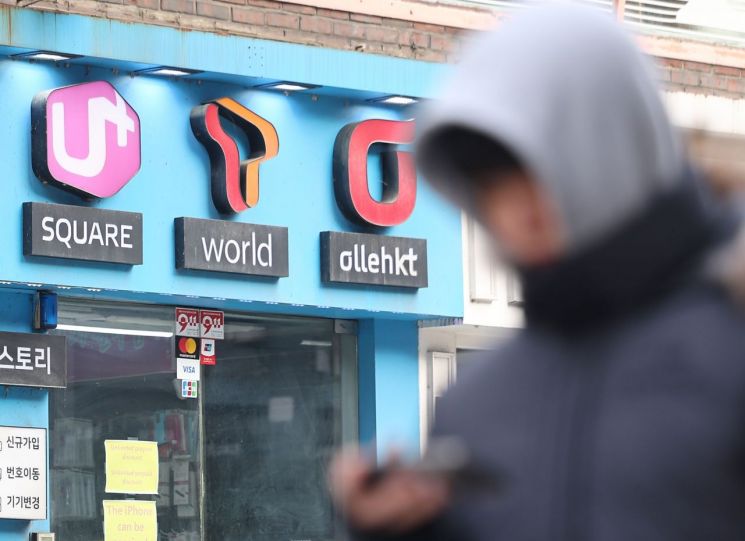
Professor Shin also said, "If they build localized networks and use domestic roaming (allowing service use between different carriers), they become like an MVNO, raising questions about whether competition diversification will be possible."
The Ministry of Science and ICT is remaining tight-lipped ahead of the auction. A ministry official said, "Since the auction is imminent, it is inevitably sensitive to comment on this matter."
© The Asia Business Daily(www.asiae.co.kr). All rights reserved.


















