US Achieves Record High Barrel Production Last Year
International Oil Prices Plummet Sharply
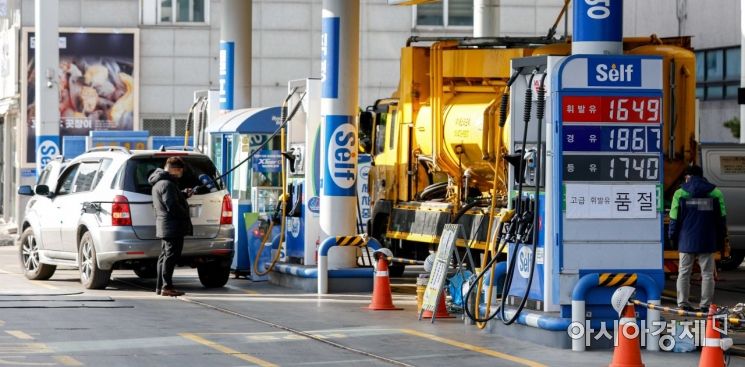
Due to the decline in oil prices caused by increased crude oil production in the United States, Saudi Arabia, the world's largest exporter, has decided to lower the price of oil exported to Asia by $2 per barrel. This is the lowest oil price since November 2021.
Following the Ukraine crisis, the United States has been increasing energy production, and last year it produced a record number of barrels of crude oil, triggering a chain reaction of price reductions. The Organization of the Petroleum Exporting Countries (OPEC) and OPEC+ (a coalition of OPEC members and non-OPEC countries) attempted to defend prices through production cuts in November last year but failed to stop the downward trend. Ultimately, Saudi Arabia, aiming to maintain its market share, significantly cut its crude oil export prices on the 8th (local time), causing international oil prices to plunge once again.
The Wall Street Journal (WSJ) reported that "Saudi Arabia's decision to reduce the price of oil exported to Asia may indicate that the world's largest exporter is struggling to sell all of its production."
On the same day, West Texas Intermediate (WTI) crude oil for February delivery closed at $70.77 per barrel, down 4.1% from the previous trading day's closing price. This was the largest drop since November 16 last year (4.9%). On the same day, Brent crude oil for February delivery, the international oil price benchmark, fell 3.3% to $76.12 per barrel. The sharp decline in oil prices was caused by Saudi Arabia's state-owned energy company Aramco lowering the official price of crude oil for Asian exports by $2 per barrel.
Oil prices have been declining since the end of September last year. Brent crude peaked at $94.43 per barrel on September 18 last year and fell despite the war between Israel and the Palestinian militant group Hamas, ending the year at $77.04 per barrel. On the 3rd, the Houthi rebels attacked vessels in the Red Sea, raising concerns about supply disruptions, which caused a slight rebound, but the upward trend in oil prices did not continue. Bjorn Sildrop, a commodities analyst at SEB Group, explained, "Saudi Arabia aims to maintain competitiveness in the market," adding, "It appears to have temporarily prioritized maintaining market share."
The decline in oil prices is also due to the United States, a non-OPEC+ member, producing record amounts of crude oil daily. According to the U.S. Energy Information Administration (EIA), the average daily crude oil production in the U.S. last year is expected to reach a record 12.9 million barrels. In October last year, production even exceeded 13 million barrels per day. In response to the sharp drop in oil prices, OPEC+ attempted to defend prices by cutting production by 2.2 million barrels per day in November last year but failed to stop the downward trend.
However, the possibility of a slowdown in U.S. crude oil production in the future is a factor that could drive oil prices up. According to consulting firm Rapidan Energy Group, U.S. crude oil production is expected to increase by about 300,000 barrels this year compared to last year. This is a slower pace compared to last year's production increase of 1 million barrels.
Additionally, the acquisition of smaller competitors by major oil companies is also cited as a factor contributing to the slowdown in crude oil production. In October last year, ExxonMobil agreed to acquire shale company Pioneer for about $60 billion, and Chevron agreed to acquire oil exploration company Hess for $53 billion.
Furthermore, this year presents many geopolitical variables, including the U.S. and other countries' presidential elections and the potential escalation of the Israel-Hamas war. Paul Jackson, head of global asset allocation research at Invesco, said, "These variables can change everything," and predicted, "In such a case, Brent crude oil prices could exceed $100 in 2024."
© The Asia Business Daily(www.asiae.co.kr). All rights reserved.
![User Who Sold Erroneously Deposited Bitcoins to Repay Debt and Fund Entertainment... What Did the Supreme Court Decide in 2021? [Legal Issue Check]](https://cwcontent.asiae.co.kr/asiaresize/183/2026020910431234020_1770601391.png)















