Driving Technological Innovation and Cost Reduction Through Private Companies
Global Moon Exploration Competition Heats Up
American space company Astrobotic successfully launched an unmanned lander on the 8th (local time). If this probe lands on the lunar surface, it will mark a milestone as the world's first private lunar lander. With U.S. space companies attempting lunar landings five times this year alone, the United States is making a full-scale move in the increasingly heated lunar exploration competition by leading private companies. China is also sending research equipment to the lunar surface, indicating a heated competition among countries vying for leadership in lunar exploration.
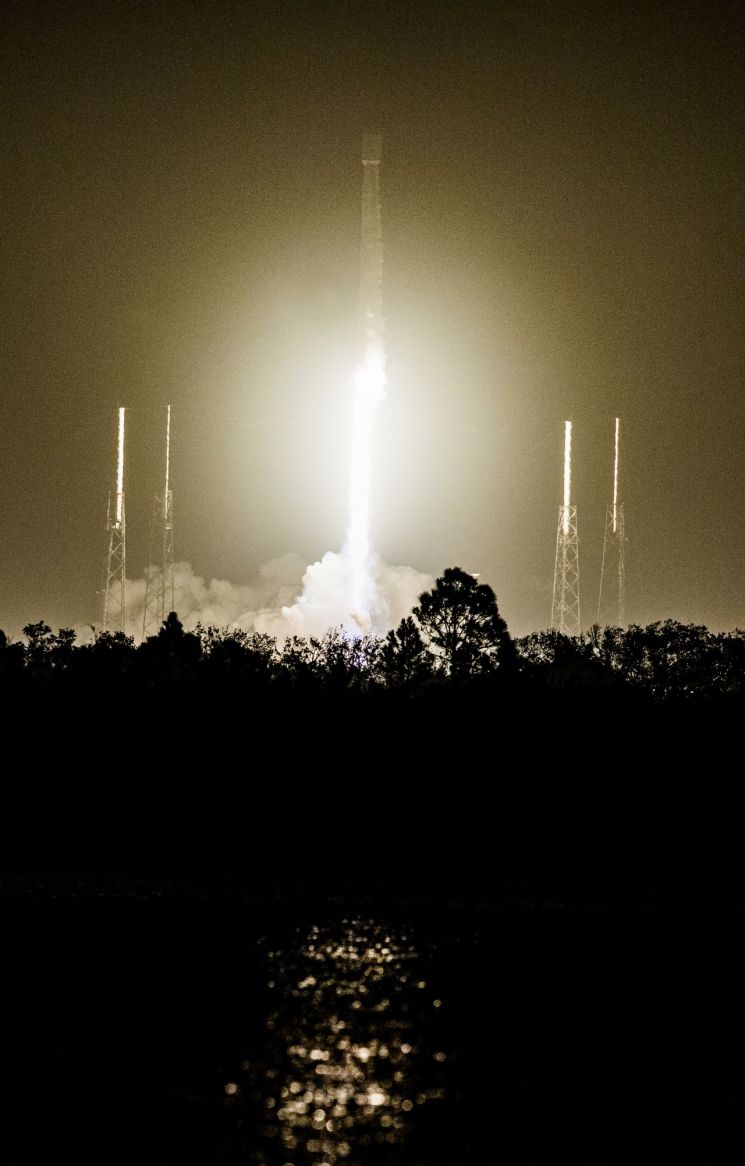
On the morning of the same day, Astrobotic launched the unmanned lander Peregrine, developed by United Launch Alliance (ULA), aboard the next-generation rocket 'Vulcan.' ULA is a joint venture between Lockheed Martin and Boeing. This lander carries several NASA instruments, including a radiation hazard measurement device for future astronauts. It will attempt to land on the moon on the 23rd of next month. If Peregrine succeeds in landing on the moon, it will be recorded as the world's first private lunar lander.
Astrobotic plans to launch an additional lander, Griffin, later this year. Griffin will carry a NASA rover that studies lunar ice deposits.
Next month, another American company, Intuitive Machines, will launch an additional lander. Intuitive Machines' Nova-C spacecraft will be launched aboard the private company SpaceX's Falcon 9 rocket. This spacecraft carries NASA equipment such as devices that study debris plumes rising during lunar landing. Intuitive Machines plans to send a second Nova-C spacecraft by the end of the year.
Firefly Aerospace will also launch its Blue Ghost spacecraft and land it on the moon within this year, using a SpaceX rocket.
Even if only one of these companies' projects succeeds, the United States will return to the lunar surface for the first time since 1972.
Countries around the world, including the United States, are increasingly entering the lunar landing competition. India succeeded in landing on the moon last year, and Japan plans to land its first domestic lunar probe, 'SLIM,' launched into space last September, in late this month.
The United States and China are striving to send astronauts to the lunar surface and ultimately develop permanent settlements.
China has been sending research equipment to the lunar surface in recent years, stating that space exploration should benefit all countries and humanity. NASA, however, is concerned that China could secure water resources near the lunar south pole and maintain a continuous presence there.
NASA is moving away from its traditional lunar exploration management approach and allowing the private sector to lead the design and operation of American landers. In fact, NASA uses SpaceX, led by Tesla CEO Elon Musk, to transport astronauts to and from the International Space Station (ISS). NASA aims to position itself as a customer rather than a supplier and encourages private-sector-led investment over government-led investment. This strategy is intended to promote competition among private companies, achieve economies of scale in the mid to long term, and reduce space exploration costs.
However, there are concerns that NASA's reliance on external parties may carry greater risks. Lunar exploration operations may face many difficulties, including distance and lunar terrain challenges.
Sandeep Singh, an assistant professor at Rensselaer Polytechnic Institute (RPI), said, "Allowing the private sector to handle lunar landing missions will accelerate technological development," adding, "If this had been done earlier, we could have returned to the moon sooner."
© The Asia Business Daily(www.asiae.co.kr). All rights reserved.
![User Who Sold Erroneously Deposited Bitcoins to Repay Debt and Fund Entertainment... What Did the Supreme Court Decide in 2021? [Legal Issue Check]](https://cwcontent.asiae.co.kr/asiaresize/183/2026020910431234020_1770601391.png)