E-commerce Industry Introduces Game Elements to Services
Grow Crops in App for Real Rewards
Ohouse's 'Ohouse Garden' Reaches 2.5 Million Cumulative Visitors
#. Kim Jisoo (pseudonym), a 30-something office worker, is a 'cyber farmer.' She is deeply immersed in app-tech that allows her to farm using a smartphone app and receive actual crops delivered to her. When she harvests cherry tomatoes virtually in the app, fresh real cherry tomatoes arrive at her home. Naturally, she no longer buys the crops she grows in the app when grocery shopping. She also shares the growth progress of avocados, onions, and sweet potatoes that she and her coworkers are each growing.
Cyber farming is gaining popularity in the e-commerce industry. Companies are incorporating game elements into their services so that when users grow crops in the app, they receive real rewards. The strategy is not to let customers leave the app after making a purchase but to encourage participation, increase dwell time, and secure loyalty. They are also aiming to attract new customers.
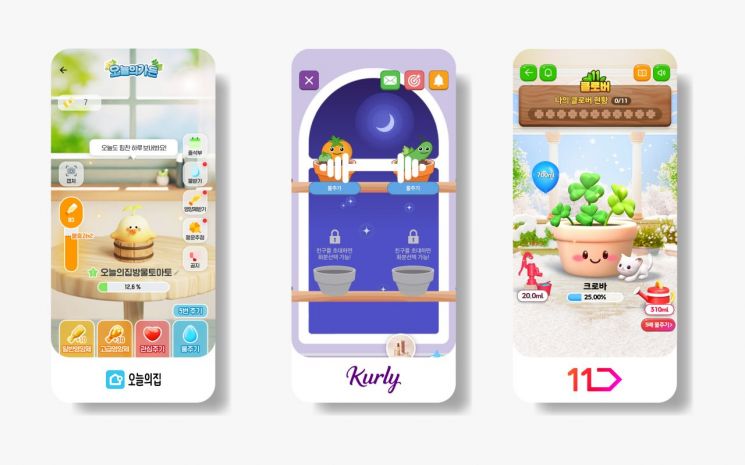
Onul's House (Ohouse) announced on the 9th that since launching the 'Onul's Garden' service at the end of August last year, it has recorded 2.5 million cumulative visitors, with more than 100,000 users consistently growing crops. Onul's Garden is a service where users grow plants in a virtual garden. Users can cultivate cherry tomatoes, Hong Kong palm, monstera, and more. They can also tend flowers. When plants reach a certain growth level, the harvest is sent to the user's home. Ohouse also created a community channel to allow users to share related information. Park Taeyong, the project manager who planned Onul's Garden, said, "We wanted to provide crops as rewards that go beyond simply giving consumer goods as gifts for economic benefits, allowing customers to experience emotional satisfaction by nurturing and caring for them in their daily lives." He added, "We hope this experience is precious and meaningful within the user's lifestyle."
Kurly also launched 'My Kurly Farm' in August last year. It is a service where users cultivate their own vegetable garden on a virtual terrace. Users can grow desired crops such as tomatoes, onions, avocados, and cucumbers to earn rewards. Notably, users can grow up to four different crops simultaneously, allowing them to harvest various types together. Upon reaching the target harvest amount for each crop, Kurly provides coupons to purchase the corresponding crops sold on Kurly for 0 won. Users can also exchange harvested virtual vegetables for points to buy other products. Kurly explained that about 200,000 people have participated since the launch of My Kurly Farm, and the average daily visits have tripled, resulting in increased customer dwell time and revisit rates.
11st has been offering '11 Clover' since November. In the 11st app, users grow clovers using 'water' earned through their activities. Collecting 11 clover leaves allows customers to receive gifts they select themselves. 11 Clover surpassed 12 million cumulative accesses within 15 days of service launch, with over 500,000 participants in two months.
An industry insider said, "The popularity of reward-based app-tech like cyber farming reflects the psychology of seeking rewards that help in reality amid ongoing high inflation during the economic downturn." They added, "From the perspective of e-commerce companies, since it positively affects customer acquisition and retention, various forms of such services are expected to continue emerging."
© The Asia Business Daily(www.asiae.co.kr). All rights reserved.

















