Major Foreign Media: "Disclaimer Analysis Results Are Limited"
Major technology companies (Big Tech) have stated that they will protect customers in the event of copyright issues related to content used in generative artificial intelligence (AI) services, but there are criticisms that the effectiveness is low. Compensation is only provided in limited cases.
On the 8th (local time), major foreign media reported that Amazon, Microsoft (MS), and Google offer only limited protection in copyright lawsuits.
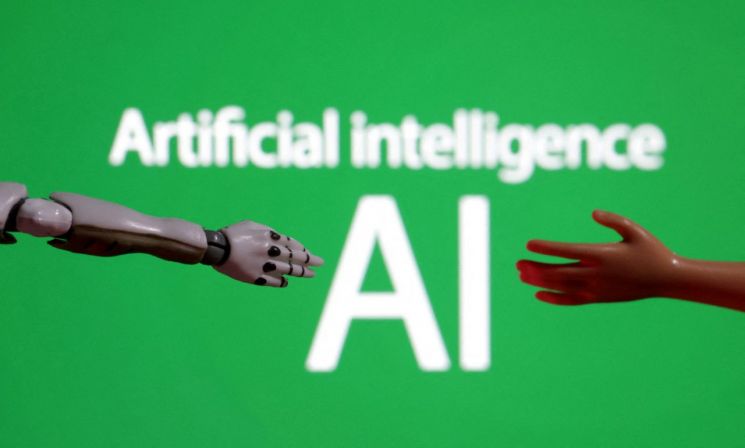
Recently, Big Tech companies have been competing to develop technologies such as AI virtual assistants and AI chatbots by investing billions of dollars. AI models are trained by learning data such as photos and texts found on the internet. This has raised concerns that data copyright owners could legally claim compensation from third parties using AI trained on their data. Such concerns act as obstacles to the spread of generative AI.
The three major Big Tech companies?Amazon, MS, and Google?have announced that they will protect customers in the event of intellectual property (IP) issues. However, an analysis of the disclaimers they issued shows that customers do not receive proper legal protection, according to major foreign media. Legal protection is only applied in a limited manner when using models developed by these companies or developed under their supervision.
Matthew Sag, a law professor at Emory University in the U.S., said, "Compensation is a fairly wise business solution because it makes people think 'this can be used without worry.'"
Brenda Leon, a partner at Luminos Law, stated, "It is important to understand that compensation is defined very narrowly."
For example, when using Amazon's AI, only content created from its own models such as Titan and various AI applications by Amazon are included. Even if the service is available on the Big Tech platform, the use of third-party models developed by AI startups like Anthropic, which Amazon has invested in, is not included. Similarly, MS only protects tools running on internal models and tools developed by the startup OpenAI, with which it has a partnership.
An IP lawyer dealing with copyright issues said, "Such guarantees were necessary to encourage users to purchase services because they are aware of legal risks."
The scope of protection also varies depending on whether fine-tuning is involved. Amazon does not provide protection if copyright infringement claims arise from fine-tuning. Google does not apply disclaimers to models fine-tuned by customers using the company's internal data. On the other hand, MS does not have such restrictions.
However, there is also a view that IP holders find it difficult to win lawsuits filed against users rather than generative AI creators. Concerns about copyright infringement due to generative AI use are considered excessive. Last year in the U.S., three authors filed lawsuits against image-generating AI developers StabilityAI, Midjourney, and DeviantArt, claiming they used images for AI training without the original creators' consent. U.S. Federal Judge William Orrick in California dismissed the lawsuits, stating that to establish copyright infringement, it must be proven that the AI-generated images are substantially similar to copyrighted images.
© The Asia Business Daily(www.asiae.co.kr). All rights reserved.
![Clutching a Stolen Dior Bag, Saying "I Hate Being Poor but Real"... The Grotesque Con of a "Human Knockoff" [Slate]](https://cwcontent.asiae.co.kr/asiaresize/183/2026021902243444107_1771435474.jpg)
















