Focused on Preventing Damage to Traditional Wooden Architecture Heritage from Termites
Also Promoting Construction of Advanced Preservation Technology Center for Large Cultural Heritage
On the 8th, the National Research Institute of Cultural Heritage announced that it aims to achieve a leap forward in national heritage research this year through a large-scale integration of science and technology. The institute plans to expand technology development not only in preservation and restoration but also in disaster prevention, applying these advancements widely in the field.
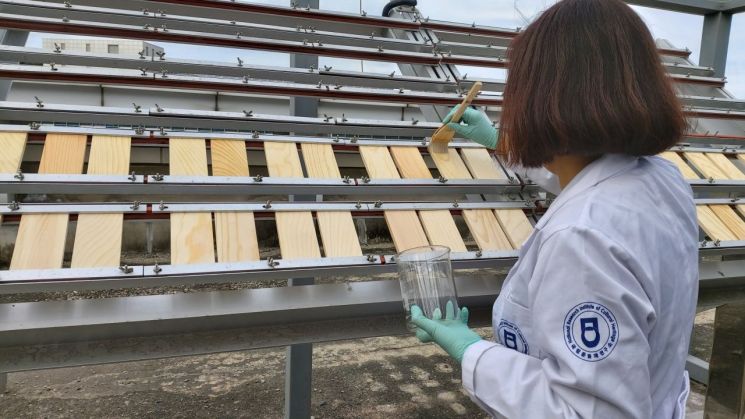
Over the past five years, the Cultural Heritage Research Institute has filed and registered an average of 15.8 patents annually related to preservation and restoration technologies. This year, it is studying the efficacy and residual effects of various agents to prevent damage to traditional wooden architectural heritage caused by invasive white termites. The institute will select appropriate biocides and determine the reapplication cycle for these agents.
In collaboration with government-funded chemical research institutions and paint company technology research centers, standardized removal methods for spray graffiti and necessary safety guidelines are also being established. The Cultural Heritage Research Institute recently demonstrated sufficient technical capability in removing spray graffiti from sites such as Yeongchumun Gate of Gyeongbokgung Palace. An official explained, "We already published guidelines for 'Paint Graffiti Removal Methods for Stone Cultural Heritage' in 2008 and hold fifteen patents related to stone preservation and restoration, including 'Compositions for Stone Cultural Heritage Preservation Treatment and Methods Using Them.'"
The institute is also intensifying efforts to establish standards for fillers used to reinforce cracks and missing parts in murals. Since it is promoting the preservation treatment of the mural in Josadang Hall of Buseoksa Temple, the only Goryeo Dynasty temple mural in Korea, it plans to develop stable preservation treatment methods.

In the field of disaster prevention, preparations are underway for technologies to protect cultural heritage vulnerable to fire. Since last year, the institute has been developing technology for 'fireproof structures for cultural heritage protection' to prevent loss and damage caused by large wildfires and other incidents. An official stated, "This technology involves installing buried fireproof structures around cultural heritage sites that stand up during a fire to act as protective barriers, minimizing damage from flames and other hazards," adding, "It is expected to preserve the original form and reduce restoration costs."
Additionally, the Cultural Heritage Research Institute is advancing projects such as constructing an advanced preservation technology center for large-scale cultural heritage and developing mobile programs for ancient architecture using augmented reality. The advanced preservation technology center for large-scale cultural heritage is anticipated to be a space that establishes an integrated system ranging from efficient mid- to long-term preservation treatments to precise radiation diagnostics and digital restoration.
© The Asia Business Daily(www.asiae.co.kr). All rights reserved.


















