"Computer Files Like Composite Photos
Do Not Qualify as 'Obscene Materials'"
The Supreme Court has ruled that the act of requesting the creation of obscene photo files by digitally combining a friend's face with nude photos on a computer cannot be punished under the criminal law as the crime of 'inducing the manufacture of obscene materials.'
Previously, the Supreme Court had ruled in a case involving Article 243 of the Criminal Act on the distribution of obscene materials that "computer program files cannot be considered obscene documents, drawings, films, or other objects." The current ruling similarly holds that 'obscene objects' under Article 244 on the manufacture of obscene materials do not include computer program files.
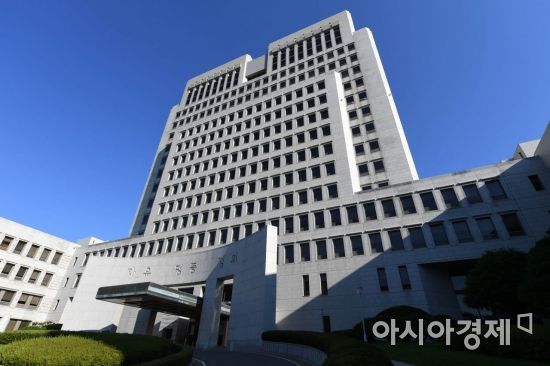
According to the legal community on the 5th, the Supreme Court's 3rd Division (Presiding Justice Ahn Cheol-sang) overturned the original ruling that sentenced Lee Mo to eight months in prison in his appeal trial on charges of inducing the manufacture of obscene materials and violating the Act on the Punishment of Sexual Violence Crimes (illegal filming using a camera), and remanded the case to the Seoul High Court.
Lee was indicted on charges of commissioning an unknown person via SNS from April to November 2017 to produce 17 digitally altered nude photos combining the faces of female acquaintances.
He was also charged with defaming the victims during the commission process and illegally filming women's bodies six times in places such as the subway and classrooms.
The crime was uncovered when Lee lost his mobile phone. The finder opened the phone to find its owner and discovered the altered photos, which were then handed over to the victims. In December 2017, the victims submitted the phone to the police and filed a complaint against Lee.
Initially, the police investigated the case, but after Lee enlisted in the military, jurisdiction transferred to the military prosecution. The military court found most charges guilty and sentenced him to eight months in prison in both the first and second trials.
However, the Supreme Court's judgment differed.
Previously, in a case involving the distribution of obscene materials, the Supreme Court ruled that "computer program files cannot be considered obscene documents, drawings, films, or other objects." The Court held that computer files such as the digitally altered photos Lee requested do not qualify as 'obscene objects' under the manufacture of obscene materials statute.
The court stated, "The obscene composite photo files that the defendant commissioned an unidentified person to produce and transmit cannot be considered 'obscene objects' under Article 244 of the Criminal Act," adding, "Nevertheless, the lower court recognized this part of the indictment against the defendant as guilty, which is a misinterpretation of the law regarding the manufacture of obscene materials and affected the judgment," explaining the reason for overturning and remanding the case.
Meanwhile, creating obscene photos as computer files can currently be punished under Article 14-2 (Distribution of False Videos, etc.) of the Act on the Punishment of Sexual Violence Crimes, newly established in March 2020. However, since Lee committed the crime before the enactment of this provision, he cannot be punished under the principle of criminal law that applies the law in effect at the time of the act.
The Supreme Court also made a different ruling from the lower courts regarding the evidentiary validity of photos obtained during the forensic examination of Lee's mobile phone related to his illegal filming charges.
While the first and second trials held that there was no problem with the evidence since the victim voluntarily submitted Lee's phone along with the complaint, the Supreme Court ruled that to use the photos as evidence for the illegal filming charges unrelated to the manufacture of obscene materials, a separate search warrant should have been issued, and Lee's right to participate as a suspect should have been guaranteed.
The court pointed out, "The photos secretly taken by the defendant of unidentified female high school students in places such as the subway and academies cannot be considered electronic information specifically and concretely related to the crime of inducing the manufacture of obscene materials, which was the motive for the voluntary seizure," adding, "However, the judicial police officer, despite having accidentally discovered electronic information related to a separate crime, stopped further investigation and did not obtain a search warrant from the court, making the seizure of such information illegal."
It continued, "Even if the military prosecutor obtained a warrant about nine months later and proceeded with digital forensic procedures to search, restore, and print the unrelated illegal filming photos, it is difficult to say that the causal relationship with the prior illegal procedure was diluted or severed," and "The printed illegal filming photos and CDs are therefore illegally obtained evidence and lack evidentiary value."
The court concluded, "The lower court's judgment contains errors in the legal interpretation regarding the guarantee of the suspect's right to participate, the delivery of the electronic information seizure list, and objective relevance, which affected the judgment."
© The Asia Business Daily(www.asiae.co.kr). All rights reserved.
![Clutching a Stolen Dior Bag, Saying "I Hate Being Poor but Real"... The Grotesque Con of a "Human Knockoff" [Slate]](https://cwcontent.asiae.co.kr/asiaresize/183/2026021902243444107_1771435474.jpg)











