US and Europe Mandate Adoption of Eco-Friendly Fuel SAF
Fines for Non-Compliance, Incentives for Compliance
LCCs Only Introduce Low-Carbon Aircraft
"SAF Response Needed for Europe Route Expansion Strategy"
Low-cost carriers (LCCs) expanding medium- and long-haul routes to Europe and other regions are advised to prepare for the introduction of eco-friendly fuels to reduce carbon emissions.
Woori Financial Management Research Institute analyzed this in its report titled "Sustainable Aviation Fuel, Emerging as a Game Changer in the Aviation Industry," released on the 4th. Seong Ji-young, senior researcher at Woori Financial Management Research Institute, stated, "While major airlines are responding through pilot operations, LCCs lack the financial capacity to adequately prepare for eco-friendly fuels. With the merger of Korean Air and Asiana Airlines expected to allocate additional medium- and long-haul routes to LCCs, and the global trend toward expanding the use of Sustainable Aviation Fuel (SAF), LCCs also need to prepare in advance."
SAF is an eco-friendly aviation fuel made from crops such as corn and sugarcane, as well as waste cooking oil. It is similar to biodiesel but undergoes a carbon reduction process during production. It emits more than 75% less carbon than conventional jet fuel (fossil fuel aviation fuel). However, it is currently more than three times as expensive as jet fuel, and its production volume accounts for only 0.1% of total aviation fuel.
Currently, the two major domestic airlines are promoting the introduction of eco-friendly aviation fuel. Korean Air conducted a pilot operation of cargo flights using SAF in collaboration with GS Caltex from September to November last year and is carrying out a demonstration project analyzing energy efficiency and other factors. Asiana Airlines has agreed to receive SAF supplies for five years starting in 2026 from the U.S. refiner Shell.
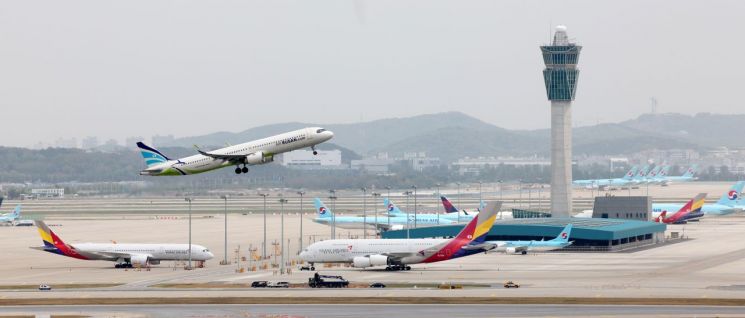
On the other hand, LCCs are responding to carbon reduction by introducing low-carbon aircraft rather than SAF. However, as they are increasing medium- and long-haul routes to the U.S. and Europe, there are calls for them to prepare for SAF introduction in advance. Air Premia operates a Frankfurt route, and T'way Air plans to launch a new route to Croatia this year.
This aligns with strengthened carbon reduction policies in the U.S. and Europe. The 27 countries of the European Union (EU) established regulations last April mandating the use of SAF. The mandatory blending ratio of SAF in aviation fuel will gradually increase from 2% in 2025 to 70% by 2050. Violations of the regulation will incur fines twice the price of jet fuel per ton. The U.S. has also announced plans to increase SAF production capacity and will provide tax credits to airlines using SAF. Japan and India also plan to introduce mandatory regulations. Researcher Seong predicted, "In the short term, the number of countries mandating SAF introduction is limited and the mandatory ratios are low, so the burden of fines may be manageable. However, in the long term, large-scale production will lower prices, and incentives such as carbon emission credits will help establish SAF as an industry that replaces the existing jet fuel market."
© The Asia Business Daily(www.asiae.co.kr). All rights reserved.
![Clutching a Stolen Dior Bag, Saying "I Hate Being Poor but Real"... The Grotesque Con of a "Human Knockoff" [Slate]](https://cwcontent.asiae.co.kr/asiaresize/183/2026021902243444107_1771435474.jpg)
















