Ministry of Health and Welfare and KDCA Smoking-Related Survey Results
Daily Smoking Rate 15.4%... Notable Decline Among Men
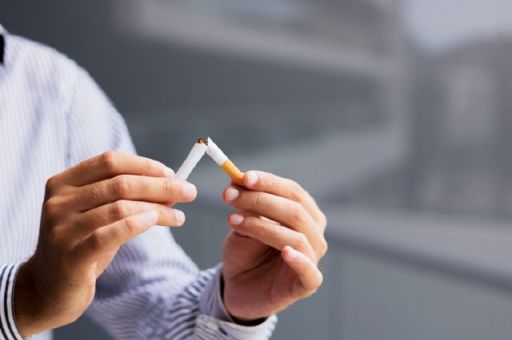
The proportion of people aged 15 and older who smoke cigarettes in South Korea has significantly decreased over the past 10 years.
According to data released on the 4th by the Ministry of Health and Welfare and the Korea Disease Control and Prevention Agency, the daily smoking rate among South Koreans aged 15 and older was 15.4% in 2021. The daily smoking rate refers to the percentage of people who have smoked at least 100 cigarettes (5 packs) in their lifetime and currently smoke cigarettes daily. The daily smoking rate for the population aged 15 and older in 2021 dropped by 7.8 percentage points compared to 2011, which was 23.2%.
Until 2014, 2 out of 10 South Koreans aged 15 and older smoked daily. However, from the following year, the daily smoking rate fell below 20%, stagnated at 17.5% during 2017-2018, and has been gradually decreasing each year since 2019 (16.4%).
The decline in the daily smoking rate was more pronounced among men, indicating that the proportion of male smokers was significantly higher. In 2021, the smoking rate among men aged 15 and older was 26.3%, nearly six times higher than that of women (4.5%). However, the decrease over the past 10 years was much greater for men (-15.3 percentage points) than for women (-0.6 percentage points).
The Korea Disease Control and Prevention Agency also highlighted the health risks caused by smoking. Smoking increases the risk of various cancers such as ▲lung cancer ▲esophageal cancer ▲pancreatic cancer ▲stomach cancer ▲colon cancer ▲cervical cancer, as well as ▲myocardial infarction ▲ischemic heart disease ▲stroke ▲asthma ▲tuberculosis. Moreover, it takes between 10 to 20 years after quitting smoking for the risk of lung and pancreatic cancers to become similar to that of non-smokers, so it is best to quit smoking as early as possible.
● Annual Resolutions to Quit Smoking: How to Overcome Withdrawal Symptoms
- Verify whether your knowledge about smoking is accurate by consulting smoking cessation medical services, counseling, and educational materials.
- Regularly write diary entries about why quitting smoking is necessary and what could happen if you do not quit.
- In the early stages, frequently visit your primary care physician or a nearby public health center’s smoking cessation clinic for short check-ups.
- Receiving encouragement and support from close friends and colleagues can also be helpful.
- Reflect specifically on why you continue to smoke and what prevents you from quitting.
- If you had incorrect knowledge, organize what you have newly learned and what you misunderstood on paper, and share and discuss this with your family to receive encouragement.
- Set small rewards in advance to motivate yourself.
- Prepare a plan for how to cope if you relapse and start smoking again, and write it down on paper or your smartphone.
- If withdrawal symptoms are severe, consider using medications or smoking cessation aids to reduce nicotine withdrawal symptoms.
© The Asia Business Daily(www.asiae.co.kr). All rights reserved.
![Clutching a Stolen Dior Bag, Saying "I Hate Being Poor but Real"... The Grotesque Con of a "Human Knockoff" [Slate]](https://cwcontent.asiae.co.kr/asiaresize/183/2026021902243444107_1771435474.jpg)
















