Publication of Statistical Yearbook Containing 190 Data Sets in 17 Fields Including Population, Housing, Education, and Culture as of Late 2022
Improvement in Medical Environment with 250 More Healthcare Workers and 51 Additional Beds in Health Sector
Daily Waste Output Decreased by 165 Tons Compared to Previous Year, 700 More Multi-family Households Increased
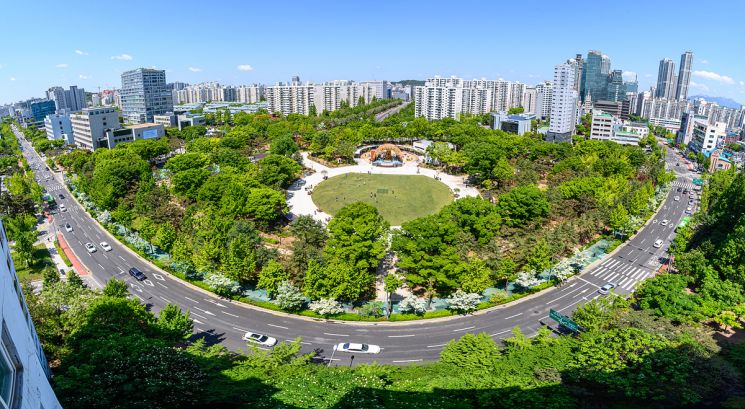
Yangcheon-gu (District Mayor Lee Gi-jae) announced that the ‘2023 Yangcheon-gu Statistical Yearbook,’ which comprehensively contains basic statistical data by sector and year, showing the changes in Yangcheon at a glance, revealed that jobs in the information and communication sector, including the 4th Industrial Revolution, increased by 9.1% compared to the previous year.
This statistical yearbook, published for the 35th time since its inception in 1989, was compiled by editing statistical figures based on data provided by various departments of Seoul City and related organizations as of December 31, 2022. It consists of a total of 190 statistics across 17 fields, including ▲population ▲labor and businesses ▲health ▲social security ▲environment ▲education and culture.
According to the yearbook, amid serious employment issues, the number of businesses and workers by industry increased, indicating a rise in quality jobs as well. The number of businesses reached 37,929, a 2% (746 businesses) increase from the previous year, and the number of workers rose to 133,776, up 2.6% (3,405 people) from the previous year.
In particular, due to the increased demand for digital transformation in industries such as the 4th Industrial Revolution and the metaverse, the information and communication industry, including publishing, video, and broadcasting communications, increased by 9.1% (548 people) compared to the previous year.
Other industries with a high number of workers included ▲wholesale and retail trade (20,765 people) ▲health and social welfare services (17,154 people) ▲education services (15,309 people), while the transportation and storage sector, which accounts for 9.8% (13,193 people) of the total workforce, showed the highest growth rate with a 14.3% (1,656 people) increase from the previous year.
In the health (social security) sector, the medical environment improved as the number of medical institutions, workers, and hospital beds all increased. First, the number of medical institutions?including general hospitals, Korean medicine clinics, dental hospitals, and clinics?rose by 12 to 663 locations compared to the previous year, and medical workers (5,941 people) increased by 250. Notably, nurses, who make up the largest portion of medical personnel at 29.8% (1,774 people), increased by 9.5% (154 people) compared to the previous year, and the number of hospital beds rose by 1.6% (51 beds) to 3,092.
In the environmental sector, waste collection and disposal saw a significant decrease in waste generation, with daily waste output at 10,865,000 tons, down 13.2% (165 tons) from the previous year. In fact, the district was selected as the best local government nationwide in the ‘2023 Food Waste Management Local Government Performance Evaluation’ hosted by the Ministry of Environment last August, based on reduction achievements and proper disposal. To continue reducing waste, the district plans to distribute food waste processors with RFID free of charge to apartment complexes next year.
Regarding housing, there were 146,886 households, an increase of 1,043 households from the previous year. In particular, multi-family housing, which accounts for 28.5% (41,885 households) of all housing, showed the largest growth rate with a 1.7% (700 households) increase compared to the previous year.
On the other hand, following the population decline trend in Seoul, the registered population in the district decreased by 1.44% (6,477 people) to 444,010, and the number of households decreased by 0.12% (217 households) to 181,187. The average household size was 2.43 people, continuing to decline annually, likely influenced by population aging and an increase in single-person households. The number of births was 1,682, and deaths were 2,302, indicating that 4.6 people were born and 6.3 people died daily.
The newly published statistical yearbook is expected to be widely used as basic data for policy formulation, related academic research, and regional development. The district plans to provide the yearbook in electronic file and e-book formats on the district office website under ‘Uri Yangcheon → Yangcheon Statistical Information → Statistical Yearbook Archive’ so that all residents can easily access and use it.
Lee Gi-jae, Mayor of Yangcheon-gu, said, “I hope the newly published statistical yearbook will be usefully utilized in establishing customized policies for residents,” and added, “We will continue to do our best to provide reliable data.”
© The Asia Business Daily(www.asiae.co.kr). All rights reserved.
![Clutching a Stolen Dior Bag, Saying "I Hate Being Poor but Real"... The Grotesque Con of a "Human Knockoff" [Slate]](https://cwcontent.asiae.co.kr/asiaresize/183/2026021902243444107_1771435474.jpg)
















