Bank of Korea Announces 2024 Monetary and Credit Policy Operational Directions
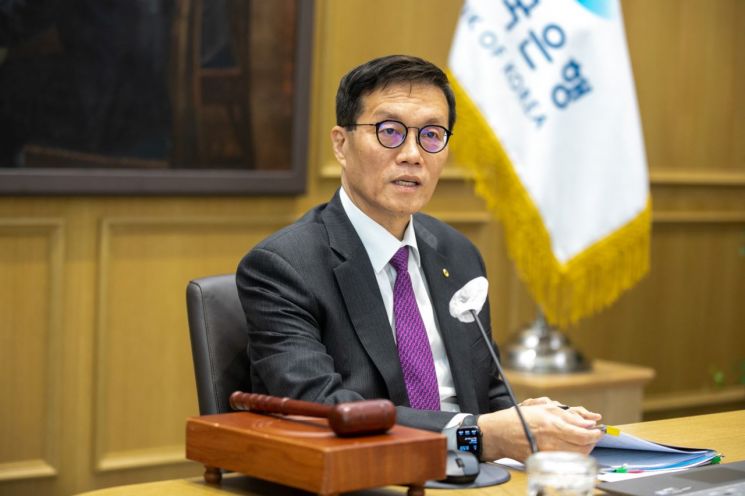
The Bank of Korea announced that it will maintain a high interest rate policy until inflation stabilizes next year.
On the 29th, the Bank of Korea released the "2024 Monetary and Credit Policy Operation Direction," emphasizing that it will continue a prolonged tightening stance until there is confidence that inflation will stabilize at the target level of 2%.
The Bank of Korea has kept the base interest rate fixed at 3.5% since February this year. If the inflation rate does not decrease next year, it is expected to maintain the current high interest rate level.
The Bank of Korea forecasted that the inflation rate will continue its underlying slowing trend next year. However, it explained that inflation is expected to decline to the target level only after the fourth quarter of next year, and that monetary policy needs to be managed carefully considering household debt.
Next year, the consumer price index and core inflation (excluding food and energy) are expected to rise by the mid-2% range and the low to mid-2% range, respectively. Domestic inflation is expected to continue a trend of gradual slowdown due to weakening demand-side price pressures, but the pace of deceleration is predicted to be moderate due to the pass-through of accumulated cost increases.
The Bank of Korea stated that it will closely monitor inflation trends along with economic conditions, financial stability risks such as household debt, changes in major countries' monetary policies, and geopolitical risks to determine the intensity and duration of monetary tightening.
The domestic economy next year is expected to continue its improving growth trend due to sustained export recovery. Consumption is anticipated to recover moderately due to the exhaustion of pent-up demand and the impact of monetary tightening, but exports and facility investment are expected to continue improving due to a rebound in the semiconductor industry and expanded investments in new growth industries in major countries.
The number of employed persons is expected to slow its increase, mainly in the service sector, but the slowdown is predicted to be moderate as labor supply from women and the elderly continues. The unemployment rate is forecasted to rise slightly due to the slowdown in employment growth.
The Bank of Korea assessed that there is high uncertainty regarding the inflation and growth outlook due to factors such as the prolonged domestic and international monetary tightening, movements in international oil prices and exchange rates, and the development of geopolitical risks. It also analyzed that continuous attention is needed to risks from the accumulation of household debt and exposure to real estate in some non-bank financial institutions.
The global economy is expected to continue slowing down due to the prolonged monetary tightening stance. The United States is forecasted to experience weakened growth due to the sustained high interest rates, while the Euro area is expected to see some recovery in growth due to improved real incomes, though the pace of recovery will be moderate.
China's economic downturn has somewhat eased due to stimulus measures, but growth is expected to decline to the mid-4% range next year due to the ongoing real estate market slump. Global inflation is projected to continue its underlying slowing trend due to the sustained impact of monetary tightening and easing cost pressures.
© The Asia Business Daily(www.asiae.co.kr). All rights reserved.

















