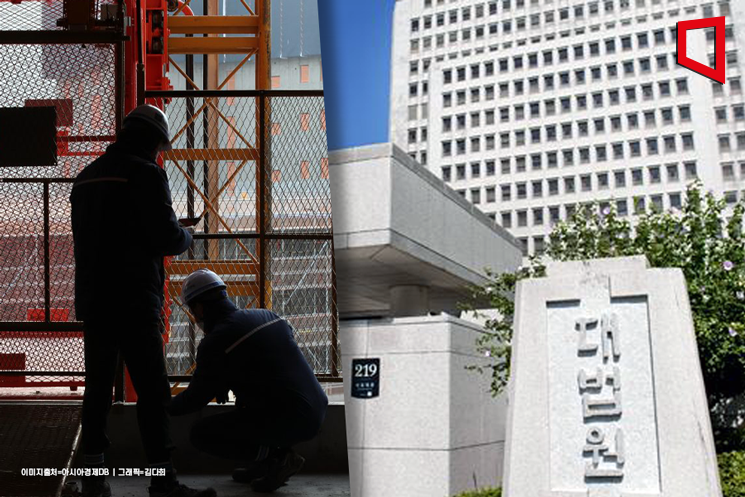
Last March, the prison sentence of the CEO of Hankook Steel was finalized in connection with the death of a subcontractor worker during outdoor work at Hankook Steel. This is the first case in which the CEO of a primary contractor was sentenced to prison following the enforcement of the Serious Accidents Punishment Act.
The Supreme Court's 3rd Division (Presiding Justice Oh Seok-jun) on the 28th upheld the original sentence of one year imprisonment for CEO A of Hankook Steel, who was indicted for violating the Serious Accidents Punishment Act and other charges. This was the first case reviewed by the Supreme Court since the Act came into effect in January last year, and the first time a CEO of a primary contractor received a confirmed prison sentence under this law.
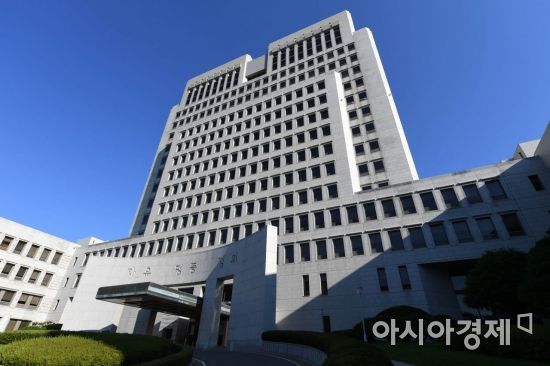
B, a worker in his 60s employed by a subcontractor at Hankook Steel, died last March at the Hankook Steel factory in Ham-an, Gyeongnam, after his leg was crushed by a 1.2-ton heat shield during work. CEO A, the primary contractor’s representative, was indicted for failing to fulfill safety obligations related to this accident.
In April, the first trial court sentenced A to one year in prison and ordered his detention, holding him responsible for neglecting safety measures despite frequent industrial accidents at Hankook Steel. The court also fined the Hankook Steel corporation 100 million won.
Both A and the prosecution appealed the first trial verdict, but in August, the second trial court dismissed both appeals. The Supreme Court also found no error in this judgment and upheld the original ruling.
The court stated, "The defendant’s violation of the Industrial Safety and Health Act by failing to take measures related to the preparation of work plans as the person in charge of overall safety and health, and the violation of the Serious Accidents Punishment Act by failing to establish and implement a safety and health management system as the management representative, both constitute acts of omission that failed to prevent the death of the same victim at the same time and place." It added, "The violation of the Serious Accidents Punishment Act, the violation of the Industrial Safety and Health Act resulting in a worker’s death, and the crime of professional negligence causing death are in a conceptual concurrence relationship."
Conceptual concurrence refers to a single act constituting multiple crimes, and under Korean criminal law, in such cases, the offender is punished according to the heaviest penalty prescribed for the crimes.
A Supreme Court official said, "This ruling is the first to declare the legal principle that the violation of the Serious Accidents Punishment Act (industrial accident causing death), the violation of the Industrial Safety and Health Act resulting in a worker’s death, and professional negligence causing death are in a conceptual concurrence relationship under Article 40 of the Criminal Act, meaning one act corresponds to multiple crimes in terms of social norms, and thus clarifies the relationship between the offenses."
© The Asia Business Daily(www.asiae.co.kr). All rights reserved.
![Clutching a Stolen Dior Bag, Saying "I Hate Being Poor but Real"... The Grotesque Con of a "Human Knockoff" [Slate]](https://cwcontent.asiae.co.kr/asiaresize/183/2026021902243444107_1771435474.jpg)

















