Plant Fossil Species Diverse and Fossil Density High
Gwanryongsa in Changnyeong and Hamheojeong Area in Gokseong Designated as Scenic Sites
A Cenozoic plant fossil site representing South Korea has been designated as a nationally designated natural monument. It is the Geumgwangdong Formation Cenozoic fossil site located in Geumgwang-ri, Donghae-myeon, Pohang City. On the 28th, the Cultural Heritage Administration announced that it will collaborate with local governments and managers to establish systematic preservation and utilization methods and support its use as various research and educational materials.
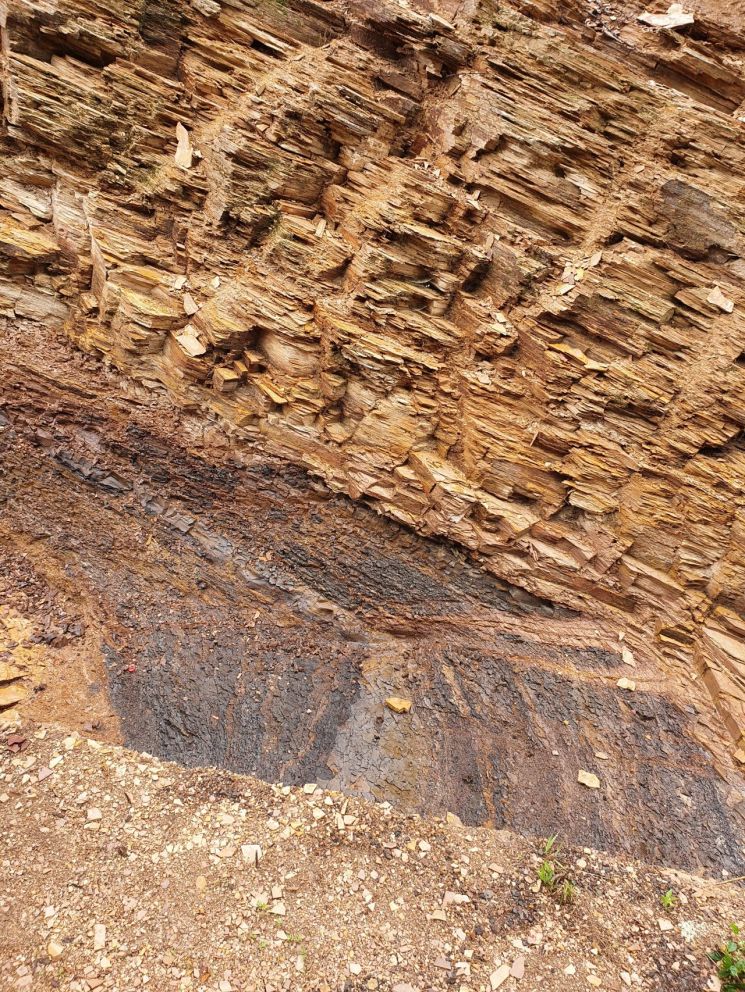
This natural heritage site is notable for the diversity of plant fossil species produced and the high density of fossils. It also provides insight into the sedimentary environment, vegetation, and climate change of the Korean Peninsula in the early Cenozoic, giving it high academic and symbolic value. The Geumgwangdong Formation was formed during the expansion of the East Sea about 20 million years ago. Sedimentary rocks about 70 meters thick are distributed over a distance of 1 km. Various plant fossils are clustered in layers throughout the area. The Cultural Heritage Administration explained, "During a period of relatively weak volcanic activity, floating sediments such as leaves were continuously supplied and deposited in a humid climate."
The confirmed plant fossils exceed sixty species, including unrecorded ones. Most are Metasequoia, Japanese beech, oak, birch, and maple. In some sections, fossils of Japanese beech, endemic to Ulleungdo, and Pinus pumila, native to Japan, were found together. This suggests that Japan had not yet separated from the Korean Peninsula at that time.
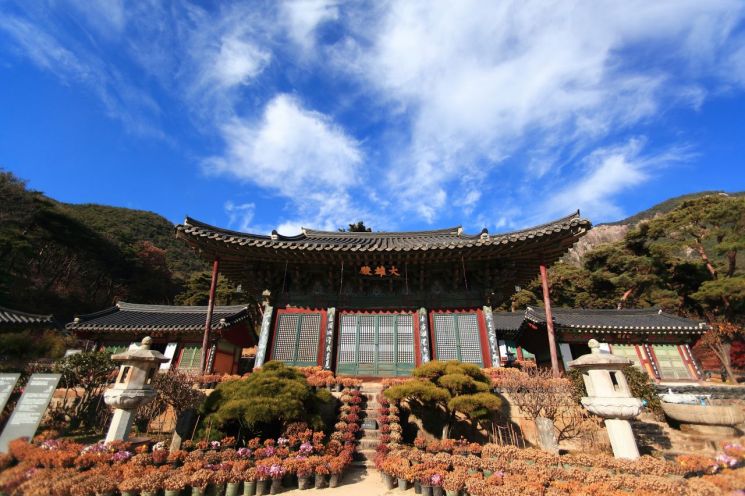
Meanwhile, on the same day, the Cultural Heritage Administration designated the area around Gwanryongsa Temple on Gwanryongsan Mountain in Changnyeong and the area around Hamheojeong Pavilion in Gokseong as nationally designated scenic sites. The former is a place where Buddhist cultural heritage and natural scenery harmonize. Behind Gwanryongsa, a Silla-era temple, rocky mountain peaks surround the area like a folding screen. The Buddha statue Yongseondae, which seems to recreate the "Banyayongseon" (the dragon boat leading to the world of prajna), and many Buddhist cultural heritages of Gwanryongsa add to its beauty.
The latter is a hilly area along the Seomjin River centered on Hamheojeong Pavilion. The pavilion was built by Joseon mid-period scholar Jehojeong Sim Gwang-hyeong (1510?1550). Records of its construction, traces of exchanges among literati, and inscriptions and poems praising the surrounding scenery have been passed down, giving it high historical and cultural value.
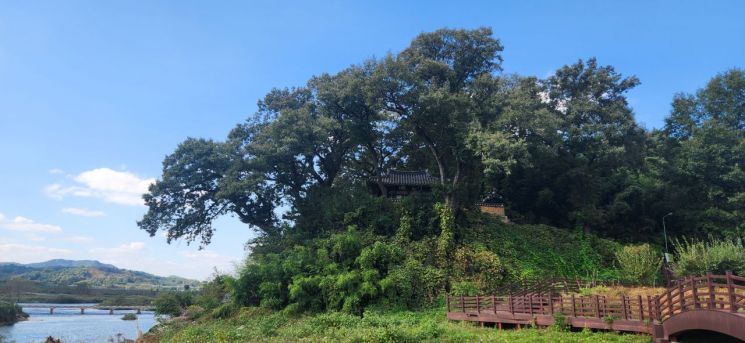
The area is shaped like a turtle entering the dragon palace according to feng shui. Hamheojeong is located on the turtle's back, and below the cliff are Yongso and Hajungamdo, a rock formation called Guamjodae (a rock island floating in the river). The Cultural Heritage Administration explained, "Sim Mingak (1589?1643), the great-grandson of Sim Gwang-hyeong, relocated the dilapidated pavilion to its current location and renamed it 'Hoyeonjeong.' After several restorations, it was renamed back to its original name, Hamheojeong."
© The Asia Business Daily(www.asiae.co.kr). All rights reserved.
![Clutching a Stolen Dior Bag, Saying "I Hate Being Poor but Real"... The Grotesque Con of a "Human Knockoff" [Slate]](https://cwcontent.asiae.co.kr/asiaresize/183/2026021902243444107_1771435474.jpg)


















