Bank of Korea Announces December Business Survey Index (BSI)
Export Companies in Display, Metal, and Chemical Sectors Show Weakness
Non-Manufacturing Slightly Rises Due to Year-End Seasonal Factors
Despite the recovery in the semiconductor industry, the business sentiment among companies has not improved as key industries such as metals and chemicals are lagging behind.
According to the 'December Business Survey Index (BSI) and Economic Sentiment Index (ESI) results' released by the Bank of Korea on the 28th, the BSI for all industries this month remained at 70, the same as the previous month. This figure is also the same as in October and marks the lowest level since February this year (69).
The BSI is a statistic calculated based on entrepreneurs' judgments and outlooks on current business conditions. If negative responses outnumber positive ones, the index falls below 100.
This month, the manufacturing industry BSI was recorded at 70, unchanged from the previous month. While semiconductor equipment manufacturers saw improved performance due to expectations of semiconductor industry recovery, other machinery and equipment rose, but chemical products and metal processing declined.
Hwang Hee-jin, head of the Bank of Korea's statistics survey team, explained, "The chemical products sector declined due to worsening business conditions caused by the supply of low-priced Chinese chemical products and a reduction in spreads, while metal processing fell due to decreased processing demand resulting from the downturn in the construction sector, which is a downstream industry."
By company size and type, small and medium-sized enterprises (+1 point) and domestic companies (+2 points) showed an increase, while large companies remained unchanged from the previous month, and export companies fell by 5 points.
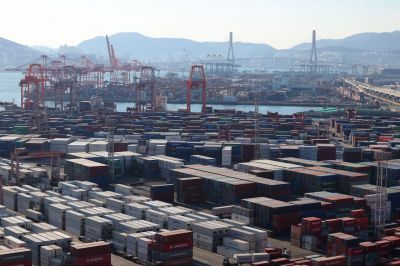
Regarding the recent decline in business sentiment among export companies despite favorable export trends, Team Leader Hwang said, "Although there was a recovery centered on semiconductors, the display sector was not doing well, and key industries such as metals and chemicals lost out to other Chinese products in terms of price competitiveness." This means that while the overall export volume may have increased, the situation varies by industry.
The non-manufacturing sector recorded a BSI of 70, up 1 point from the previous month. After hitting the lowest level in 2 years and 11 months (69) last month, it rose slightly due to seasonal factors at the end of the year.
Specifically, demand for IT consulting increased mainly in the public sector to exhaust the year-end budget, raising the information and communication industry by 4 points. Engineering businesses and SOC design saw increased year-end order performance, boosting professional, scientific, and technical services by 2 points. The transportation and warehousing industry also rose by 3 points as profitability improved due to falling crude oil prices and rising shipping freight rates.
The BSI for business outlook next month showed an increase in manufacturing but a decline in non-manufacturing.
The manufacturing business outlook BSI for January next year rose by 1 point from the previous month to 69, with increases in electronic, video, and communication equipment (+6 points) and primary metals (+8 points). The non-manufacturing business outlook BSI for January, which had risen this month, fell by 3 points to 68 due to declines in information and communication (-10 points) and professional, scientific, and technical services (-8 points).
The December Economic Sentiment Index (ESI), which reflects the Consumer Sentiment Index (CSI) in the BSI, recorded 91.1, down 0.1 points from the previous month. The seasonally adjusted ESI cyclical component was 92.7, down 0.1 points from the previous month.
© The Asia Business Daily(www.asiae.co.kr). All rights reserved.

















