Hyundai Motor and Kia Sell 770,000 Hybrid Vehicles from January to November
Record High Sales... 21% of Domestic Total Vehicle Sales
Independent Development of Engines and Transmissions Since the 1990s
"Annual Growth of Over 7% Expected Until 2030"
Targeting Launch of High-Performance Engine Hybrids in 2025
Hyundai Motor Company and Kia announced on the 27th that the number of hybrid vehicles sold this year up to last month reached 767,000 units, marking an all-time high. This is interpreted as a result of the battery electric vehicles, which had been attracting attention among eco-friendly cars, slowing down amid a decline in the proportion of internal combustion engine vehicles, mainly diesel cars.
Breaking down the sales volume between domestic and overseas markets, overseas sales recorded 513,000 units (based on shipments), while 254,000 units were sold in the domestic market. The domestic sales volume is also the highest ever.
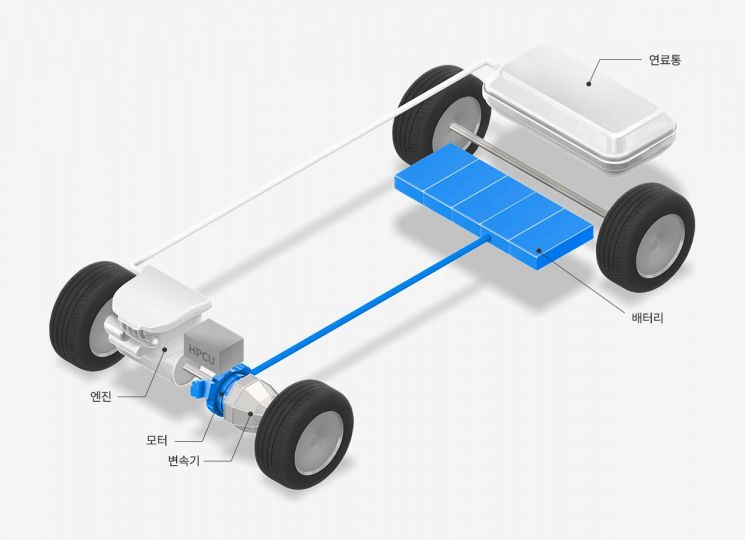
Hyundai Motor Group explained, "The decision to independently develop the world's first parallel hybrid system in 2011 became the driving force that allowed us to stay one step ahead of other companies in the hybrid market competition," adding, "Maintaining the global third place this year, following last year, is also thanks to our strong position in the electric vehicle market and successful response in the hybrid market."
As the name suggests, a hybrid vehicle uses both an internal combustion engine and an electric motor. Structurally, it is more complex than either an internal combustion engine vehicle or an electric vehicle. It requires technology that precisely controls engine and motor operation according to various driving conditions.
Hyundai Motor Company and Kia first introduced parallel hybrids in 2011 with the release of the mid-size sedans Sonata and K5. At that time, Toyota and General Motors’ series-parallel (combined) systems were mainstream. Toyota had also attempted to implement parallel hybrids in the past but abandoned the effort midway.
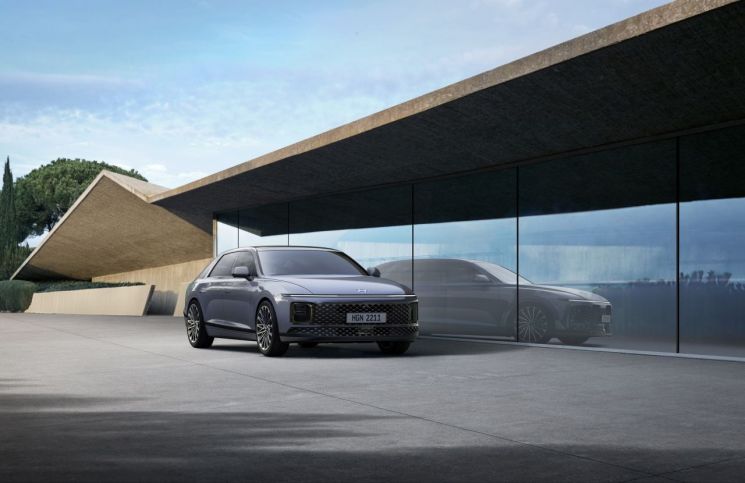
Hyundai Motor Group emphasized that its mechanical engineering capabilities, built through independently developing engines and transmissions since before the 1990s, formed the foundation for successfully developing hybrids independently. The company introduced Korea’s first independently developed Alpha engine in 1991. In 2019, it developed the Continuously Variable Valve Duration (CVVD) technology for the first time, which optimizes the duration the intake valve remains open according to engine operating conditions.
In 2009, Hyundai Motor Group released the third 6-speed automatic transmission among automakers. Additionally, it directly developed the battery, considered a core component of the hybrid system, and first installed it in the mid-large SUV Santa Fe launched in August this year.
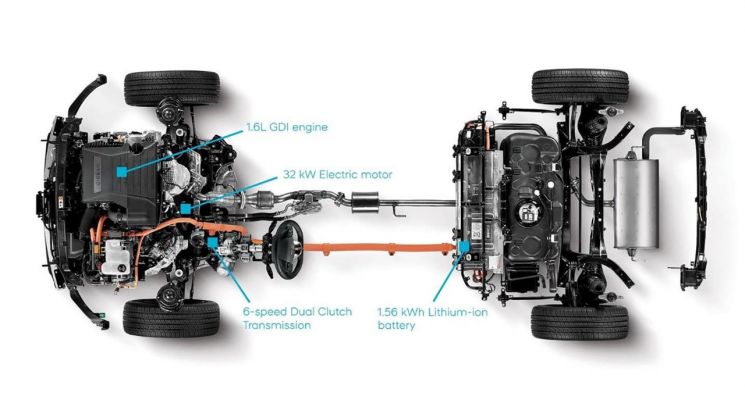 Hybrid powertrain model based on Hyundai Motor Company and Kia's 1.6ℓ Gasoline Direct Injection (GDI) engine
[Photo by Hyundai Motor Group]
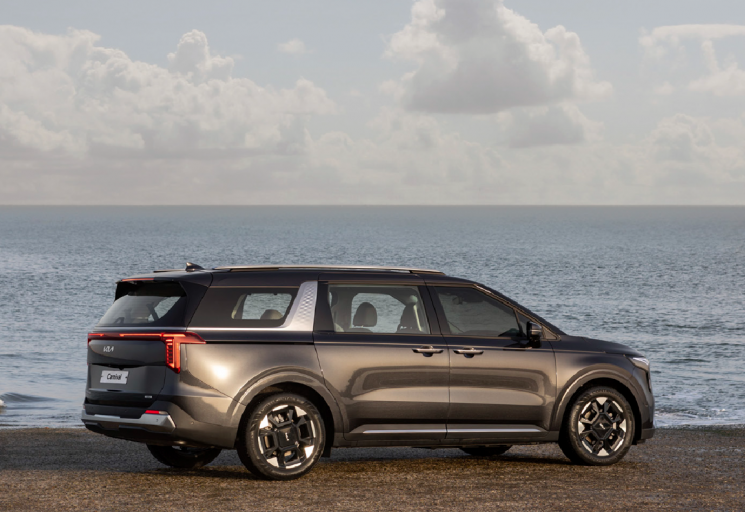
The Kia multipurpose vehicle Carnival Hybrid, released last month, applied various accumulated technologies in multiple ways. Its fuel efficiency is about 14 km per liter, and the system’s maximum output reaches 245 horsepower. The combined output uses a high-performance 54 kW motor, the highest among all hybrids released by Hyundai Motor Group so far. The company reported that about 70% of customers ordering the new Carnival choose the hybrid version. Overseas automotive media have also frequently compared it alongside major Toyota models, often favoring Hyundai Motor Company and Kia.
As the transition to electric vehicles is expected to take longer than initially anticipated, the hybrid market is also expected to steadily grow. Market research firm Global Fortune Business Insights forecasted that the global hybrid vehicle market will grow 19% this year to $271.8 billion (approximately 360.54 trillion KRW). It is expected to grow more than 7% annually, approaching 600 trillion KRW by 2030.
Hyundai Motor Group also plans to continue technology development, anticipating steady growth in hybrids for the time being. The company is developing a next-generation hybrid system combined with a high-performance engine, targeting a 2025 launch.
© The Asia Business Daily(www.asiae.co.kr). All rights reserved.
![Clutching a Stolen Dior Bag, Saying "I Hate Being Poor but Real"... The Grotesque Con of a "Human Knockoff" [Slate]](https://cwcontent.asiae.co.kr/asiaresize/183/2026021902243444107_1771435474.jpg)


















