Interview with Former USTR Lighthizer
FTA Adoption by Korea and Others Uncertain
WSJ Highlights Trump's Tariff Plans
Concerns Over Trade Conflicts and Inflation Rebound
Warnings in US of "Risk of Alienating Allies"
Former U.S. President Donald Trump, who is running in next year's presidential election, plans to raise tariffs on all imported foreign goods, including those from allied countries, by 10 percentage points if he succeeds in winning re-election. If realized, there are growing concerns that this will spread protectionism through retaliatory tariffs from other countries and trigger a global trade war.
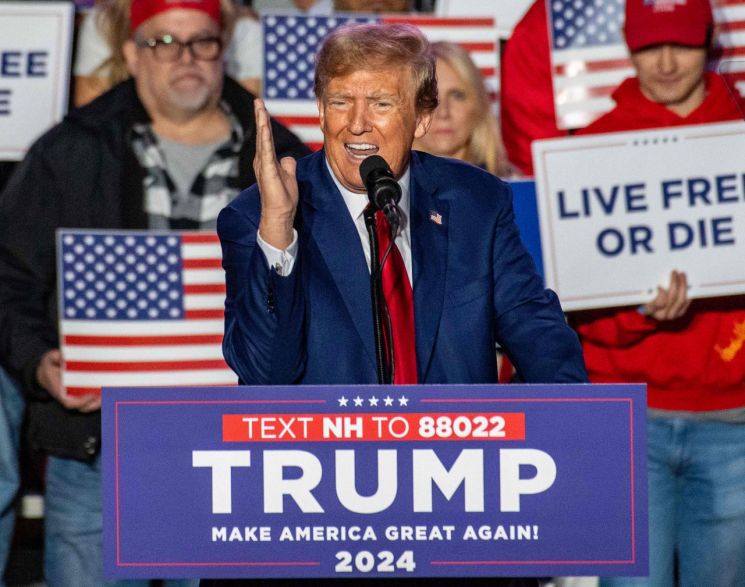
According to the New York Times (NYT) on the 26th (local time), Robert Lighthizer, former U.S. Trade Representative (USTR) who led the Trump administration's trade policy, revealed in an interview with the media that there is a plan to increase tariffs on all imports by 10 percentage points compared to the current rates.
If the current tariff on imports is 5%, the plan is to raise the rate to 15%. Earlier, former President Trump announced in August his intention to introduce a universal 10% tariff on imports, but it was unclear whether the total rate would be 10% or an additional 10% increase. When the NYT sent interview questions to the Trump campaign, Lighthizer confirmed the plan to add an additional 10 percentage points to tariffs. However, it has not been decided whether former President Trump will impose such universal tariffs on the 20 countries, including South Korea, that have free trade agreements (FTAs) with the U.S.
Lighthizer stated, "Considering the scale of the U.S. trade deficit and its impact on the U.S. economy, the president will have clear authority to unilaterally impose tariffs under two laws: the International Emergency Economic Powers Act (IEEPA) and Section 338 of the Tariff Act." He is expected to take on a key role if a second Trump administration materializes.
The Wall Street Journal (WSJ) also highlighted Trump’s announced tariff policy on the same day, describing it as a "tit-for-tat" tariff imposition. It pointed out that Trump aims to sever normal trade relations with China through legal measures that automatically raise tariffs on all imports, from toys to aircraft and industrial raw materials. Allies will not be exempt; the newspaper predicted that tariffs will be imposed on software (SW) and digital services from the European Union (EU), and the Indo-Pacific Economic Framework (IPEF), aimed at strengthening economic cooperation with Asian allies, will be dismantled.
This is likely to provoke massive retaliatory measures from other countries, triggering trade disputes. Warnings are emerging within the U.S. that relations with China as well as with allies will deteriorate. If tariffs increase import prices, the recently eased inflation is also likely to rebound.
Daniel M. Price, who served as an international economic advisor during the George W. Bush administration, described former President Trump’s universal tariff plan as "capricious and irrational," predicting that it would "pass costs onto U.S. consumers and producers and risk alienating allies." He added, "When Trump previously abused tariffs on former allies citing fabricated national security reasons, major trading partners like Japan and South Korea restrained retaliation, expecting him to come to his senses soon, but this time they will not be deluded."
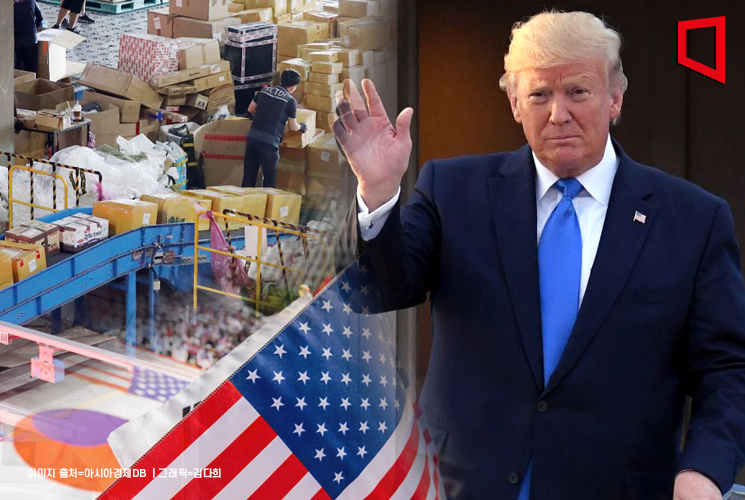
The U.S. economy is also expected to be adversely affected. The Tax Foundation estimated that introducing a 10% universal tariff would increase the tax burden on U.S. consumers and businesses by $300 billion. It projected that U.S. economic growth would decline by 0.5%, and more than 500,000 jobs would be lost. The conservative group American Action Forum predicted that the universal tariff would slow economic growth by 0.3%.
Some speculate that if former President Trump succeeds in returning to power, the actual implementation of trade policies will be less aggressive than his campaign promises. Inu Manak, senior trade policy fellow at the U.S. Council on Foreign Relations, said, "Even if Trump wins re-election, he will not fully implement all the trade policies he has declared. The 10% universal tariff would cause inflation and is unlikely to be applied comprehensively, and Lighthizer will mediate this."
© The Asia Business Daily(www.asiae.co.kr). All rights reserved.
![Clutching a Stolen Dior Bag, Saying "I Hate Being Poor but Real"... The Grotesque Con of a "Human Knockoff" [Slate]](https://cwcontent.asiae.co.kr/asiaresize/183/2026021902243444107_1771435474.jpg)

















