'Scalability' as a Powerful Weapon... Unlimited Capacity Expansion
Dedicated to Technology Development with Global Semiconductor Companies
20 Trillion Won Market Expected by 2028
Samsung Electronics has successfully verified Compute Express Link (CXL) technology in collaboration with Red Hat, laying the groundwork to enhance memory performance while reducing costs. Samsung Electronics has been regarded as having lost the lead to SK Hynix in the high-bandwidth memory (HBM) market, but now it has secured an opportunity to seek a turnaround in the new battleground of CXL, which follows HBM.
CXL is a next-generation interface that can efficiently connect products of different types in applications requiring high-performance computing such as artificial intelligence (AI), machine learning, and big data. It is conceptually different from the recently spotlighted HBM. HBM connects to processing units like central processing units (CPU) and graphics processing units (GPU) to enable fast data transfer. However, it is expensive and has limitations in infinitely increasing data processing capacity and bandwidth.
On the other hand, CXL efficiently links computing systems such as CPUs, GPUs, and memory storage to enable faster computation. It increases memory capacity by enhancing scalability while using existing main DRAM as is.
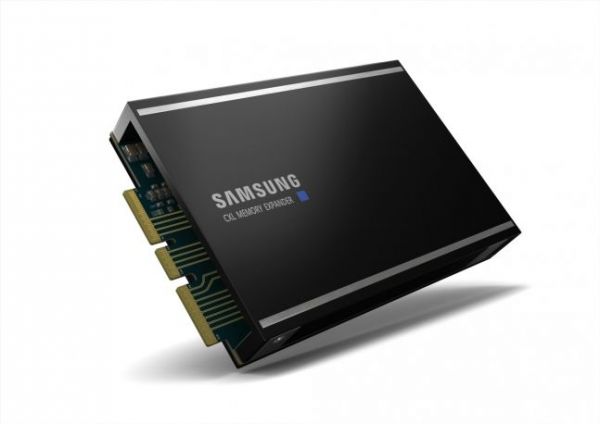
In particular, Red Hat, which Samsung Electronics collaborated with this time, is considered an optimal company equipped with all the necessary conditions for using CXL. It stands out not only in Linux but also in virtualization. Therefore, the completion of operation verification at Red Hat means that cloud users can immediately utilize the product without additional software assistance.
Samsung Electronics is creating synergy by collaborating on technology and platform development with many leading overseas semiconductor companies, ranging from IDM (Integrated Device Manufacturer) to fabless (semiconductor design companies).
Just as the HBM market expanded with the popularization of ChatGPT, the CXL market is expected to blossom in earnest starting with the release of server CPUs by Intel in the first half of next year. According to market research firm Yole Intelligence, the global CXL market is projected to reach $15 billion (approximately 20 trillion KRW) by 2028.
Ryu Young-ho, a researcher at NH Investment & Securities, evaluated, "CXL expands accessibility, increases the efficiency of data movement, and enables effective resource sharing," adding, "It breaks away from the previously limited memory standards and can accommodate any memory regardless of type, capacity, or performance."
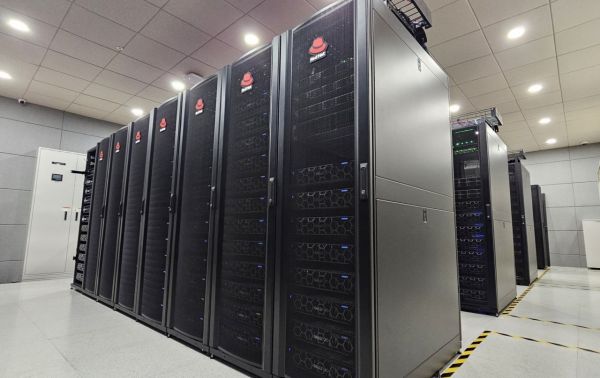 SMRC located at Samsung Electronics Hwaseong Campus conducts industry's first CXL memory operation verification with Red Hat.
 [Photo by Samsung Electronics]
Samsung Electronics is investing more aggressively in the CXL field than anyone else. So far, Samsung Electronics is considered to be one step ahead of SK Hynix in CXL.
Samsung Electronics developed the world's first CXL-based DRAM technology in May 2021, followed by the development of a DDR5-based 512-gigabyte (GB) CXL DRAM product in May 2022, just one year later. In May of this year, it developed the industry's first 128GB CXL 2.0 DRAM supporting CXL 2.0, moving one step closer to the commercialization of next-generation memory. On the 4th of this month, it filed a total of four trademarks related to CXL. The names filed are ▲Samsung CMM-D ▲Samsung CMM-DC ▲Samsung CMM-H ▲Samsung CMM-HC.
It plans to mass-produce CXL 2.0 DRAM within this year. Additionally, it will timely introduce products of various capacities according to the demand of the next-generation computing market to accelerate the expansion of the CXL ecosystem.
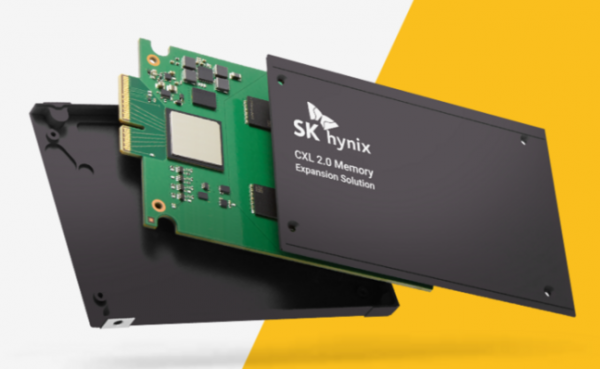
SK Hynix is also in pursuit. After developing the first 96GB CXL memory solution sample based on DDR5 DRAM in August last year, it succeeded in developing the industry's first memory solution CMS (Computational Memory Solution) integrating computing functions based on CXL in October of the same year. SK Hynix plans to complete customer certification for DDR5-based 96GB and 128GB CXL 2.0 memory solution products by the first half of next year and commercialize them in the second half of next year.
U.S. Micron also showcased the memory expansion module 'CZ120' supporting CXL 2.0 at the 'Flash Memory Summit 2023' event last August.
© The Asia Business Daily(www.asiae.co.kr). All rights reserved.



















