The Supreme Court has upheld the guilty verdict against a business operator who imported and sold Doraemon mini-block products domestically without authorization, from a company authorized to sell products using the Doraemon character in China, for violating copyright law.
The ruling states that in a situation where there is a separate domestic licensee for commercialization rights or product sales rights for the Doraemon character, importing products from a company authorized to sell overseas products without the explicit permission of the copyright holder and selling them domestically is not permitted.
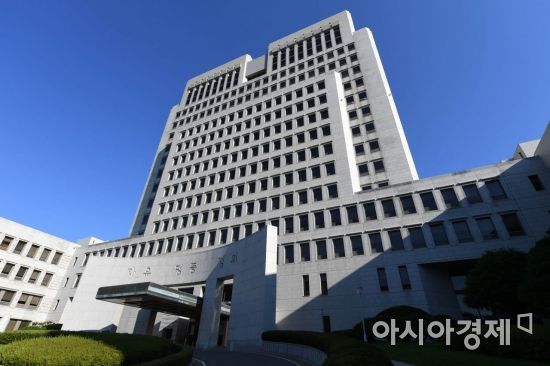
According to the legal community on the 24th, the Supreme Court's 2nd Division (Presiding Justice Min Yu-sook) confirmed the original court ruling that sentenced Yang Mo to a fine of 18 million KRW for charges of copyright infringement and violation of the Unfair Competition Prevention Act.
Yang was prosecuted for selling mini-block products resembling characters from Japanese comics such as Doraemon, One Piece, and Crayon Shin-chan domestically without the copyright holder's permission between 2015 and 2016.
Regarding the Doraemon character, the Japanese copyright holder granted commercialization rights within China to Company A from 2015 to 2017, and Company A delegated sales rights for products using the Doraemon character within mainland China (excluding Taiwan, Hong Kong, and Macau) to Company B from July 2015 to June 30, 2016.
Yang received approximately 960 Doraemon block products from Company B, which was granted sales rights within China, and sold them domestically. The domestic commercialization rights for the Doraemon character in Korea are owned by Company C.
The first trial court recognized guilt for copyright infringement concerning some of the characters involved and sentenced Yang to a fine of 15 million KRW. The court acquitted Yang of copyright infringement charges related to the other characters and of violations of the Unfair Competition Prevention Act for all characters.
The court reasoned that based solely on the evidence submitted by the prosecution, it was difficult to acknowledge that the marks used on the blocks were widely known globally or that the characters or their closely related companies were widely recognized among domestic block and stationery manufacturers or general consumers as marks indicating business operations.
The appellate court overturned the first trial's decision and sentenced Yang to a fine of 18 million KRW.
The first trial court had considered Yang's copyright infringement and unfair competition violations as materially concurrent offenses, but a Supreme Court ruling in December 2015 established that these offenses should be regarded as ideal concurrence (where one act corresponds to multiple offenses, and the heaviest penalty among them is applied). The appellate court reversed some charges previously acquitted by the first trial court to guilty.
A key issue in the trial was whether the "exhaustion of distribution rights" clause in Article 20 of the Copyright Act could be applied.
Article 20 (Distribution Right) of the Copyright Act states, "The author has the right to distribute the original or copies of the work." The proviso of the same article states, "However, this does not apply if the original or copies of the work have been provided for transaction by sale or other methods with the permission of the copyright holder."
This provision implies that once the copyright holder has permitted the sale of the original or copies of the work, having already had the opportunity to be compensated, free distribution thereafter should be guaranteed.
The appellate court acknowledged that the Doraemon block products sold by Yang were genuine products supplied from a company authorized to sell in China.
However, the court stated, "It cannot be concluded that the copyright holder's rights are exhausted in cases of parallel imports, where a third party imports genuine products domestically through different distribution channels without the permission of the domestic exclusive importer, under the so-called 'exhaustion of distribution rights' clause in Article 20 of the Copyright Act. The Copyright Act does not contain provisions that allow parallel imports."
This means that the proviso of Article 20 of the Copyright Act cannot be interpreted to permit third parties to import and sell copyrighted works through other routes when there is a separate domestic exclusive importer.
The court further stated, "Even if the proviso of Article 20 applies, the copyright holder has not explicitly permitted the defendant to import Doraemon block products from the Chinese commercialization rights holder and resell them domestically. Moreover, the copyright holder granted commercialization rights within China only to Company A, which delegated sales rights within mainland China to Company B. The copyright holder's intention should be understood as granting commercialization or sales rights only within China or mainland China to Companies A and B, respectively. Conversely, the copyright holder granted domestic commercialization rights to Company C, indicating an intention to grant domestic commercialization or sales rights to Company C."
Finally, the court concluded, "Unless Companies A or B have a legally or economically close relationship with Company C or there are special circumstances that justify considering them the same, it is unlikely that the copyright holder permitted the defendant's actions. Therefore, the defendant's act of importing Doraemon block products from the Chinese commercialization rights holder without the copyright holder's permission and reselling them domestically constitutes an infringement of the copyright holder's rights."
The Supreme Court's judgment was consistent.
The court stated, "Company B received permission from Company A to use the Doraemon character only within China under specific terms and conditions. The scope of use of copyrighted works is determined by the license agreement. Therefore, Company B's act of selling Doraemon block products directly to the defendant beyond the agreed sales territory cannot be considered authorized by the copyright holder."
It added, "Therefore, Company B's actions were unauthorized, failing to meet the requirements of the proviso in Article 20 of the Copyright Act, and the copyright holder's distribution rights in Korea for the Doraemon block products sold by Company B to the defendant have not been exhausted."
The court also noted, "Although some parts of the original court's reasoning were somewhat inappropriate, there is no error in the application of the law regarding the proviso of Article 20 of the Copyright Act or the exhaustion principle, as claimed in the appeal, in the original court's judgment that the defendant infringed the copyright holder's rights by importing Doraemon block products from the Chinese commercialization rights holder without permission and reselling them domestically," thus dismissing the appeal.
© The Asia Business Daily(www.asiae.co.kr). All rights reserved.

















