According to analysis by a UK research team, some drawings were made by others
"Distinguishing unseen parts of the human eye with 98% accuracy"
A study using artificial intelligence (AI) to analyze the work "Madonna of the Rose," by Italian Renaissance master Raphael, revealed that some parts were painted by someone else.
On the 21st (local time), the US CNN reported that a research team from the University of Bradford in the UK used AI technology to analyze Raphael Sanzio's (1483?1520) painting "Madonna of the Rose" and confirmed that some parts were painted by another person.
"Madonna of the Rose" depicts the Virgin Mary holding the naked baby Jesus, with the infant John the Baptist and Saint Joseph positioned to her right. Known as a 1517 work, the painting is currently housed at the Prado Museum in Madrid, Spain. The title "Madonna of the Rose" originates from a single pink rose placed at the bottom of the painting.
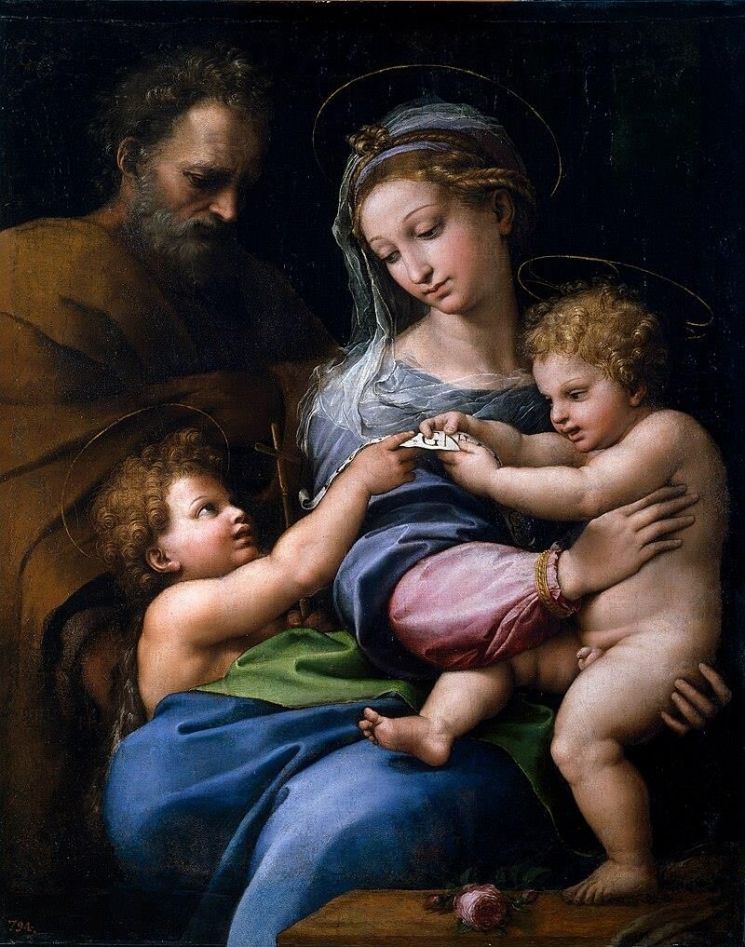
Previously, it was believed that Raphael did not paint the entire work himself; he laid out the overall composition, while the rest was executed by his promising pupils Giulio Romano and Giovanni Francesco Penni. Howell Edwards, Emeritus Professor of Molecular Spectroscopy at the University of Bradford and a participant in the study, stated, "When we analyzed 'Madonna of the Rose' using an AI program, it was revealed that the Saint Joseph section was painted by someone else." He added, "However, it is certain that the Virgin Mary, baby Jesus, and John the Baptist were painted by Raphael."
Hassan Ugail, Director of the Visual Computing and Intelligent Systems Centre at the University of Bradford and developer of the AI program used in this study, said the program can distinguish the authenticity of Raphael's works with 98% accuracy. Ugail explained, "This algorithm analyzes over 4,000 variables including brushwork, color palette, and hues to examine details invisible to the human eye, enabling a thorough analysis of the artwork."
Earlier, the Bradford research team also revealed through AI analysis that Raphael's work "De Bressi Tondo," suspected as a forgery for over 40 years, is authentic.
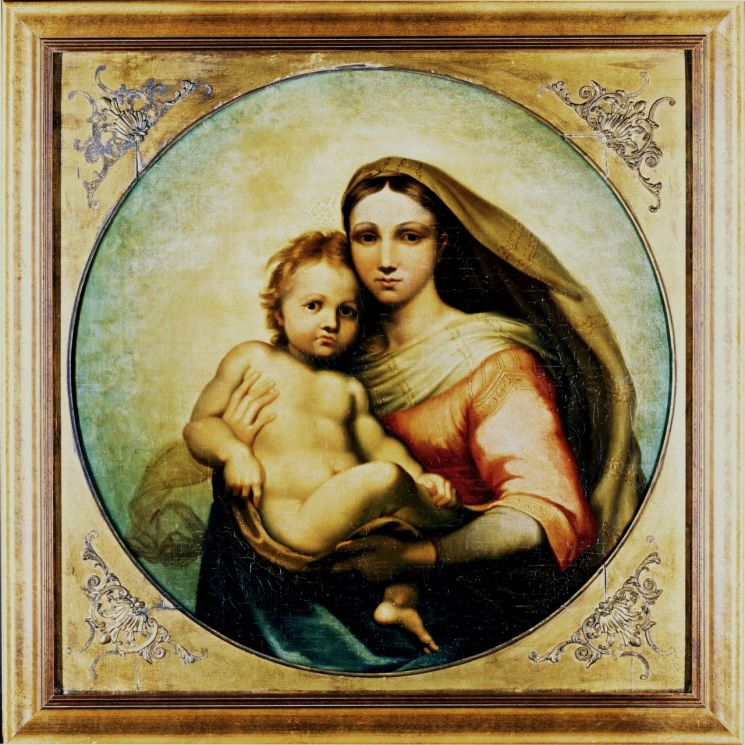
In July, researchers from the University of Nottingham and the University of Bradford applied AI facial recognition technology to analyze the piece and confirmed that the faces of Mary and Jesus in the painting closely match those depicted in Raphael's other work, "Sistine Madonna." This painting, showing the Virgin Mary holding baby Jesus, was part of the collection of the late British businessman George Lester Winward. Two years before his death in 1995, Winward established a trust to manage his art collection and allow scholars to study it.
Until now, the art world speculated that this work was a 19th-century replica imitating Raphael's masterpiece "Sistine Madonna," completed in 1512, due to the strong stylistic similarities. The "Sistine Madonna" was commissioned by Pope Julius II, who was then pope, to honor his uncle and predecessor Pope Sixtus IV. The painting depicts Sixtus IV and Saint Barbara alongside the Madonna and Child and is currently housed in the Dresden Gallery in Germany.
The authenticity debate that lasted over 40 years has been settled by AI analysis. Ugail said, "After examining the piece with new AI technology, we reached the astonishing conclusion that 'De Bressi Tondo' is almost certainly Raphael's work. Combining previous facial recognition experiments and prior research by fellow scholars, we concluded that both paintings are by the same artist."
© The Asia Business Daily(www.asiae.co.kr). All rights reserved.


















