"Effect Asymmetric Depending on Achievement Status"
A study has found that the effectiveness of policies promoting labor supply through employment incentives or changes in income tax rates may vary depending on workers' 'target income.'
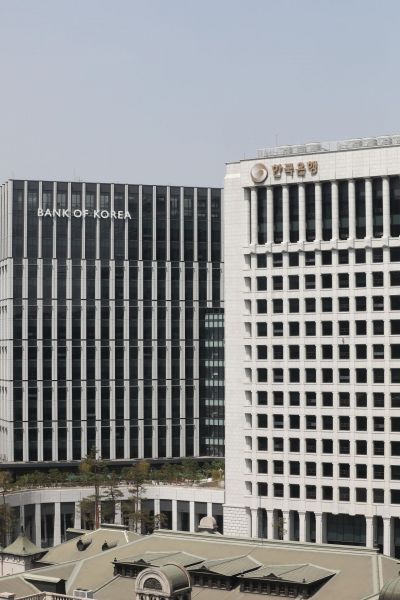
On the 20th, the Bank of Korea announced this in a 'BOK Economic Research' report titled "Testing the Target Income Hypothesis of Labor Supply: An Analysis Using Fisheries Data."
The report specifically supported this by utilizing fisheries data from Alaska, USA, during 2006-2007. The target income was confirmed through the 'target catch amount' data directly recorded by captains before sailing, and by combining this with voyage log data, it was shown that labor supply (working hours) depends on the target level (target catch amount). Before achieving the target, fishing (work) continued even by extending the voyage period beyond the plan, but after reaching the target, the probability of fishing significantly decreased.
The report named this phenomenon 'reference-dependent preferences' and explained that "it demonstrates that the relative level compared to the reference point, rather than the absolute level of income, is an important factor in actual labor supply."
Choi Isul, a senior researcher at the Macroeconomic Research Division of the Bank of Korea Economic Research Institute, said, "The study results showed that workers' labor supply probability discontinuously decreases once they achieve their target income, indicating a significant loss aversion tendency," and suggested, "When designing policies to encourage labor supply, it is necessary to be aware that policy effects may appear asymmetrically depending on whether the target income is achieved."
Senior researcher Choi added, "For example, if economic agents have not yet reached their target income, even small economic incentives may increase labor supply due to the psychological desire to achieve the target. However, if they are already enjoying their target income, greater incentives for additional working hours are required to have a labor supply promotion effect," and explained, "Regarding policies aimed at promoting labor supply through employment incentives or changes in income tax rates, it is important to note that policy effects may be asymmetric depending on whether the target income is achieved."
© The Asia Business Daily(www.asiae.co.kr). All rights reserved.
![Clutching a Stolen Dior Bag, Saying "I Hate Being Poor but Real"... The Grotesque Con of a "Human Knockoff" [Slate]](https://cwcontent.asiae.co.kr/asiaresize/183/2026021902243444107_1771435474.jpg)
















