Judgment in Favor After 11 Years in 6 Billion Won Corporate Tax Cancellation Lawsuit
The Supreme Court has ruled that it was wrong to impose corporate tax on LG Electronics for the money received from LG Notel (now Ericsson LG), a joint venture, as business transfer proceeds for tax avoidance purposes rather than as dividend income from preferred stock reduction. This comes 11 years after a tax of around 10 billion won was imposed in 2012.
According to the ruling, while tax authorities can deny the transaction form chosen by the taxpayer and impose tax based on the substance-over-form principle, if the legal relationship chosen by the taxpayer is recognized as having economic purpose and rationality, and it is difficult to prove that the substance differs from the form solely based on the circumstances claimed by the tax authorities, the substance-over-form principle cannot be applied.
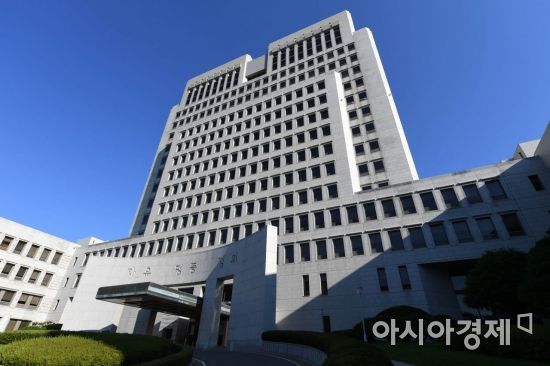
On the 20th, according to the legal community, the Supreme Court's Third Division (Presiding Justice No Jeong-hee) overturned the appellate court's ruling that had ruled against LG Electronics in its corporate tax cancellation lawsuit against the Yeongdeungpo Tax Office and remanded the case to the Seoul High Court.
The court stated, "The appellate court judged that the substance of the disputed funds was network business transfer proceeds and therefore the non-inclusion of dividend income under the Corporate Tax Act could not be applied. This judgment involved a misunderstanding of the law regarding the substance-over-form principle and failed to conduct necessary hearings, which affected the ruling," explaining the reason for the reversal and remand.
LG Electronics signed a joint investment contract with Canadian network equipment company Nortel Networks in August 2005 and established LG Notel, a domestic corporation, in October of the same year. It then transferred the entire network business division to LG Notel through a contribution in kind and received approximately 304.4 billion won in consideration.
Separately, LG Electronics entered into a preferred stock agreement with Nortel Networks and received 79.7 billion won from LG Notel between 2007 and 2008.
According to the contract, if LG Notel achieved domestic sales exceeding 480 billion won, LG Electronics would repurchase the preferred stock it held from LG Notel, and LG Notel would pay the capital reduction proceeds and cancel the preferred stock accordingly.
However, opinions diverged between LG Electronics and tax authorities regarding the nature of the 79.7 billion won received in this manner.
LG Electronics argued that this should be regarded as deemed dividends due to capital reduction and that the 'non-inclusion of dividend income' regulation should apply. Non-inclusion of dividend income means that when a domestic corporation receives dividend income from another domestic corporation it has invested in, part of this income is excluded from accounting income to prevent double taxation.
On the other hand, tax authorities judged that although the 79.7 billion won appeared to be dividend income on the surface, it was in substance network business transfer proceeds with the purpose of tax avoidance, and ultimately imposed 10.9 billion won in corporate tax on LG Electronics, including penalties.
LG Electronics filed a lawsuit arguing that the legitimate tax amount calculated by applying the non-inclusion of dividend income regulation was about 4.1 billion won, and that the corporate tax imposition exceeding this by approximately 6.77 billion won should be canceled.
The first-instance court ruled in favor of LG Electronics.
The court judged that based solely on the circumstances presented by the tax authorities, it was difficult to evaluate that LG Electronics only formally entered into the preferred stock agreement but in substance received 79.7 billion won as business transfer proceeds, and therefore it should be regarded as dividend income.
However, the second-instance court ruled that "LG Electronics essentially received the funds as network business transfer proceeds primarily for tax avoidance purposes" and upheld the tax authorities' corporate tax imposition, dismissing the plaintiff's claims entirely.
But the Supreme Court's judgment was different.
The Supreme Court ruled that the 79.7 billion won LG Electronics received as preferred stock capital reduction proceeds is indeed dividend income subject to non-inclusion and overturned the appellate court's ruling.
The court stated, "Considering the content and form of the transaction, the parties' intentions, the purpose and circumstances of the preferred stock paid-in capital reduction, and the entire process of the transaction, it cannot be seen that the plaintiff intentionally created the appearance of 'preferred stock paid-in capital reduction proceeds' to avoid corporate tax on business transfer proceeds and received 79.7 billion won."
The court cited as grounds for this judgment that Nortel Networks needed LG Electronics' business cooperation to achieve performance and thus entered into such a preferred stock agreement, and that LG Notel paid 76.7 billion won after completing all procedures required under the Commercial Act.
Unless new evidence is presented or there are special changes in circumstances during the retrial, the corporate tax imposition of approximately 6.77 billion won is expected to be canceled.
© The Asia Business Daily(www.asiae.co.kr). All rights reserved.
![Clutching a Stolen Dior Bag, Saying "I Hate Being Poor but Real"... The Grotesque Con of a "Human Knockoff" [Slate]](https://cwcontent.asiae.co.kr/asiaresize/183/2026021902243444107_1771435474.jpg)
















