Various Non-Lethal Weapons Developed
But Controversy Over Actual Effectiveness
'Armed Security Guards' Show Signs of Boom
The security crisis in the Red Sea is intensifying due to the war between Israel and the Palestinian armed faction 'Hamas.' The Yemeni Houthi rebels have attacked civilian vessels, and Somali pirates are also becoming active again. In this context, the British public broadcaster BBC introduced 'advanced non-lethal weapons' specially designed for civilian ships navigating the Red Sea.
'Sonic Cannon' that Repels Pirates with High-Frequency Sound
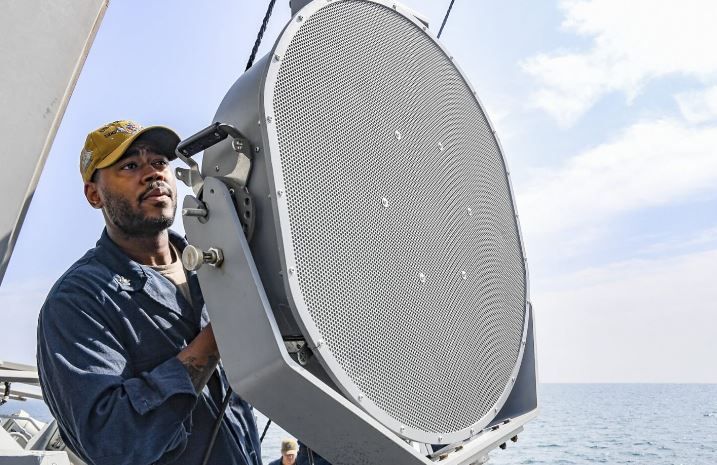 Long-Range Acoustic Device (LRAD) developed by Jenasis. [Image source=Solaris Marine Service website]
The first is the sonic weapon 'LRAD' developed by the American company Genasys. LRAD was developed in the early 2000s when the threat of hijacking by Somali pirates rapidly increased.
LRAD emits high-frequency sound waves up to a distance of 500 meters. People exposed to the LRAD 'acoustic cannon' experience confusion and discomfort. According to the BBC, the most recently developed model reportedly emits sound while tracking the target.
However, the effectiveness of LRAD in repelling pirates has not yet been fully proven. In 2005, there were reports that pirates were driven away using LRAD, but a 2008 report claimed that the LRAD system could not prevent ship hijackings.
From Water Cannons to Chemical Sprays
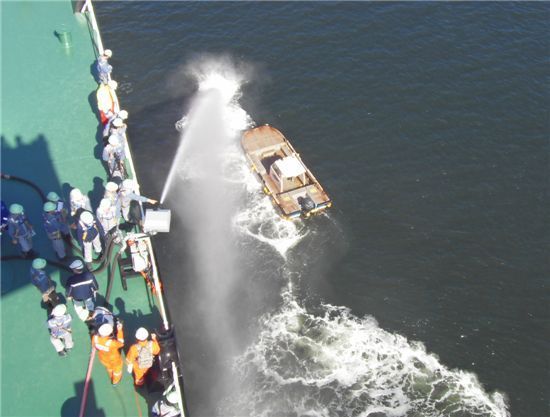 Water cannon developed by Samsung Heavy Industries for pirate suppression [Image source=Samsung Heavy Industries]
Today, the most commonly used defense method on civilian ships is the water cannon. It fires a powerful stream of water to deter pirates on boats. Water cannons are installed not only on ships navigating the Red Sea but also on naval vessels conducting anti-piracy operations.
There has also been experimentation with the idea of spraying chemical substances that cause 'discomfort' to people using water cannons and hoses. According to the BBC, the smell of this chemical causes pain similar to being hit with pepper spray. However, it is said that this substance has never actually been installed on ships.
Experts also point out the limitations of water cannons. Sean Robertson of the security management company EOS Risk Group told the BBC, "Water cannons do not work against opponents with a strong intent to attack," adding, "You cannot stop someone armed with rocket launchers and AK-47 rifles with water."
Eye for an Eye... Signs of a Boom in Armed Security Guard Business
So, what is the most reliable means of protection in the current situation? In fact, the most useful method for repelling armed rebels or pirates is said to be 'armed security guards.'
Chris Long, Chief Information Officer of the maritime security company Neptune P2P Group, told the BBC, "Pirates want money, not to die," and added, "If they get shot, they will run away."
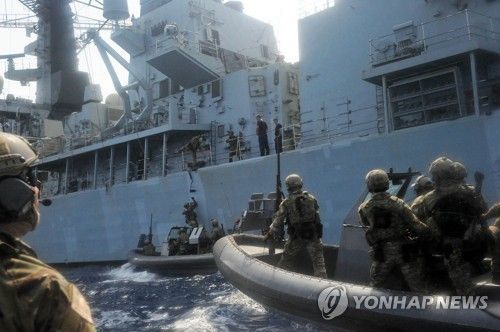
Today, many security companies provide armed guards to civilian ships. Although demand for these companies decreased over the past one to two years as security in international waters stabilized, recently there are signs of a boom again. Cargo ship owners usually pay about ?60,000 (approximately 98.84 million KRW) for a security team of three people.
However, security companies also have limitations. They cannot stop armed groups of a country like the Houthi rebels. Regarding this, Long explained to the media, "If the Houthi rebels try to board a ship, the guards have no choice but to lay down their weapons and let them in," adding, "We cannot be involved in attacks by any state-actor."
Ultimately, in situations where the threat comes from state-level armed organizations rather than ordinary pirates, cooperation among navies of various countries is most important. This is why multinational fleets, including those of the United States and the United Kingdom, are conducting ship protection operations in the Red Sea.
© The Asia Business Daily(www.asiae.co.kr). All rights reserved.
![Clutching a Stolen Dior Bag, Saying "I Hate Being Poor but Real"... The Grotesque Con of a "Human Knockoff" [Slate]](https://cwcontent.asiae.co.kr/asiaresize/183/2026021902243444107_1771435474.jpg)


















