OECD Pension Report... Elderly Poverty Rate at 40.4%
South Korea's elderly poverty rate once again ranked first among OECD member countries.
Elderly Poverty Rate at 40.4%... The Only OECD Country in the 40% Range
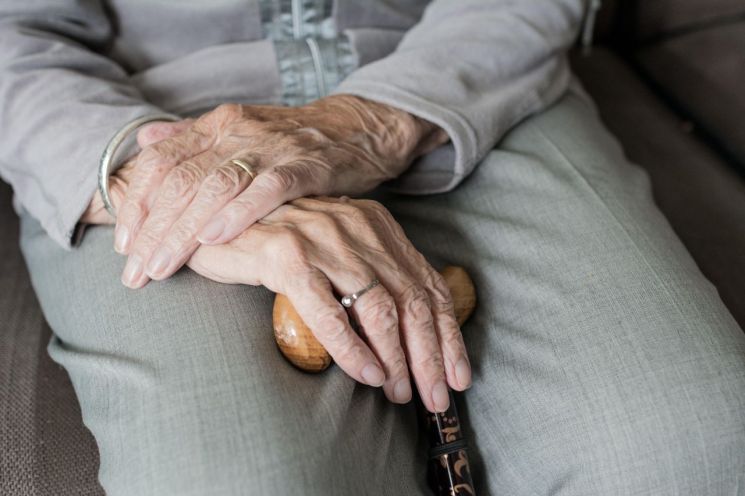
According to the OECD's "Pensions at a Glance 2023" report released on the 19th, as of 2020, the income poverty rate of the elderly population aged 66 and over in South Korea was recorded at 40.4%. South Korea is the only OECD member country to exceed 40%, nearly three times the OECD average (14.2%). The income poverty rate refers to the proportion of the population whose average income is below the poverty threshold, defined as less than 50% of the median household disposable income.
The gap between South Korea and other countries was also significant. Following South Korea, Estonia (34.6%) and Latvia (32.2%) were in the 30% range. Japan (20.2%) and the United States (22.8%) were only about half of South Korea's level, while Nordic and Western European countries such as Iceland (3.1%), Norway (3.8%), Denmark (4.3%), and France (4.4%) belonged to the group with low elderly poverty rates.
South Korea's elderly poverty rate worsened with increasing age. Among the elderly population aged 66 and over, the income poverty rate for those aged 66 to 75 was 31.4%, but for those aged 76 and over, it rose to 52.0%. This means that one in two elderly people belongs to the poverty group.
The gender gap was also noticeably apparent. The elderly poverty rate for South Korean women was 45.3%, 11.3 percentage points (P) higher than that of men (34.0%). This difference is larger than the OECD average, where men are at 11.1% and women at 16.5%.
The OECD analyzed, "Female elderly receive lower income-related pension benefits and have longer life expectancy, resulting in higher poverty rates than male elderly," adding, "South Korea has a relatively large gap between elderly men and women."
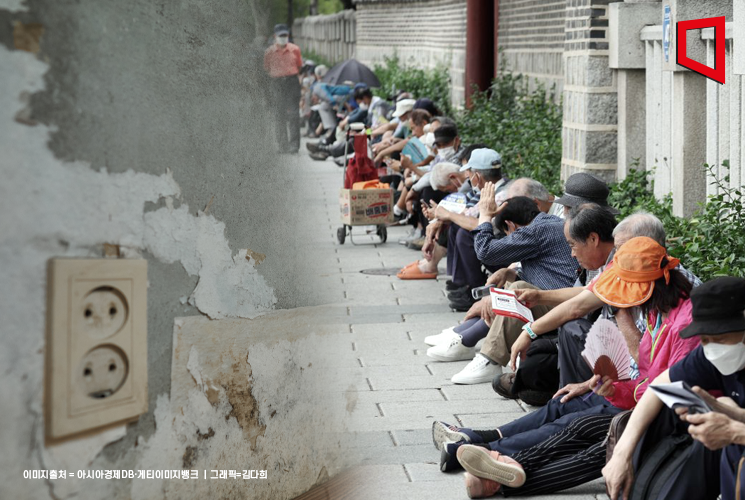
Low Disposable Income Among Elderly... Severe Income Inequality
While most OECD member countries have elderly disposable income lower than that of the total population, South Korea's situation was more severe. The disposable income of South Korea's elderly population was 68.0% of the total, the second lowest among OECD countries after Lithuania (67.4%). For those aged 76 and over, it was 58.6%, ranking last in the OECD.
The OECD member country average was 88.0%, with Japan at 85.2% and the United States at 93.2%. For those aged 76 and over, Japan was at 78.0% and the United States at 83.8%, showing a significant difference from South Korea.
Income inequality among South Korean elderly was also relatively high. The Gini coefficient for disposable income among South Korea's elderly population was 0.376, higher than that of the total population (0.331). The Gini coefficient is an indicator of income inequality, where a value closer to 1 indicates greater inequality.
Typically, due to the redistributive nature of pension systems, income inequality among pension recipients (the elderly) tends to be lower than that of the total population, but in South Korea, this trend is reversed. The OECD average Gini coefficient for disposable income among the elderly population is 0.306, which is lower than that of the total population (0.315).
Public Pension Income Replacement Rate at 31.6%... "South Korea's Pension System is Immature"

According to the OECD, South Korea's pension income replacement rate (the ratio of pension benefits to average earnings during the contribution period) is 31.6%, about two-thirds of the OECD average (50.7%). The OECD assessed that "South Korea's pension system is still immature, and the pensions received by elderly people are at a very low level."
This figure differs significantly from South Korea's national pension income replacement rate of 42.5% based on Korean standards. The OECD's calculation method differs from Korea's, and since the basic pension is not included, the income replacement rate is considered underestimated. The government reportedly requested the OECD last October to include the basic pension, but it appears this was not reflected in the current report.
Meanwhile, South Korea's employment rate for those aged 65 to 69 was 50.4%, the second highest among OECD member countries after Japan (50.9%). The OECD average employment rate for this age group was 24.7%.
© The Asia Business Daily(www.asiae.co.kr). All rights reserved.
!["The Woman Who Threw Herself into the Water Clutching a Stolen Dior Bag"...A Grotesque Success Story That Shakes the Korean Psyche [Slate]](https://cwcontent.asiae.co.kr/asiaresize/183/2026021902243444107_1771435474.jpg)


















