Implementation Plan Comprising '3 Major Initiatives and 16 Detailed Strategies'
Exploring Management Improvement and Development Plans through the 'Taxi Development Roundtable'
Busan City has established the ‘Taxi Transportation Business Development Implementation Plan’ based on the results of research projects such as measures to revitalize the taxi industry, and will promote it annually starting in 2024.
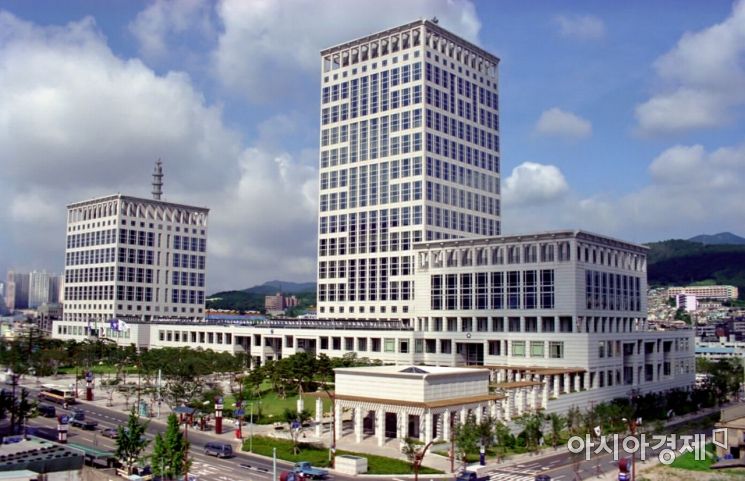
The ‘Research Project on Measures to Revitalize the Taxi Industry and Appropriate Taxi Fare Rate Calculation’ was conducted from March to October to prepare measures to overcome the crisis in the taxi industry in connection with government policies. Through this, current issues were identified and an in-depth review was conducted for effective policy implementation.
The newly established ‘Taxi Transportation Business Development Implementation Plan’ consists of three major tasks: ① Strengthening the self-sustainability of the taxi industry, ② Increasing safety and convenience, and ③ Enhancing data-based services, with 16 detailed strategies under these tasks.
First, in the area of ‘Strengthening the self-sustainability of the taxi industry,’ the focus is on institutional improvements and policy development reflecting the current situation. Seven detailed strategies will be promoted annually, including increasing transportation capacity through flexible labor introduction and regularizing appropriate transportation cost calculation to create a mature consensus environment across the region.
The detailed strategies include ▲ Regular review and adjustment of taxi fares (every 2 years) ▲ Diversification of labor types for taxi drivers (such as part-time work) ▲ Establishment of public taxi garages ▲ Expansion of paid advertising zones on vehicles (such as taxi signs and indoor media bars) ▲ Expansion of youth employment (introduction of flexible working hours, income based on performance, expansion of the Taxi Driver Hope Support Project) ▲ Expansion of support facilities for drivers such as taxi rest areas (creation and management of comprehensive rest areas reflecting movement routes based on TIMS) ▲ Support for the introduction of eco-friendly taxis (encouraging electric vehicles when replacing or scrapping vehicles).
▲ Taxi Operation Information Management System (TIMS)
Operating entity: Korea Transportation Safety Authority; system maintenance costs shared by city/province taxi license ratios
Management details: A system to check taxi location, income, and operation rate using digital operation recorders and meters
▲ Taxi Driver Hope Support Project
Purpose: To improve treatment of corporate taxi drivers and restore industry employment rates
Target: New employees with more than 6 months of service, long-term employees with more than 6 years of service (accident-free)
Support details: Monthly incentive of 100,000 KRW paid to eligible corporate taxi drivers
Second, in the field of ‘Increasing safety and convenience,’ six detailed strategies will be promoted, including the development of new platform taxi services that meet user needs and various support policies for driving safety.
▲ Activation of taxi platform-based services ▲ Expansion of mobility services for transportation-vulnerable groups ▲ Mandatory and expanded taxi service evaluations ▲ ‘Good Taxi’ certification and promotion ▲ Support for installation of taxi safety devices ▲ Support for medical aptitude examination fees for elderly drivers.
Mandatory and expanded taxi service evaluations
Legal amendment: Article 20, Paragraph 1 of the Passenger Transport Vehicle Act changed from voluntary evaluation every two years to mandatory evaluation
Evaluation target: Expansion from general (corporate) taxis to individual taxis to improve service quality
▲ ‘Good Taxi’ certification and promotion
‘Good Taxi’ certification for accident-free, no-drinking, and no-crime drivers to increase safety
▲ Support for medical aptitude examination fees (driver qualification maintenance examination) for elderly drivers
50% support for medical aptitude examination fees (600,000 KRW) for taxi drivers aged 65 and over
Lastly, in the field of ‘Enhancing data-based services,’ three detailed strategies will be promoted to resolve mismatches between regional supply and demand through the advancement of taxi operation information (distance, time, frequency, etc.).
▲ Strengthening the use of the Taxi Operation Information Management System (TIMS) ▲ Support for installation of indoor and outdoor taxi operation record video storage devices ▲ Introduction of demand-based total volume management system (linked to reduction projects).
Support for installation of indoor and outdoor taxi operation record video storage devices
Installation and support of 3-channel vehicle black boxes (front, rear, interior) to prevent traffic accidents and crimes
Introduction of demand-based total volume management system (linked to reduction projects)
The 5th taxi total volume survey reflecting the current situation after taxi reduction projects and taxi restrictions are lifted
Additionally, the city will operate the ‘Taxi Development Roundtable,’ composed of experts and representatives from civic groups, to continuously explore management improvement and development plans for the taxi industry, thereby enhancing policy sophistication.
Mayor Park Hyung-jun stated, “Following the prolonged COVID-19 pandemic, the taxi industry has faced management difficulties due to a decrease in passengers. We have prepared this Taxi Transportation Business Development Implementation Plan through related research to proactively respond to changes in the mobility environment, such as advanced technology and public transportation development. We expect that by steadily implementing the plan from next year, the taxi industry will be revitalized and the quality of service will improve significantly, greatly enhancing citizen satisfaction.”
© The Asia Business Daily(www.asiae.co.kr). All rights reserved.
![Clutching a Stolen Dior Bag, Saying "I Hate Being Poor but Real"... The Grotesque Con of a "Human Knockoff" [Slate]](https://cwcontent.asiae.co.kr/asiaresize/183/2026021902243444107_1771435474.jpg)











