Petrochemical Industry, Introduction to the Current Status of Eco-Friendly Fuel Entry
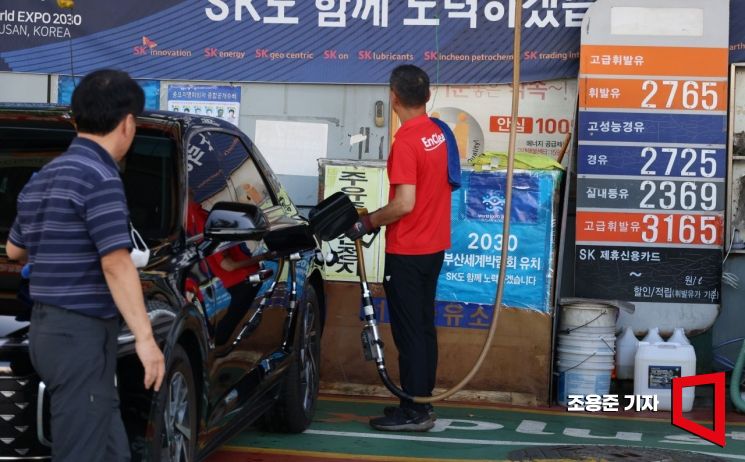 On September 6th, the prices for gasoline and diesel were displayed at a gas station in downtown Seoul. Photo by Jo Yongjun jun21@
On the 18th, the Ministry of Trade, Industry and Energy announced that it will hold the 5th "2023 Petroleum Conference" at the Samjung Hotel in Seoul under the theme "New Growth Strategies for the Petroleum Industry and the Role of Eco-friendly Fuels." The event is hosted by the Korea Petroleum Association and the Korea Energy Economics Institute, with the Korea Petroleum Management Service organizing it.
The Korea Energy Economics Institute forecasts that next year's international oil price (based on Dubai crude) will remain around $83 per barrel, similar to this year, amid mixed factors affecting oil prices, including OPEC Plus's commitment to supporting prices and concerns over declining oil demand due to economic slowdowns in major countries such as China.
HD Hyundai Oilbank, SK Innovation, and the Korea Petroleum Management Service will introduce the current status of domestic and international petroleum industry ventures into eco-friendly fuel sectors. Overseas major oil companies such as Chevron and ExxonMobil have already begun converting parts of their crude oil refining processes to bio-feedstock refining processes. Domestic refiners are also conducting demonstration projects on co-processing, which involves mixed refining of petroleum-based feedstocks and recycled feedstocks such as pyrolysis oil from waste plastics.
Sungkyunkwan University and HD Hyundai Heavy Industries will present the current status of technology development for sustainable aviation fuel (SAF) and methanol-powered vessels, focusing on the shipping and aviation sectors. The Korea Institute of Energy Technology, which has been researching renewable synthetic fuels (E-Fuels) that have recently gained attention in the eco-friendly fuel sector, will introduce domestic and international technologies and ongoing projects related to renewable synthetic fuels. Currently, domestic technology is at a mature level, and only corporate investment decisions remain before commercialization.
Lee Ho-hyun, Director of the Energy Policy Office, stated, "In the context of ongoing international regulations aimed at decarbonizing all transportation sectors including road, aviation, and shipping, it is positive that refiners are proactively conducting eco-friendly fuel production demonstrations and planning large-scale facility investments." He added, "The government will continue to support the industry’s eco-friendly fuel investments by providing institutional support such as amendments to petroleum business laws, increasing the Renewable Fuel Standard (RFS) blending ratio, and offering incentives like tax credits."
© The Asia Business Daily(www.asiae.co.kr). All rights reserved.

















