Overcoming the Threshold After Three Attempts Amid COVID-19 Impact
"Entering the US Market Next Year Through a Subsidiary"
GC Green Cross's blood product 'Alyglo (intravenous immunoglobulin (IVIG-SN) 10% formulation)' has become a new drug recognized by the U.S. Food and Drug Administration (FDA). This is the eighth achievement of a domestically produced new drug following recent successes such as Celltrion's 'Zimventra.' The company plans to quickly enter the U.S. market by next year.
GC Green Cross announced on the 18th that it received biological license application (BLA) approval for Alyglo from the FDA on the 15th (local time). The company plans to start sales through its U.S. subsidiary, GC Biopharma USA, in the second half of next year. Alyglo is an intravenous immunoglobulin 10% formulation used for primary humoral immunodeficiency, also known as congenital immunodeficiency.
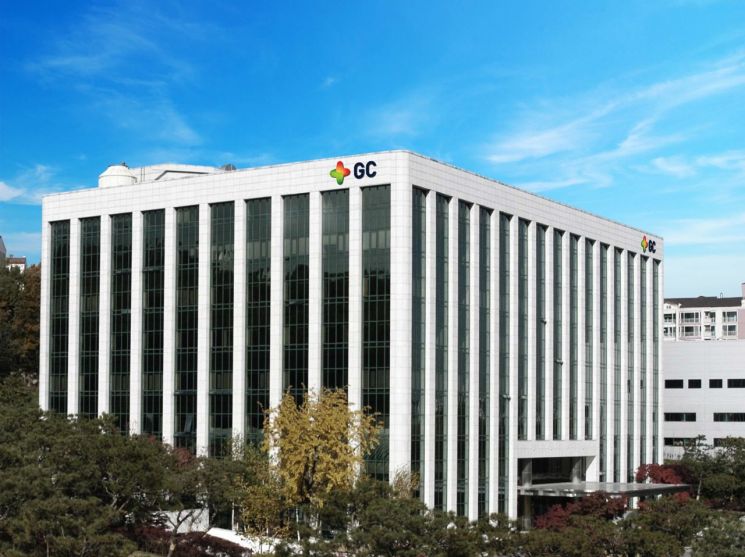
Originally, the approval deadline for Alyglo under the Prescription Drug User Fee Act (PDUFA) was January 13 of next year, but unusually, approval was granted a month earlier. A GC Green Cross official explained, "Before resubmitting the BLA, we had already successfully completed the FDA inspection and there were no major disqualifications. We believe this led to the FDA's expedited approval notification." Given that this was nearly the third attempt, the company described the early approval as a success.
In fact, Alyglo's FDA approval was not smooth. After the first attempt in 2021, a second attempt was made, and including the 2015 challenge for a 5% immunoglobulin concentration product BLA, it was a success on the third try. At that time, GC Green Cross passed the FDA preliminary review but was criticized for insufficient data on the manufacturing process. Despite submitting additional related data, approval was ultimately not obtained.
Determined to succeed, GC Green Cross submitted the BLA for Alyglo, which increased the concentration to 10%, to the FDA in February 2021 after six years. However, due to the COVID-19 pandemic making on-site inspections difficult, the production facility evaluation was conducted through a 'remote assessment,' and in February last year, a final complete response letter (CRL) requiring an on-site inspection was received. Nevertheless, an on-site inspection of the Ochang plant in Chungbuk was conducted in April, and the BLA was resubmitted to the FDA in July.
This approval was based on the results of a Phase 3 clinical trial conducted in 2020 involving 49 patients with primary immunodeficiency in the U.S. and Canada. In the clinical trial, Alyglo met the primary efficacy endpoint with an annual rate of 0.02 for serious bacterial infections (SBI), and in terms of safety, the rate of temporally associated adverse events (TAAEs) occurring within 72 hours after administration was 0.24, meeting the predefined evaluation criteria, with no serious adverse events reported.
Thus, Alyglo became the eighth domestically produced new drug to receive FDA approval. Domestic new drugs previously approved include LG Chem's 'Pactiv' in 2003, Dong-A ST's 'Cibexstro' (2014), SK Chemicals' 'Abstila' (2016), SK Biopharm's 'Sunosi' (2019) and 'Xcopri' (2019), Hanmi Pharmaceutical's 'Rolontis' (2022), and Celltrion's 'Zimventra' (2023). Notably, following Zimventra as the first biologic new drug approval, Alyglo is the first blood product new drug approval, showing a gradual diversification of product types.
The company is also optimistic about Alyglo's growth potential. The U.S. immunoglobulin market was valued at $10.4 billion (approximately 13.56 trillion KRW) last year. With the recent increase in autoimmune disease patients, demand for immunoglobulin continues to rise. However, blood products require large-scale facility investments and advanced production experience, limiting the number of producers and often causing supply shortages. Therefore, market expansion through Alyglo's overseas launch is highly anticipated.
Additionally, GC Green Cross introduced its proprietary 'cation exchange chromatography (CEX chromatography)' technology in the immunoglobulin purification process to maximize product safety. This technology plays a powerful role in removing impurities such as coagulation factor XIa (FXIa), a major cause of thromboembolism.

Heo Eun-cheol, CEO of GC Green Cross, said, "We are pleased to provide safe and effective treatment options to immunodeficiency patients in the U.S. with this approval," adding, "Having dedicated ourselves to patients with rare diseases worldwide, we will do our best to expand globally and build better treatment environments for patients and healthcare professionals."
© The Asia Business Daily(www.asiae.co.kr). All rights reserved.


















