General Account 590 Billion KRW, Special Account 19.5 Billion KRW... 0.35% (2.2 Billion KRW) Decrease Compared to This Year's Budget
Social Welfare 283.4 Billion KRW, Urban Infrastructure, etc. 76.9 Billion KRW, General Public Administration 76.9 Billion KRW in Order
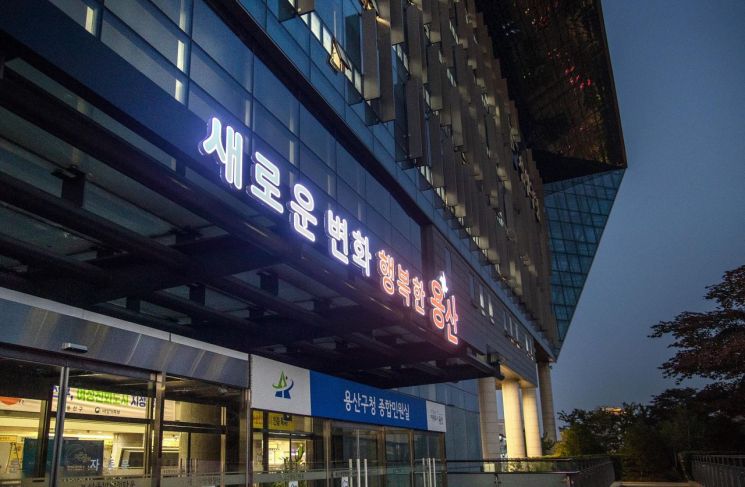
Yongsan-gu, Seoul (District Mayor Park Hee-young) has finalized the 2024 budget at 609.5 billion KRW (General Account 590 billion KRW, Special Account 19.5 billion KRW).
This amount is 0.35% (2.2 billion KRW) less than the 2023 budget of 611.7 billion KRW.
According to the project structure, the budget is divided into ▲Policy Projects 459.6 billion KRW (General Account 450.1 billion KRW) ▲Administrative Operating Expenses 142.9 billion KRW (General Account 138.2 billion KRW) ▲Financial Activities 7 billion KRW (General Account 1.7 billion KRW).
In particular, the policy projects (based on the general account) are allocated as follows: ▲Social Welfare 283.4 billion KRW ▲Urban Infrastructure Management and Environment 76.9 billion KRW ▲General Public Administration 44.5 billion KRW ▲Education, Culture and Tourism 19.7 billion KRW ▲Health 14 billion KRW ▲Contingency Fund 11.5 billion KRW.
The major budgets in the social welfare sector, which has the largest share, include ▲Basic Livelihood Security such as livelihood and housing benefits, and support for self-sufficiency work projects at 60.1 billion KRW ▲Support for the elderly and youth such as basic pensions, senior job programs, and entrusted management of youth centers at 97.5 billion KRW ▲Support for vulnerable groups such as disability activity support, disability pensions, and establishment and operation of comprehensive social welfare centers at 36.6 billion KRW ▲Childcare services and support for women and families such as parental benefits, infant care fees, and child allowances at 83 billion KRW.
The urban infrastructure management and environment sector plans to contribute to urban environmental improvement by investing ▲34.9 billion KRW in waste management including household waste treatment ▲9.7 billion KRW in water and sewage quality including maintenance of aging sewage pipelines ▲14.2 billion KRW in road facilities maintenance ▲8.9 billion KRW in regional and urban projects such as urban regeneration and maintenance of children’s and small parks.
The general public administration sector will focus administrative efforts by subdividing the budget into ▲General administration including maintenance of district and neighborhood offices, support for community leaders, integrated operation and maintenance of CCTV at 41.2 billion KRW ▲Legislative and election management such as operation of council activities at 1.7 billion KRW ▲Local administration and financial support including management of district assets and revenue management at 1.6 billion KRW.
The education, culture, and tourism sector will carry out projects divided into ▲Early childhood and primary and secondary education including support for school education programs and environment improvement, eco-friendly meals, native foreign language classrooms, and children’s English camps at 7.5 billion KRW ▲Culture and arts including operation of libraries and Yongsan Craft Center at 4.9 billion KRW ▲Sports including operation of cultural and sports centers at 6 billion KRW.
The health sector includes ▲Health and medical services such as national vaccination programs, support for infertile couples, and operation of dementia relief centers at 13.4 billion KRW ▲Food and drug safety including operation of the children's meal management support center at 600 million KRW.
The district established the 2024 budget plan in August this year and has proceeded through the processes of preparing revenue and expenditure budget requests, budget review and adjustment, and budget proposal review by the district council (287th session, 2nd regular meeting).
Park Hee-young, Mayor of Yongsan-gu, stated, “In line with the policy of strengthening sound fiscal management, we have reduced or abolished unnecessary projects and prioritized budgets related to safety that protect residents’ lives and welfare budgets for vulnerable groups. We will proactively respond by actively securing and utilizing external resources for new investment demands to prepare for mid- to long-term fiscal risks.”
© The Asia Business Daily(www.asiae.co.kr). All rights reserved.
![Clutching a Stolen Dior Bag, Saying "I Hate Being Poor but Real"... The Grotesque Con of a "Human Knockoff" [Slate]](https://cwcontent.asiae.co.kr/asiaresize/183/2026021902243444107_1771435474.jpg)
















