US University Research on Human Gene Comparison
"Possessing Specific Genes Linked to Early Rising Preference"
A study has found that "morning people," who prefer waking up early, may be influenced by genes inherited from Neanderthals.
On the 14th (local time), according to the U.S. Wall Street Journal (WSJ), a research team led by Professor Tony Capra of the University of California, San Francisco (UC San Francisco) compared the DNA of modern humans with that of Neanderthals and another extinct ancient human species, the Denisovans.

They obtained health and genetic information of hundreds of thousands of people of European ancestry from a UK database and analyzed it alongside DNA extracted from the bones and teeth fossils of several Neanderthals and one Denisovan. As a result, they identified 246 genes related to circadian rhythms, among which individuals carrying certain genes derived from Neanderthals were found to prefer waking up early.
Regarding this, Professor Capra said, "We found that many Neanderthal gene variants are consistently associated with a tendency to be morning people."
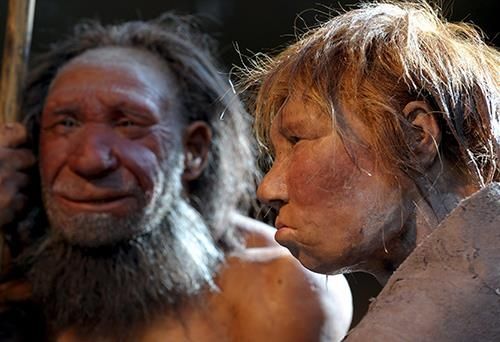
Neanderthals are an extinct species of the genus Homo, named after the Neander Valley (Neanderthal) in D?sseldorf, Germany, where they were discovered in 1856. They expanded their territory from Europe to West Asia, Central Asia, and North Africa, and had practices such as stone tool making, fire use, and burial customs. Neanderthals had shorter legs, longer torsos, and a stocky build compared to modern humans, with adult males standing about 164?168 cm tall and females about 152?156 cm.
The first Homo sapiens appeared in Africa about 300,000 years ago and migrated to Eurasia around 70,000 years ago. There, they encountered Neanderthals and Denisovans, leading to interbreeding among various species. Neanderthals are estimated to have disappeared about 50,000 years ago in Asia and 30,000 years ago in Europe. Today, about 2% of the genes of Europeans and Asians come from Neanderthals.
Professor Capra explained, "Previous studies have shown that going to bed early and waking up early is associated with circadian rhythms that adapt more quickly to natural day-night cycles." This means that people who perceive and adapt to the natural passage of time more quickly tend to wake up earlier in the morning. The research team believes that this adaptive ability was likely advantageous in higher latitude regions where Neanderthals and Denisovans lived, compared to Africa where humans originated. This is because the seasonal variation in sunrise and sunset times is minimal in Africa but significant in high-latitude areas.
However, there are various factors that determine whether someone is a morning person, so it is insufficient to explain this solely by Neanderthal genes.
Professor Joshua Akey of Princeton University said, "While some Neanderthal genomes may have contributed to the trait of being a morning person, it is unlikely that who is a morning or evening person can be entirely attributed to Neanderthal ancestry." This is because many other factors affect circadian rhythms, including personality, willpower, and sleep hormones.
The study showing that having certain Neanderthal genes increases the likelihood of being a morning person was published in the recent issue of the scientific journal Genome Biology and Evolution.
© The Asia Business Daily(www.asiae.co.kr). All rights reserved.
![Clutching a Stolen Dior Bag, Saying "I Hate Being Poor but Real"... The Grotesque Con of a "Human Knockoff" [Slate]](https://cwcontent.asiae.co.kr/asiaresize/183/2026021902243444107_1771435474.jpg)

















