Some Opposition Over Secret Ballot Vote on General Strike
Internal conflict is detected within the Korean Medical Association (KMA), which is opposing the government's policy to expand medical school quotas. Former KMA President Choi Dae-jip, who served as the head of the Struggle Subcommittee of the Pan-Medical Community Countermeasure Special Committee (Pan-Committee), has stepped down from his position. There is also opposition within the medical community regarding the principle of keeping the ongoing vote on the nationwide doctors' strike (collective sick leave) confidential.
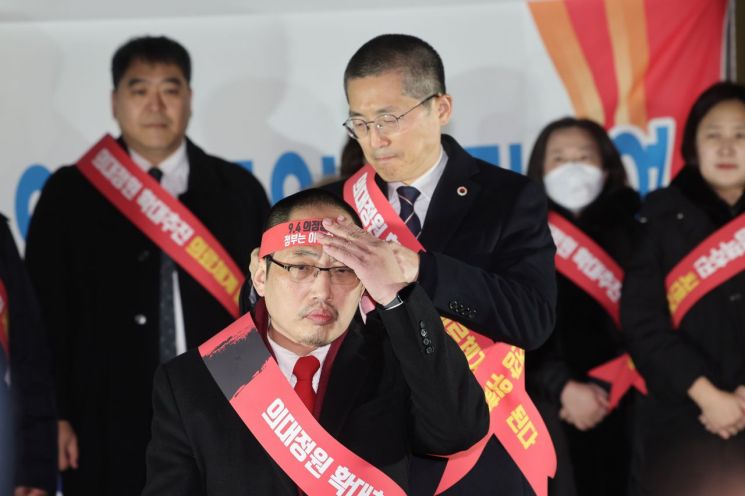
On the morning of the 14th, former President Choi released a brief statement to the media saying, "I hereby resign from the position of head of the Pan-Committee Struggle Subcommittee." Following his resignation, the current KMA President Lee Pil-su, who is also the head of the Pan-Committee, will concurrently hold the position of Struggle Subcommittee head. The Pan-Committee was established by the KMA to oppose the government's policy to expand medical school quotas.
Choi, who was KMA President during the previous administration, led the medical community's general strike in 2020 against the government's establishment of public medical schools and expansion of medical school quotas. After a hardline struggle, he successfully negotiated the September 4 Medical Agreement with the government, which included a commitment that the government would not unilaterally push forward policies.
Regarding Choi's resignation, a KMA official stated, "We understand that (former President Choi) made this decision for the unity of the medical community." When he joined the Pan-Committee as a subcommittee head, some voices within the medical community opposed him due to his past actions. They argued that the September 4 Medical Agreement did not properly reflect the internal opinions of the medical community. Medical students collectively refused the national licensing exam even after the agreement. The Future Doctors Association also issued a statement on the 30th of last month, shortly after Choi took the position of Struggle Subcommittee head, criticizing, "Calling back former President Choi at a time when the medical community should be united is no different from fostering internal division."
The Future Medical Forum released a statement welcoming Choi's resignation, saying, "Although late, we welcome former President Choi's magnanimous resignation as head of the Struggle Subcommittee, and we hope the KMA executive will take this incident as a lesson and proceed with greater caution in the future." The Future Medical Forum is an organization led by former KMA President Joo Su-ho.
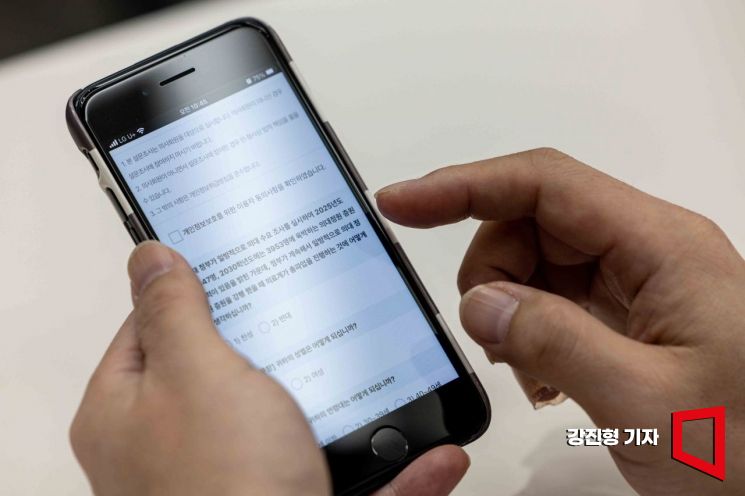 On the 11th, a doctor is casting a vote at the Korea Medical Association in Yongsan-gu, Seoul, ahead of the strike vote scheduled from the 11th to the 17th in opposition to the government's plan to increase the quota for medical schools. Photo by Jinhyung Kang aymsdream@
There is also opposition within the medical community regarding the ongoing strike vote being conducted by the KMA among all members until the 17th. This is because the executive has decided to keep the voting results confidential. A KMA official explained, "This vote is a process to empirically confirm members' opinions," adding, "It is a procedure to confirm that a strike may be launched if the government unilaterally pushes forward the expansion of medical school quotas." In other words, the strike vote serves as a kind of 'warning message' in negotiations with the government. Furthermore, the KMA has stated that even if the vote results in strong support for a strike, they will not immediately proceed with the strike.
The Future Medical Forum criticized the KMA's voting policy, stating, "It is strange to hold a vote among all members right before the rally, and if it is merely a simple opinion poll, there is absolutely no need to conduct it now." They further described the vote as a "bizarre and absurd vote" and demanded, "If the vote is forced through, promise to disclose the results to all members." In response, a KMA official said, "Whether to proceed with the general strike is a matter that must be decided carefully."
Separately from former President Choi's resignation, the KMA will proceed with the planned collective actions. On the night of the 14th, they will hold a relay one-person protest in front of the Yongsan Presidential Office. On the 17th, the deadline for the strike vote, a nationwide doctors' rally will be held around Gwanghwamun and Sejong-daero.
Meanwhile, during the 21st Medical Issues Council meeting held amid the strike vote, the government and the KMA reached a basic level of agreement. At the meeting on the 13th, which focused on the working conditions of residents, both sides agreed to pursue policies to improve working conditions, including reducing excessive working hours. At the 22nd Medical Issues Council meeting scheduled for the 20th, they plan to discuss the establishment of a medical delivery system and principles for discussing physician workforce based on objective statistics and data.
© The Asia Business Daily(www.asiae.co.kr). All rights reserved.


















