Winfrey "Obesity is a Disease... Difficult with Willpower Alone"
Obesity Drug Ingredients Linked to Gastrointestinal Disorders... 'Caution When Taking'
American broadcaster Oprah Winfrey, who recently made headlines for losing 40kg, revealed that she is taking obesity medications to manage her weight.
On the 13th (local time), Winfrey said in an interview with the American magazine 'People,' "The fact that there is a medically approved prescription for weight management gives a sense of relief that obesity is not something to be hidden or ridiculed."
 Oprah Winfrey, the "Queen of Talk Shows" in the United States, posed with Chicago artist Sean Michael Warren (right), who painted her portrait, at the unveiling ceremony of her portrait held on the 13th (local time) at the National Smithsonian Portrait Gallery in Washington DC. The museum announced that it will permanently keep this portrait. Photo by AP Yonhap News
Previously, Winfrey had mentioned consistent exercise as her weight loss secret, but this is contrary to that.
She said that her perspective on obesity medications changed after a personal broadcast program released on the website 'Oprah Daily' last September. She said she gained insight through conversations with the audience during the program, stating, "I had blamed myself for being overweight, and I realized that I cannot control it with willpower alone."
She continued, "Obesity is a disease. It is about the brain, not willpower," adding, "Now, I take as much medication as needed to manage the yo-yo effect (returning to pre-diet weight)."
Meanwhile, obesity medications in the 'glucagon-like peptide-1 (GLP-1)' class, such as Wegovy, which contains the same ingredient as Ozempic, a type 2 diabetes treatment, are becoming popular due to their excellent weight loss effects.
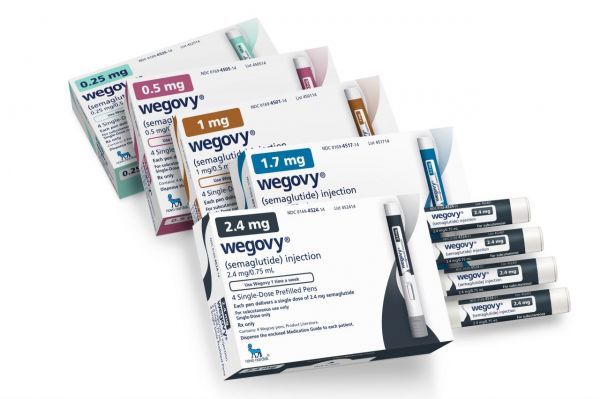 Novo Nordisk's GLP-1 class treatment 'Wegovy (active ingredient Semaglutide)'. Photo by Novo Nordisk
In particular, Tesla CEO Elon Musk gained fame by mentioning that he lost about 13kg with the help of Wegovy. Recently, demand for obesity medications has outpaced supply to the extent that there are concerns that diabetic patients may not be able to receive their medication.
In fact, Belgium recommended that Ozempic be prescribed only to diabetic patients and strengthened regulations last month to allow Ozempic, Rybelsus, Victoza, Eli Lilly's Trulicity, and AstraZeneca's Bydureon to be prescribed only to type 2 diabetes patients and certain types of obese patients.
However, since the key ingredients of obesity medications can significantly increase the risk of gastrointestinal diseases such as pancreatitis, intestinal obstruction, and gastroparesis, caution is required when taking them. Professor Mayar Etminan and researcher Mohit Sodi (doctoral candidate) from the University of British Columbia in Canada reported in the medical journal 'Journal of the American Medical Association (JAMA)' in October that there is a strong association between the diabetes and obesity treatment ingredients 'semaglutide' and 'liraglutide' and pancreatitis, intestinal obstruction, and gastroparesis.
Semaglutide and liraglutide are drugs that act on the satiety hormone GLP-1. Semaglutide is the main ingredient in Ozempic, Rybelsus, and Wegovy. Liraglutide is the main ingredient in the obesity medication Saxenda.
© The Asia Business Daily(www.asiae.co.kr). All rights reserved.


















